Crispijn de Passe
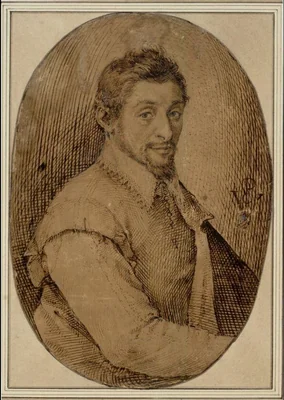
Crispijn de Passe the Elder (Active 1564-1612) stands as the foundational figure of one of the most prolific and commercially successful Dutch engraving dynasties of the late sixteenth and early seventeenth centuries. Comparable in scale to the workshops of the Wierix or Sadeler families, the de Passe enterprise shaped the dissemination of visual culture across Northern Europe, supplying the burgeoning market for accessible printed images.
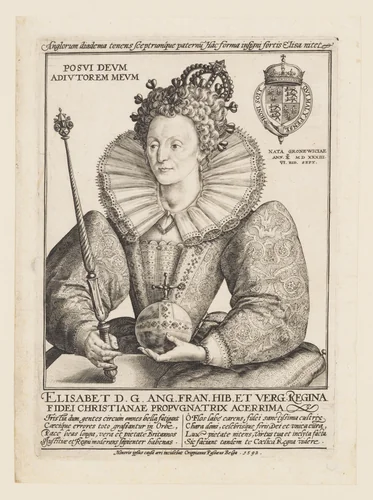
Crispijn the Elder’s significance rests not solely on his technical virtuosity, but on his effective establishment of a highly specialized and enduring business model. Unlike many contemporary artists focused on large, singular masterpieces, the de Passe focus was primarily on functional and highly reproducible media: finely detailed portraits, elaborate book title-pages, and comprehensive decorative series. While this focus operated perhaps at what could be termed a more “mundane commercial level” than grand narrative painting, it guaranteed financial sustainability and broad penetration into scholarly and elite homes throughout the continent. This strategic specialization ensured their consistent output of high-quality prints.
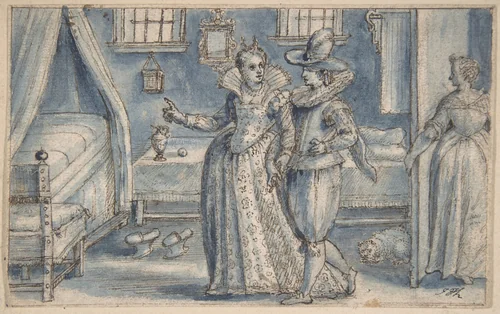
The family workshop was characterized by stylistic uniformity; the works of Crispijn and his descendants are often difficult to distinguish in the absence of a clear signature or date, a testament to the efficient, collaborative nature of their production. Crispijn de Passe was himself a designer, frequently creating the original compositions for the prints executed in his studio, leaving behind a valuable collection of drawings alongside his printed output.
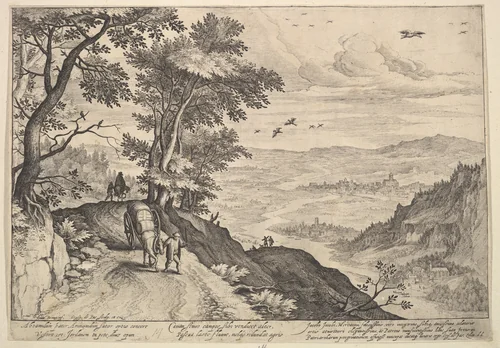
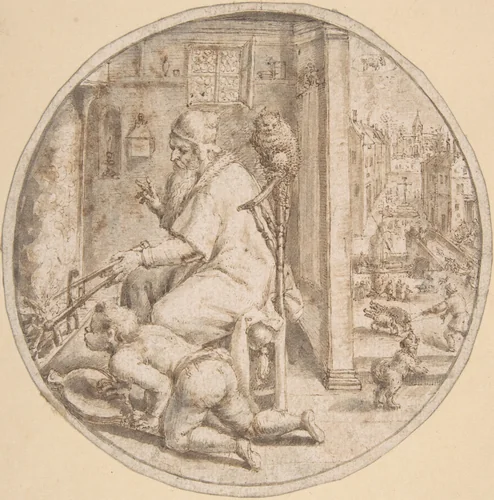
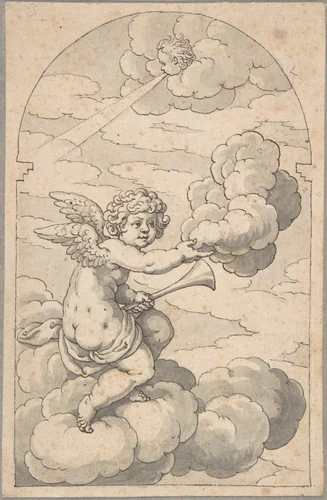
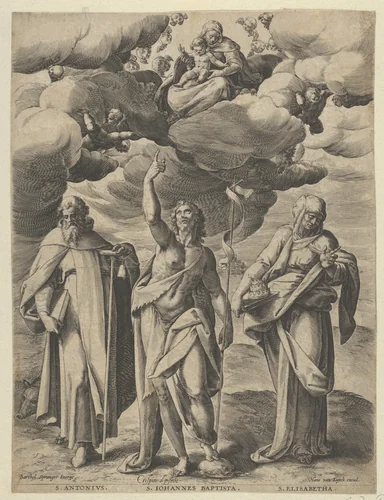
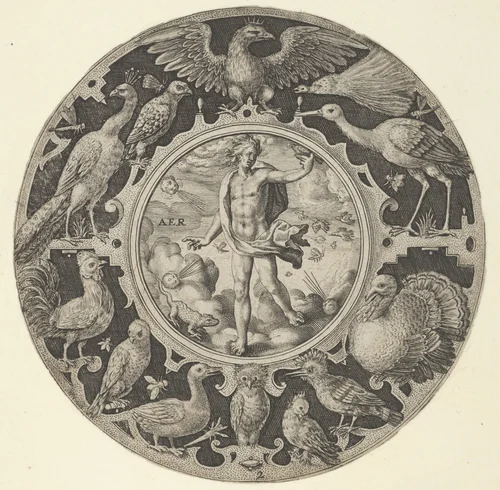
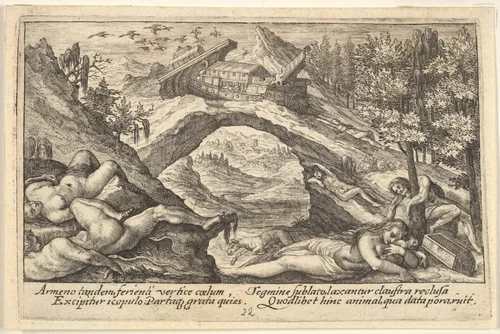
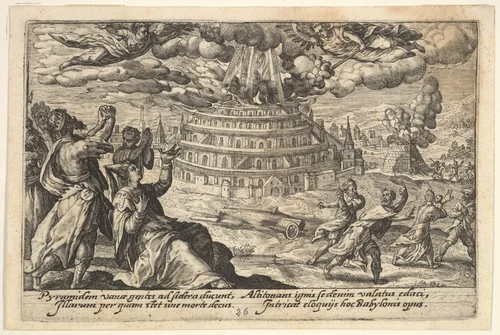
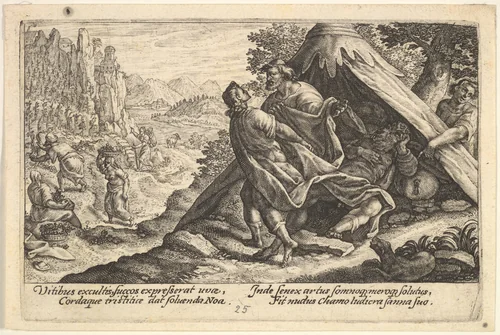
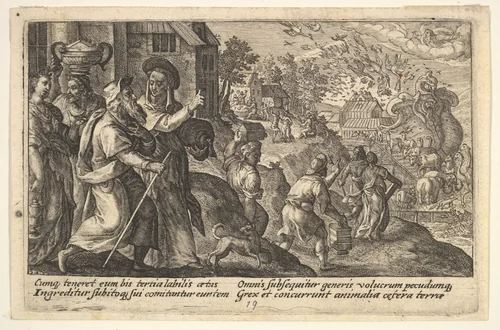
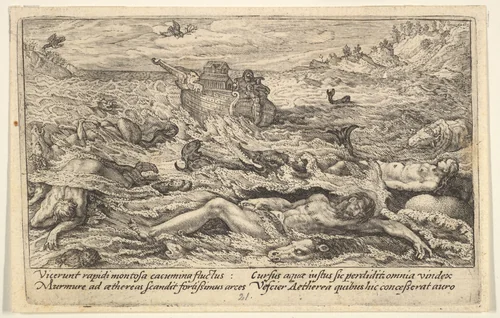
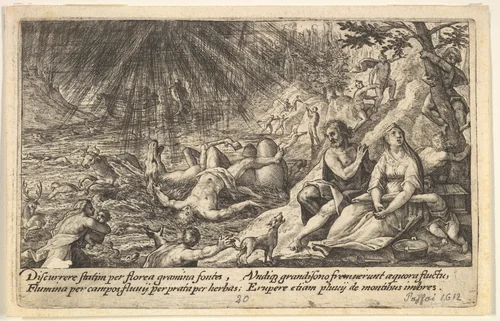
His scope ranged across allegorical, devotional, and genre subjects, catering to diverse intellectual and spiritual needs. Noteworthy examples include the intricate meteorological depiction 'Aer' in a Decorative Border with Birds, the devotional panel Saint Anthony, Saint John the Baptist, and Saint Elizabeth, and the domestic scene December: And Old Man Seated by a Hearth with a Young Man Blowing on the Fire. Crispijn’s careful attention to detail and ability to translate complex designs into reproducible formats ensured the enduring appeal of Crispijn de Passe prints. Today, much of the family’s extensive catalog, including pieces held in the Metropolitan Museum of Art, has entered the public domain, making this historic and downloadable artwork available for research and appreciation worldwide.