Cosmas Damian Asam
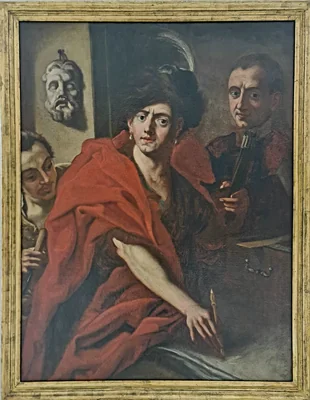
Cosmas Damian Asam (1686-1750) stands among the most significant German painters and architects of the late Baroque period, recognized for synthesizing dramatic continental influences with the burgeoning German Rococo. Born in Benediktbeuern, Asam’s early training was defined by a crucial two-year immersion in Rome, where he studied at the prestigious Accademia di San Luca from 1711 to 1713. There, under the tutelage of the revered classicist Carlo Maratta, Asam absorbed the grand tradition of Italian ceiling painting and theatrical staging. This period culminated in 1713 when he secured the Academy’s first prize for his drawing, Miracle of Saint Pio, establishing his early mastery of composition and figure drawing.
Upon his return to Bavaria, Cosmas Damian Asam initiated one of the most productive collaborations in European architectural history with his younger brother, Egid Quirin Asam, a master sculptor and stucco worker. The subsequent output, often collectively attributed to the “Asam Brothers,” involved the construction and complete decoration of churches, creating integrated environments that fused painting, architecture, and sculpture into a unified spiritual theater. While Egid Quirin provided the plasticity and dramatic structure, Cosmas Damian was responsible for the illusionistic frescoes and altar paintings that opened the ceiling vaults to celestial visions.
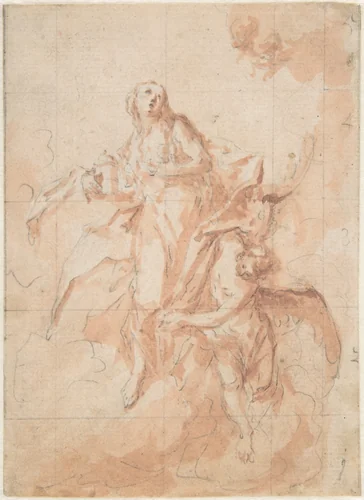
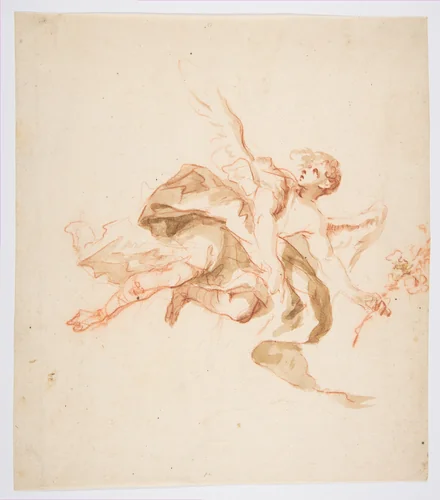
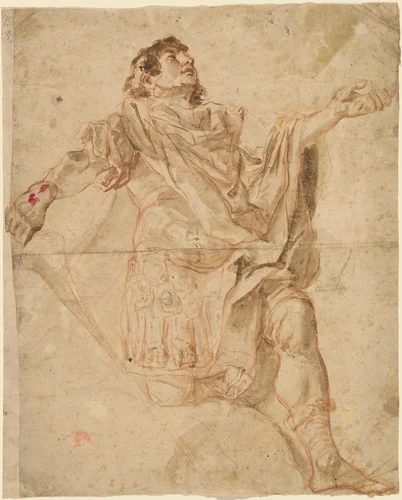
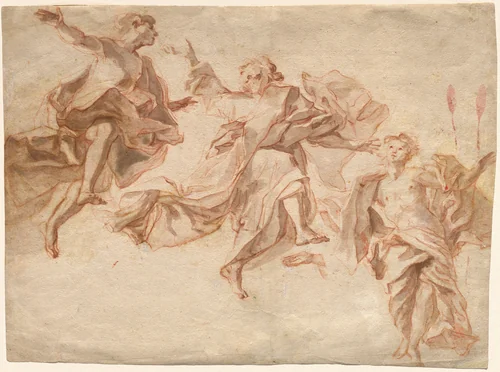
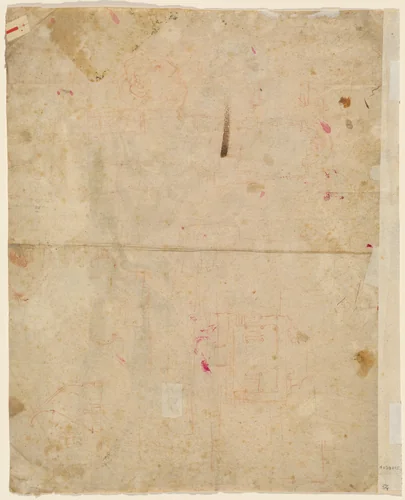
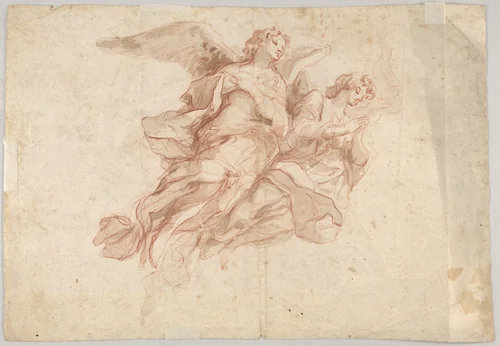
Asam’s extant drawings, such as The Assumption of the Saint Mary Magdalen and The Ascension of Christ, demonstrate his sophisticated approach to kinetic energy and divine light, essential components of his large-scale installations. The inclusion of early studies like Saint George Kneeling (recto) and the practical application sketched on the The Head of Saint George and Architectural Plans (verso), confirms his proficiency across fine art and design disciplines.
This dual mastery allowed the brothers to dominate southern German religious commissions, redefining the spatial and decorative vocabulary of the age. Their influence was profound, moving far beyond mere decoration to create total works of art (Gesamtkunstwerke). The sheer volume and quality of their collective output ensured that Cosmas Damian Asam paintings and design concepts remain cornerstones of 18th-century art history. Today, six of his drawings are held in prominent international collections, including the Metropolitan Museum of Art and the National Gallery of Art. Due to their significant age, many of the Asam Brothers' works are in the public domain, allowing institutions to provide high-quality prints and downloadable artwork to the public. Cosmas Damian Asam died in Munich, having left an indelible mark on the German Baroque landscape.
Source: Wikipedia · CC BY-SA 4.0