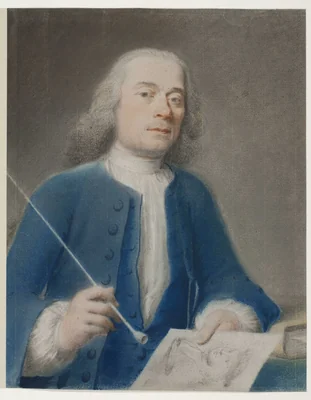
Cornelis van Noorde
Cornelis van Noorde (1731–1795) was an influential figure in the mid-eighteenth-century Dutch Republic, recognized primarily as a prolific draftsman and landscape painter. Active between 1741 and 1765, Van Noorde’s output is concentrated, yet held in major international collections, including the Rijksmuseum and the Art Institute of Chicago, testifying to the enduring museum-quality of his artistic contributions.
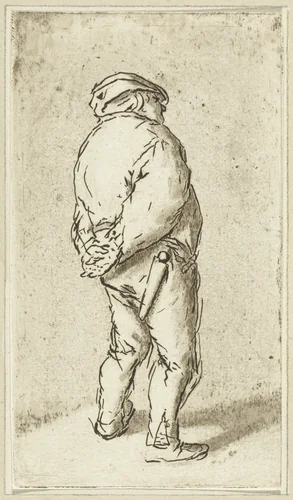
While known broadly in historical records as a painter of landscapes, Van Noorde’s most tangible legacy resides in his meticulous graphic works. His existing corpus of fourteen prints and one surviving drawing reveals a remarkable versatility, shifting deftly between formal commissions, figure studies, and scientific illustration. The subjects he tackled demanded a sharp, observational eye. Examples range from the rigorous botanical precision of Hyacint to the detailed figure study Staande man met veren op zijn hoed, which captures the social nuances and theatricality of contemporary costume.
Perhaps most illustrative of his ambition and skill were his significant portrait commissions, notably the impressive Portret van tsarina Catharina II de Grote. Producing such a politically resonant image, likely relying on secondary sources, showcases Van Noorde’s reach beyond his immediate Haarlem milieu. His methodology exemplifies the exacting approach favored by 18th-century Dutch artists, who often produced models for educational or reproductive purposes. An understated observation is that for an artist categorized as a landscape specialist, his most enduring surviving images are those that focus intently on human character or specific, market-driven scientific subjects, demonstrating a pragmatic artistic shift toward lucrative areas like illustration and portraiture.
Van Noorde’s dedication to capturing specific details positions him as a crucial chronicler of his time. Though the total known body of his work is small, the consistent quality of his execution ensures his place in the history of Dutch graphic arts. Today, his important eighteenth-century figure studies and other high-quality prints remain widely accessible, often found within digital archives where they are available as royalty-free downloadable artwork, ensuring continued scholarly study well beyond their original scope.
Source: Wikipedia · CC BY-SA 4.0