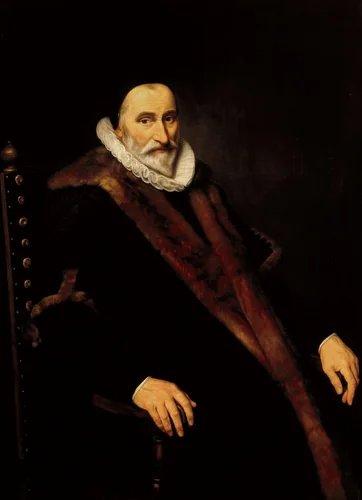
Cornelis van der Voort
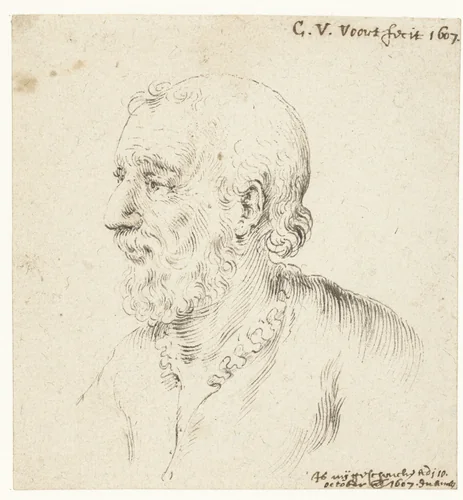
Cornelis van der Voort (c. 1576-1624) was a pivotal figure in the evolution of early 17th-century Dutch portraiture, fundamentally shaping the conventions that would characterize the Amsterdam school. Active in the city from 1607 until his death, Van der Voort’s significance was amplified by his multifaceted engagement with the art world; he was not only a highly sought-after painter but also an influential art collector, official appraiser, and dealer. This integrated role within the burgeoning market gave him a unique perspective on the demands and expectations of the rising mercantile and civic elite.
His primary artistic achievement lay in his mastery and innovation within the genre of group portraiture. Van der Voort is recognized for essentially defining the compositional standards for the regentenstuk (portraits of the governing boards of charitable institutions) and for advancing the conventions of the schuttersstuk (militia group portraits). These large-scale works, designed to commemorate collective identity and civic pride, required the delicate balance of formal grandeur with individualized likeness, a challenge he executed with skill.
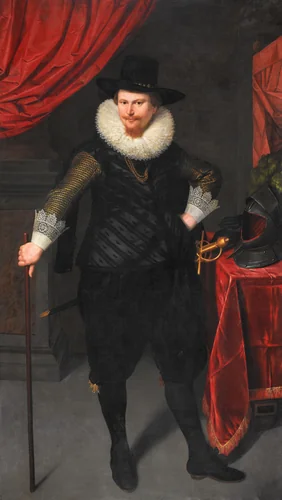
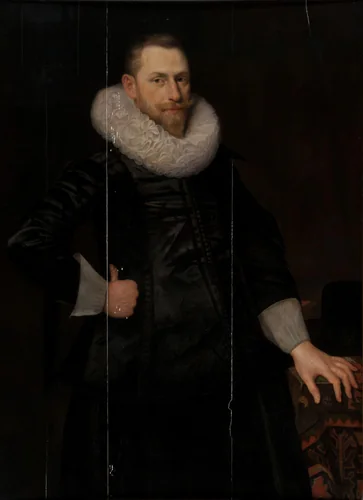
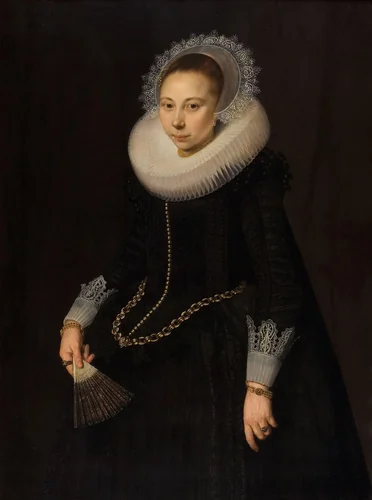
Perhaps his most profound contribution to Dutch art was the introduction of the life-size, full-length format for individual portraits. Previously, this imposing scale was reserved almost exclusively for royalty or distant aristocracy. By adopting this format for Amsterdam’s prosperous merchants, scholars, and officials, Van der Voort dramatically elevated the status of the sitters, validating their newly achieved stature in the Republic and signaling a decisive break from previous Dutch portrait traditions. Examples of Cornelis van der Voort paintings, such as the compelling Portrait of Laurens Reael, confirm his sophisticated technique and command of dignified composition.
While his active painting career spanned barely two decades, his structural innovations profoundly impacted successive generations of artists, notably those who would become masters of the civic group portrait. His influence helped cement the genre’s status as a signature form of the Dutch Golden Age. Many of his works are now housed in major institutions like the Rijksmuseum, making high-quality prints derived from his oeuvre readily accessible for scholarly study and public domain use. His reputation ensures that his foundational contribution to the portrait tradition remains fully documented.
Source: Wikipedia · CC BY-SA 4.0