Cornelis Meyssens
Cornelis Meyssens, also recorded as Cornelis Meijssens, occupies an important, transitional space within 17th-century European engraving. Active during the Baroque period, approximately 1635 to 1670, Meyssens established himself primarily as a master engraver specializing in high-detail portraiture and the creation of reproductive prints after the compositions of celebrated painters. While trained in the prolific printing hub of Antwerp, Flanders, Meyssens made the critical geographical decision to relocate permanently to Vienna, where he executed the majority of his mature work. This unusual move positioned him strategically to document the aristocratic and political elite of Central Europe, resulting in a distinct visual archive of the Hapsburg sphere. His enduring technical precision ensures his work is preserved in major collections internationally, including the Metropolitan Museum of Art and the Rijksmuseum.
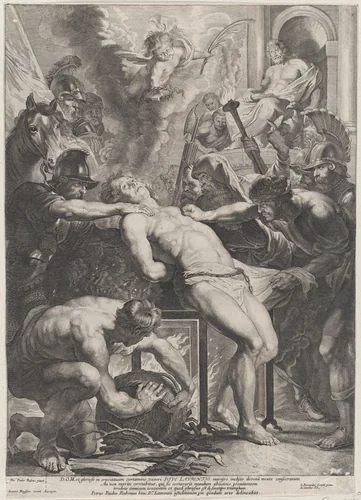
The foundational training Meyssens received in Antwerp was typical for the period, focusing on the rigorous precision necessary for reproductive work. In the absence of photographic technology, reproductive engraving was a central pillar of the art market, providing a means for influential compositions to be disseminated across vast distances. While capable of handling religious subjects, demonstrated by his detailed rendering of Saint Lawrence at the Stake, Meyssens’s primary skill lay in translating the status and psychology of sitters onto the copper plate. It is worth noting that for an artist whose reputation rested on transferring the designs of others, Meyssens developed a remarkably consistent and recognizable style, particularly in his meticulous rendering of the elaborate textiles and lace required of high-status portraiture.
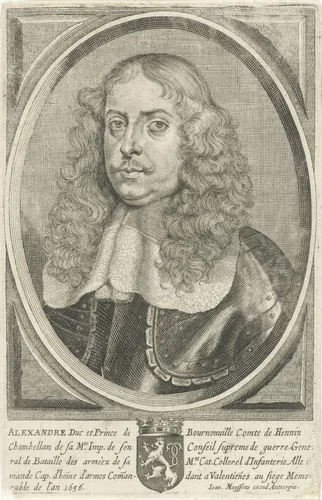
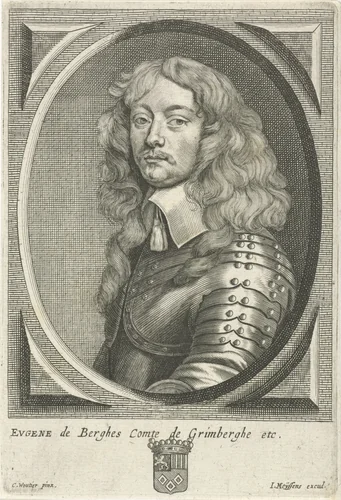
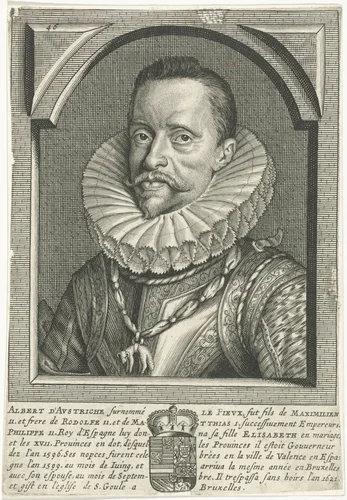
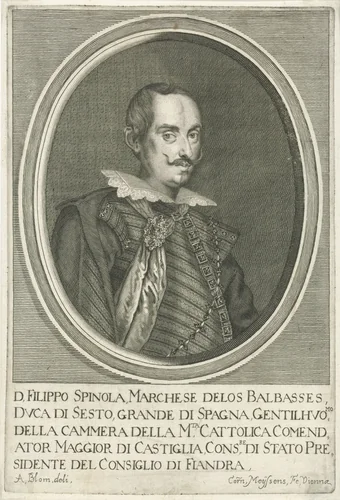
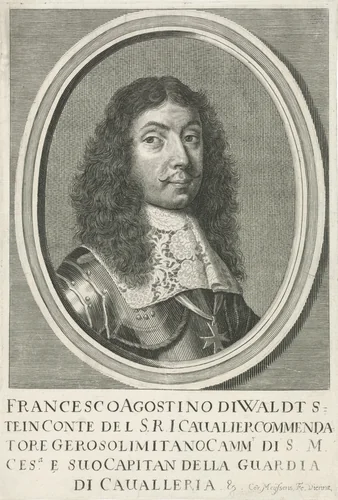
The Vienna years yielded a focused body of work that serves today as a vital visual record of imperial power. Meyssens created a comprehensive series of portraits, documenting statesmen, military leaders, and religious figures. Pieces such as the Portret van aartshertog Albrecht van Oostenrijk, the Portret van Alexander van Bournonville, and the Portret van Filippo Spinola demonstrate his sophisticated capacity to capture official likeness alongside the symbolic gravity of high office. These portraits, coupled with others like the Portret van Eugène de Berghes, confirm Meyssens’s role as an essential visual chronicler.
His dedication to producing high-quality prints means Cornelis Meyssens prints are valued highly by historians and curators today for their accuracy and detail. Recognizing the historical and artistic significance of this output, many institutions have made these historically significant images available to the public. Scholars and enthusiasts can often access his works for study or use under public domain terms, ensuring his precision continues to be widely appreciated.
Source: Wikipedia · CC BY-SA 4.0