Cornelis Ketel
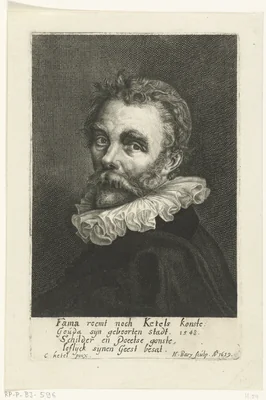
Cornelis Ketel (1548-1616) was a highly influential Dutch Mannerist painter whose career serves as a significant link between the international court styles of Elizabethan England and the burgeoning civic realism of the Dutch Golden Age. Primarily known for his portraiture, Ketel’s active periods included a productive sojourn in London from 1573 to 1581, followed by a distinguished residence in Amsterdam until his death.
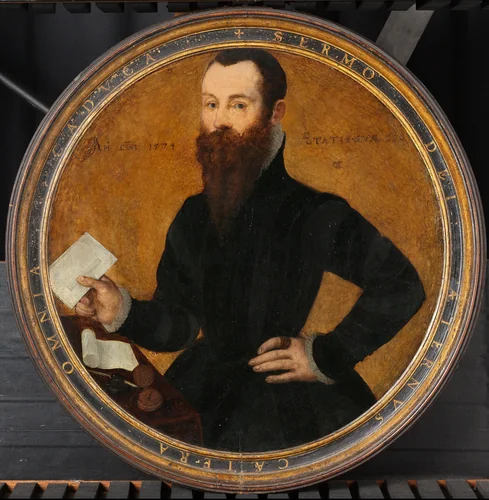
In London, Ketel established himself as a successful society artist, his work characterized by precision and the allegorical flourishes popular in the late Renaissance. This early period produced striking works such as Portrait of Adam Wachendorff, with a Putto Blowing Bubbles, which demonstrates the keen attention to texture and symbolic detail characteristic of his high-quality prints.
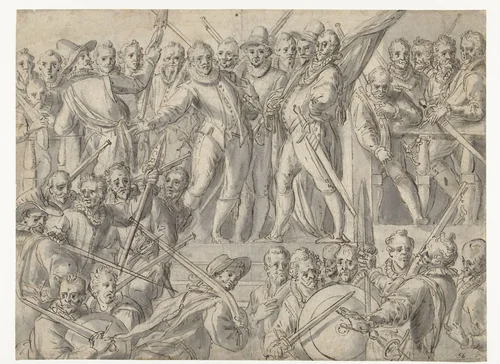
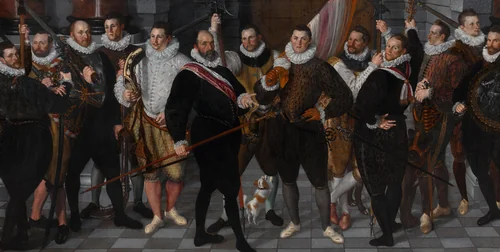
Upon his return to Amsterdam, Ketel ascended to prominence by revitalizing the format of the schuttersstuk or militia group portrait. Works such as Schutterij bestaande uit achtendertig man and The Company of Captain Dirck Jacobsz Rosecrans and Lieutenant Pauw are pivotal, moving beyond the static arrangements of previous generations. Ketel implemented compositions that captured the subjects in active, interacting groups, suggesting a narrative flow and social hierarchy that deeply resonated with the self-image of the prosperous citizenry. This innovative approach to group dynamics proved foundational for later Dutch masters.
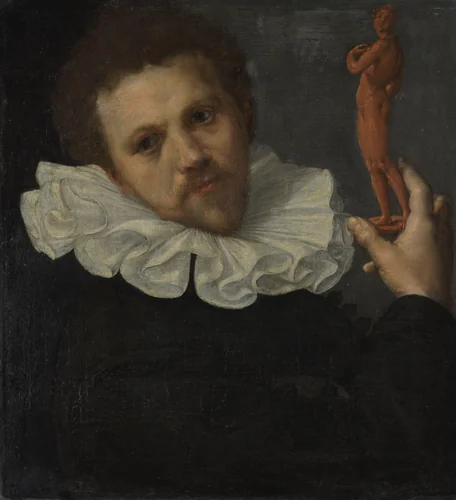
Ketel’s ambition was not confined to painting alone. A polymathic figure engaged in the intellectual currents of his time, he was recognized by his contemporaries as an accomplished poet and orator, even taking up sculpting around 1595. This dedication to multiple disciplines marks him as a truly Renaissance artist operating at the cusp of the seventeenth century.
Today, Ketel’s penetrating portraits and important civic commissions provide essential visual documentation of Dutch life during this transitional era. His most recognized Cornelis Ketel paintings, held predominantly in the Rijksmuseum, are cornerstones of the national collection. Many of these historical works have entered the public domain, ensuring that this important body of work remains widely accessible for scholars and enthusiasts.
Source: Wikipedia · CC BY-SA 4.0