Corneille de Lyon
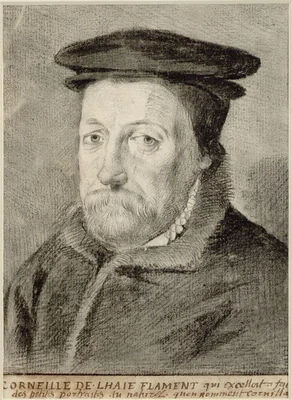
Corneille de Lyon, known originally in his native Netherlands as Corneille de La Haye, was the pre-eminent Dutch portraitist to establish a successful practice in the influential cultural hub of Lyon, France, during the mid-sixteenth century. Active from approximately 1525, but certainly established in Lyon by 1533 until his death, his style fundamentally redefined the intimate portrait format during the French Renaissance.
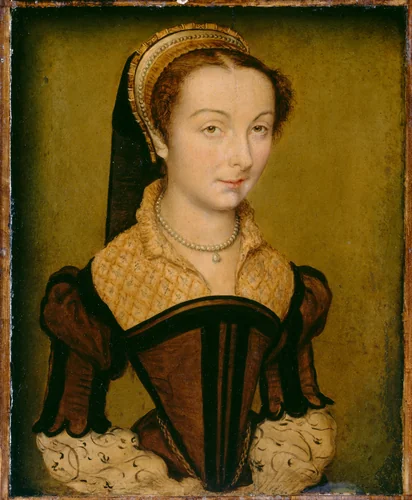
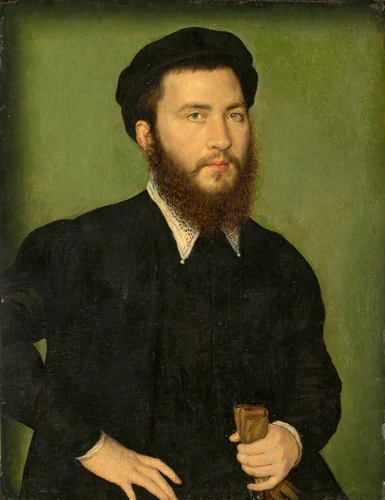
Corneille is chiefly recognized for his small-scale oil-on-panel portraits, a stark departure from the large, imposing formats favored by court painters in Paris and Fontainebleau. This innovation popularized the intimate, cabinet-sized image, allowing for greater psychological focus and accessibility. His technique relies on a precise formula: a bust-length figure positioned against a flat, often startlingly bright green or blue background. This minimalism removes distraction, focusing the viewer’s attention solely on the sitter’s face and the meticulously rendered textures of their attire.
The artistic achievement of Corneille lies in his ability to imbue these diminutive panels with profound characterization. His works, such as the compelling Portrait of a Man or the historically intriguing Portrait of a Widow, capture a sense of keen intelligence and quiet reservation in his subjects. While his surviving catalogue is modest, numbering around 15 documented examples, the concentration of psychological insight achieved within these small frames is anything but. He often captured high-ranking political figures and nobility passing through Lyon’s busy commercial circuits, including the authoritative Charles de Cossé (1506–1563), Comte de Brissac.
Today, these finely executed examples of Renaissance portraiture are preserved in major international institutions, including the Metropolitan Museum of Art and the National Gallery of Art. His distinctive style ensured that the tradition of the high-quality portrait reached beyond the official French court. As works of historical significance, many high-quality prints derived from the original Corneille de Lyon paintings are now available in the public domain, making his sharp, elegant vision accessible for contemporary appreciation and study.
Source: Wikipedia · CC BY-SA 4.0