Constantin Guys
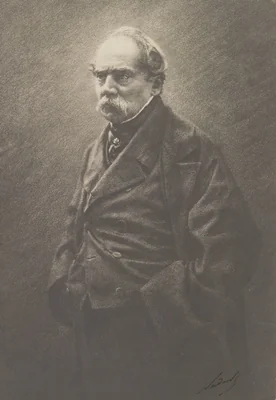
Constantin Guys (1802-1892) occupies a foundational space in the visual documentation of nineteenth-century European society. Though defined professionally as a French Crimean War correspondent and illustrator, Guys utilized drawing and watercolor with a unique journalistic rigor, translating the kinetic energy of current events and cosmopolitan life into sophisticated visual narratives. His early career as a war correspondent established the observational speed and precision that would later define his artistic style, setting him apart from studio-bound contemporaries.
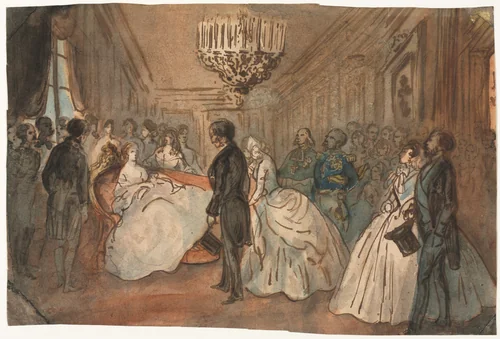
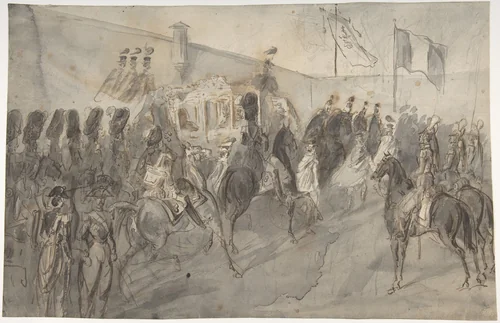
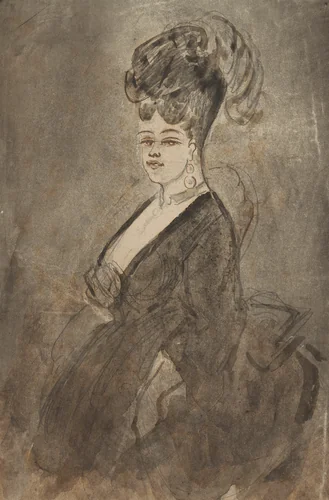
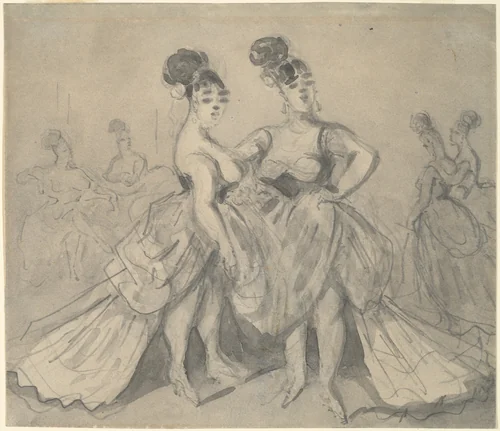
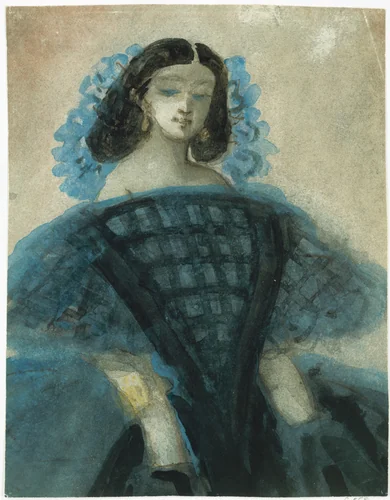
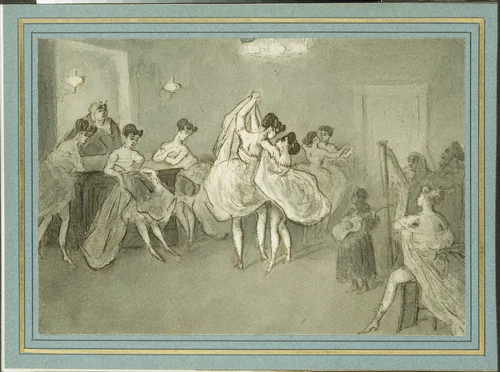
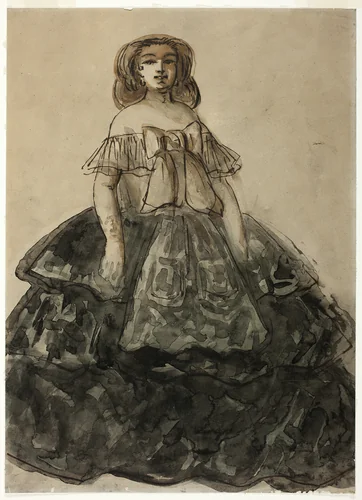
While many Constantin Guys paintings remain unknown, his prolific output of sketches and highly finished watercolors provides an unparalleled record of the flânerie and high society of the Second French Empire. He became the era’s foremost chronicler of transit, social ritual, and fashion, distilling complex scenes into economical yet detailed works. Examples such as Carriage in the Bois de Boulogne and the dynamic study At the Ball (recto) showcase his mastery of rendering movement and the texture of modern luxury. He possessed an essential talent for focusing on the ephemeral, capturing the elegance of Parisian street life in swift strokes and rich color washes.
Guys maintained a deliberately quiet distance from the formal art establishment, viewing himself as an objective eye dedicated solely to rendering the scene as it unfolded, often declining to sign his work. This dedication to anonymous observation, a rare trait among Victorian-era artists seeking fame, ensured the striking authenticity and immediacy of his vision. This unique position established him as a significant precursor to the later Impressionists, who shared his commitment to capturing modern life outside the academic tradition.
Today, his oeuvre is considered indispensable for understanding the period, with examples of his work held in major international collections including the Cleveland Museum of Art and the National Gallery of Art. Thanks to their present status in the public domain, these seminal illustrations, like A Stop in the Park, are widely accessible. Scholars and enthusiasts can find museum-quality reproductions, often available as downloadable artwork or high-quality prints, ensuring that Guys’ penetrating vision continues to define the age he chronicled.
Source: Wikipedia · CC BY-SA 4.0