Conrad Lauwers
Conrad Lauwers (Coenradus Lauwers), born in Antwerp in 1632, was a central figure in the commercial ecosystem of 17th-century Flemish graphic arts. Operating primarily as an accomplished engraver, etcher, and print seller, Lauwers’s output during his active period, notably between 1632 and 1645, was essential for the dissemination of the high-Baroque style emerging from Antwerp’s major painting studios. His mastery of the copper plate allowed him to translate the scale and dramatic flair of large oil commissions into portable, widely reproducible forms.
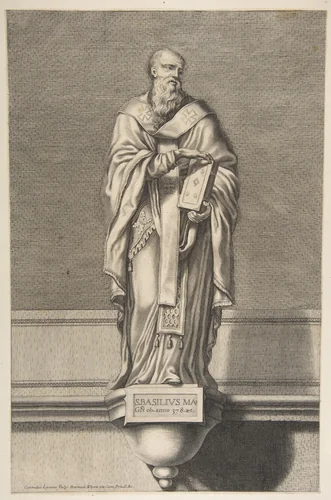
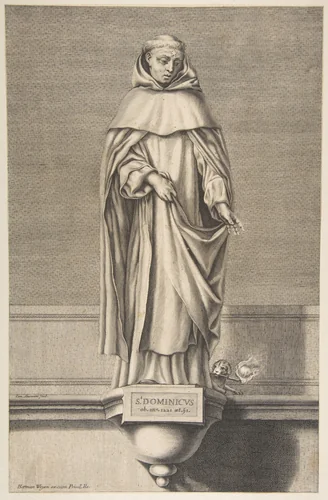
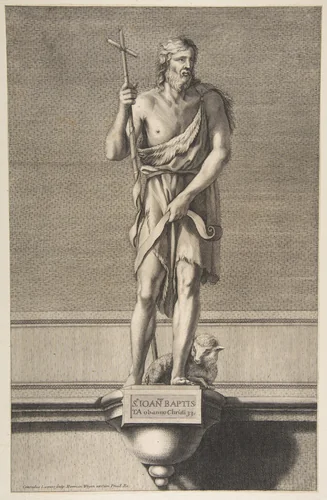
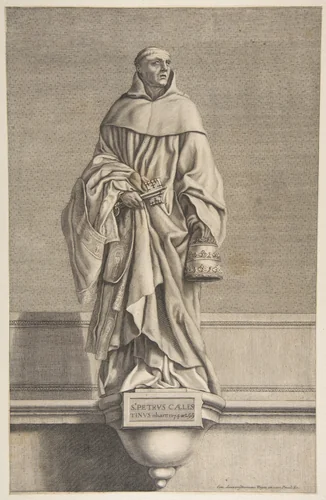
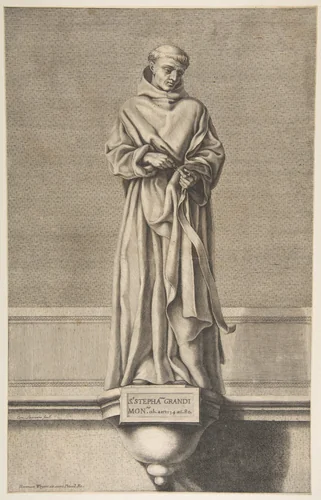
Lauwers’s specialization was firmly anchored in reproductive printmaking, a highly technical discipline that required translating brushwork and color into the precise language of line and crosshatching. This specialized labor elevated the work of leading Antwerp painters onto the global stage. His corpus features significant devotional imagery, including a compelling series focused on saints of the Church. Examples such as the detailed St. Dominic and the powerful St. John Baptist demonstrate his sensitivity to devotional intensity and monumental composition. The presence of Conrad Lauwers prints in major international repositories, including the Metropolitan Museum of Art, affirms the enduring significance and museum-quality of his contribution to graphic history.
The reproductive engraver often worked without the fame of the painter, yet their role was indispensable; the success of the Antwerp art market relied entirely on the rapid, high-fidelity production achieved by specialists like Lauwers. His print studio functioned as the technologically advanced publishing house of its era, capturing artistic trends and exporting them across Europe. While much remains unknown regarding the details of his life until his death in Antwerp in 1685, his dedication to the reproductive craft helped define a period. Today, his historical works are increasingly accessible. Many of his historically important engravings are now considered part of the public domain, offering researchers and collectors access to free art prints that continue to illuminate the visual culture of the Flemish Golden Age.
Source: Wikipedia · CC BY-SA 4.0