Claude Vignon
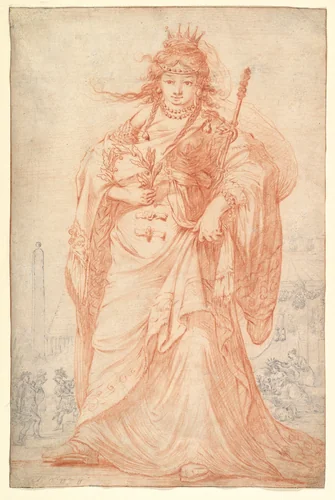
Claude Vignon (c. 1593-1623) stands as a highly versatile and prolific figure within French Baroque art, operating across the wide spectrum of painting, printmaking, and illustration. A native of Tours, his early career trajectory was profoundly shaped by an extended period of study in Italy, during which he absorbed the radical visual language of contemporary masters. Exposure to the intense emotional realism of Caravaggio and his followers, coupled with the classical refinement of the Bolognese school, notably Annibale Carracci, Guido Reni, and Guercino, provided the foundational contrasts for his future production.
Vignon’s substantial and diverse oeuvre remains strikingly difficult to categorize, resisting easy placement within a single stylistic definition. While undeniably influenced by the dramatic chiaroscuro prevalent in Rome, his mature work evolved into something distinctly personal: an expressive, often contradictory synthesis of vibrant color and theatrical lighting. His technique was characterized by a fluent application of paint that art historians have frequently described as possessing an "electric brushwork," lending a vivid, kinetic quality to his surfaces.
Vignon possessed a singular aptitude for translating the texture and material reality of his subjects, particularly excelling in the rendering of textiles, the sheen of precious stones, and the gleam of gold. This almost obsessive attention to detail ensures his figures, whether in biblical scenes like Healing the Paralytic or hagiographies such as The Martyrdom of Saint Lawrence, are often arrayed in magnificent, if somewhat overwhelming, splendor. This fascination with luxurious surface detail gives his works a notably theatrical immediacy.
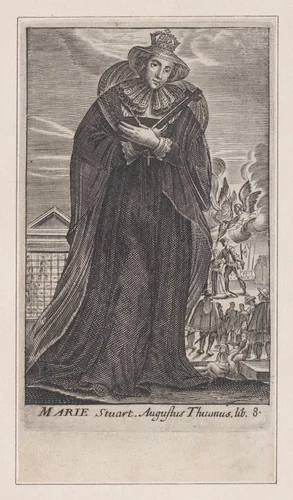
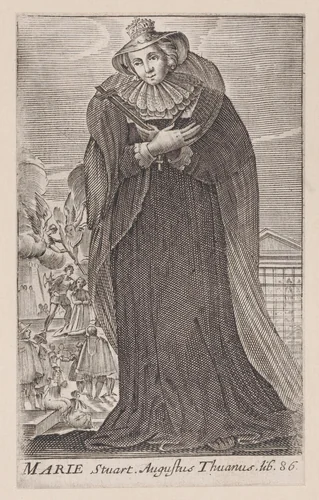
As documented by his surviving body of work, which is represented in the Metropolitan Museum of Art and the National Gallery of Art, Vignon maintained an impressive rate of output as both a painter and an etcher. His ability to translate his distinctive expressive style into detailed prints secured him a broader public platform, enabling wide distribution of his inventions. Today, his powerful compositions remain available for study in museum-quality collections worldwide. Furthermore, due to their historical longevity, many high-quality prints of Vignon’s work now reside in the public domain, offering historians and enthusiasts royalty-free access to his significant contributions to the French Baroque.
Source: Wikipedia · CC BY-SA 4.0