Claude Simpol
Claude Simpol, known also as Claude Saint-Pol or Claude Saint-Paul, was a French painter active between 1690 and 1717. Though biographical information remains scarce, his surviving body of work, comprised primarily of seven known drawings and one identified print, establishes him as a skilled practitioner working at the critical juncture between the formalized French Baroque and the nascent Rococo sensibility. His inclusion in prestigious American collections, including the National Gallery of Art, the Metropolitan Museum of Art, and the Cleveland Museum of Art, attests to the enduring significance of his quiet contributions to eighteenth-century genre painting.
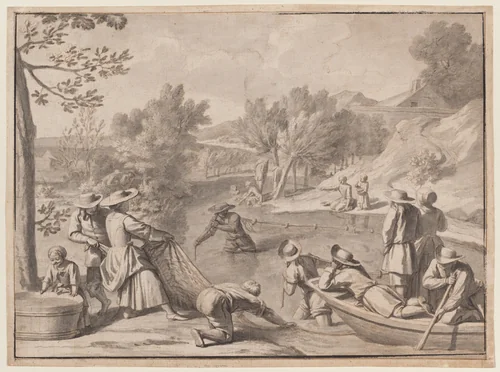
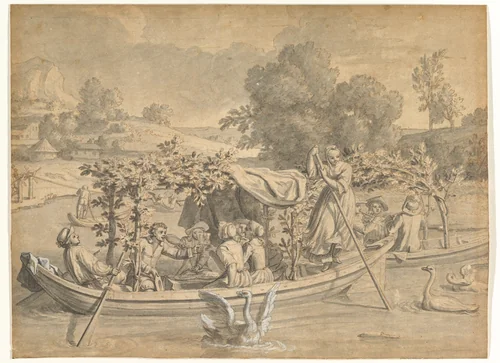
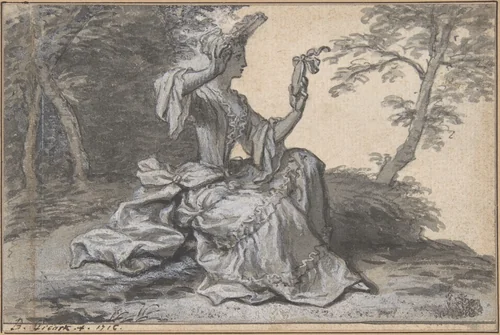
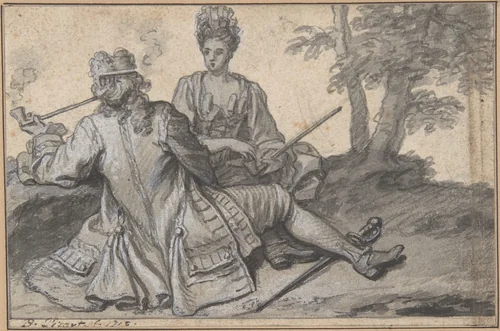
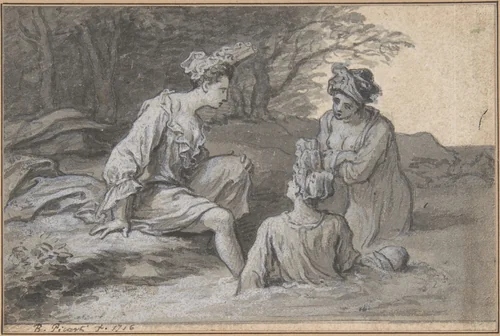
Simpol specialized in intimate scenes of daily life, demonstrating a decided preference for the pastoral and aristocratic leisure over grand historical narratives. This emphasis anticipates the rise of the celebrated fête galante genre that would dominate French painting slightly later in the century. His works focusing on the social calendar, such as August: Fishing and July: Amusements on the Water (Juillet : les Divertissements sur l’eau), capture the emerging fashion for relaxed outdoor socializing and domestic pleasure, subtly documenting the shift in aristocratic customs away from the rigid formalities of Versailles.
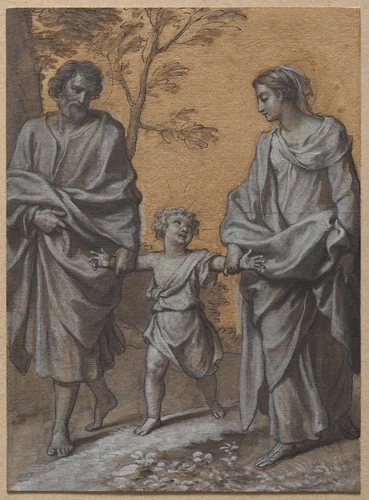
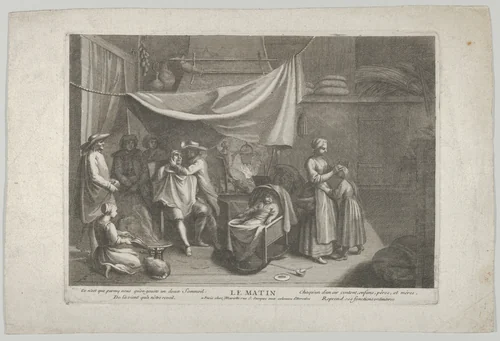
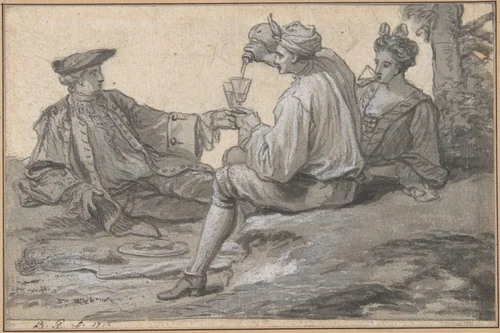
His compositions, including the detailed drawings Morning (Le Matin) and the engaging A Picnic Party, possess an observational quality that elevates them beyond mere illustration. The scenes suggest an artist keenly attuned not just to the aesthetics of leisure but also to the social dynamics unfolding within these relaxed settings. While Simpol’s training allowed him to execute traditional religious subjects, evidenced by the drawing The Return of the Holy Family from Egypt, it is his refined treatment of secular subjects that defines his legacy.
Today, many of these important drawings and Claude Simpol prints, recognized for their high artistic merit, have entered the public domain. This shift allows for the wide circulation of downloadable artwork. The resulting accessibility ensures that museum-quality reproductions and high-quality prints continue to illuminate the subtle, yet vital, social transitions that characterized the French Régence period.
Source: Wikipedia · CC BY-SA 4.0