Cigoli
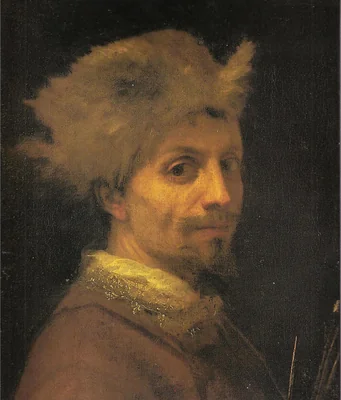
Lodovico Cardi, universally known as Cigoli (1559-1613), stands as one of the essential figures mediating the stylistic currents between the intellectual refinement of late Mannerism and the dramatic naturalism of the nascent Baroque. Trained and active in his early career in Florence, he quickly mastered the complex draughtsmanship and intellectual rigor characteristic of the Tuscan tradition before moving to Rome for the final nine years of his life.
This geographical shift was crucial in shaping his innovation. Cigoli’s work demonstrates a remarkable responsiveness to emerging visual trends, translating the Florentine emphasis on disegno into the heightened emotional immediacy and expressive power demanded by Counter-Reformation patrons in the Eternal City. He effectively established a bridge between the precision of the Florentine academic heritage and the powerful emotive force developing in Roman painting. This ability to synthesize disparate styles places him historically alongside the Carracci and Caravaggio, though with a distinctly elegant flair that remained tethered to his Tuscan roots.
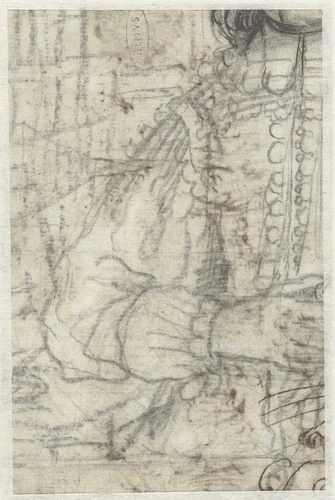
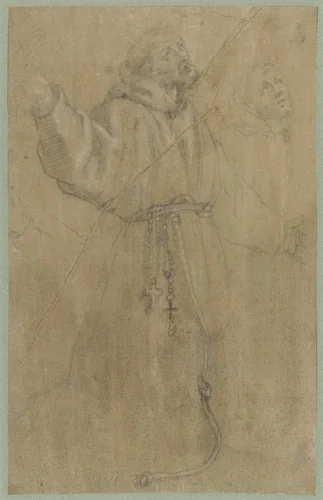
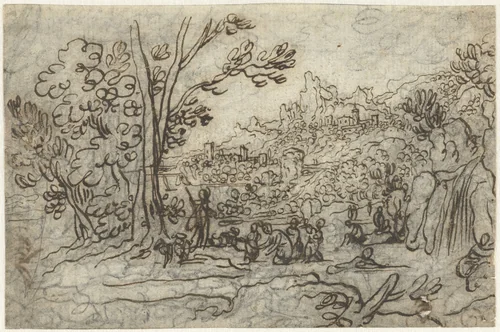
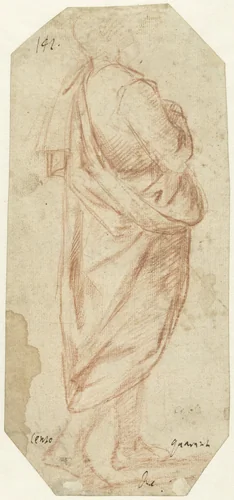
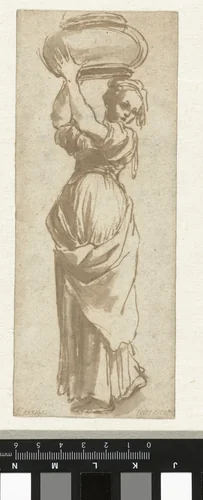
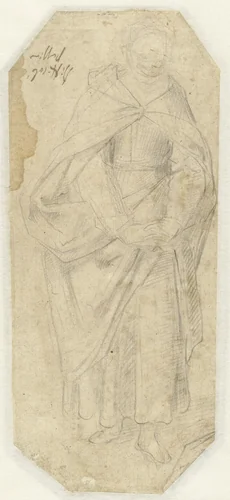
While celebrated in his lifetime for his monumental altarpieces and concurrent architectural practice, Cigoli’s enduring genius is vividly accessible in his prolific graphic output. The diversity of his approach is revealed through studies such as the precise Fragment van een voorstudie voor een mansportret and the richly dynamic religious composition Heilige Franciscus op het ogenblik van de stigmatisatie. Furthermore, his keen engagement with classicizing landscape design, evident in works like Landschap met Actaeon en Diana en haar gezellen, demonstrates a sophisticated understanding of setting that foreshadowed later Baroque landscape traditions.
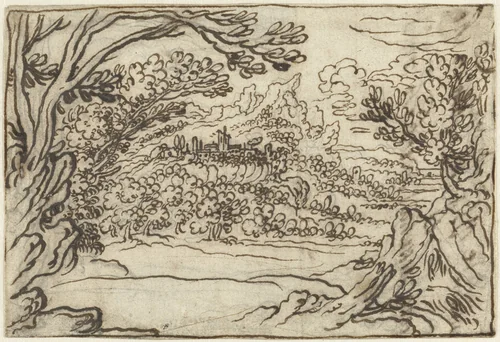
Examining drawings like Lopende jongeling met wijde mantel or Landschap met vergezicht naar een vestingstadje op een bergplateau, one observes a master capable of immense technical command, yet who never fully relinquished the formal discipline of Florence. This subtle, intellectual reserve, applied even to his most passionately depicted subjects, lends his figures a uniquely attractive seriousness. This precision secures his place in the history of drawing. Though few Cigoli paintings survive in pristine condition, the meticulous detail of his preparatory work remains perfectly preserved, providing museum-quality access to his process. Today, many of these graphic works are available through the public domain, enabling researchers and enthusiasts to study high-quality prints documenting this pivotal transitional moment in European art.
Source: Wikipedia · CC BY-SA 4.0