Christopher Nevinson
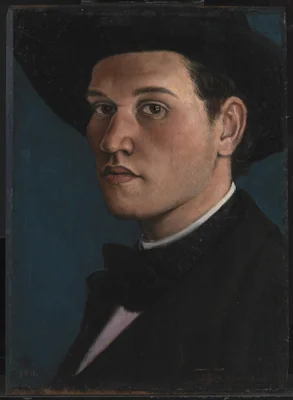
Christopher Richard Wynne Nevinson (1889-1946), known often by his initials, C. R. W. Nevinson, secured his place in the history of modern British art as one of the preeminent figures of the First World War. A versatile artist, he worked successfully across painting, etching, and lithography, translating the overwhelming force of mechanized conflict and modern city life into a compelling visual language.
Nevinson’s early artistic development was fundamentally shaped by exposure to avant-garde movements in London and Paris. He rapidly adopted and adapted the fractured viewpoints of Cubism and, most crucially, the velocity and angularity of Futurism and Vorticism. This grounding allowed him to move beyond traditional representation and create images that captured the noise, speed, and geometric brutality of the contemporary world.
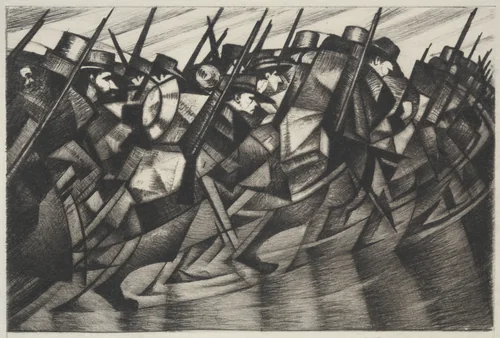
His tenure as an official war artist provided the crucible for his most famous output. Works such as the lithograph Returning to the Trenches display a profound synthesis of modernist technique with observational rigor, creating stark, graphic narratives that spoke directly to the dehumanizing efficiency of industrialized warfare. The impact of these powerful images ensured that Christopher Nevinson paintings and prints achieved rapid and lasting notoriety.
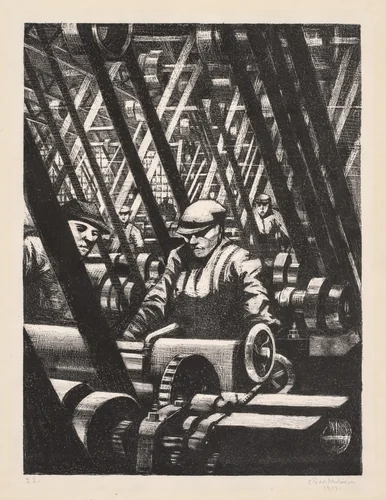
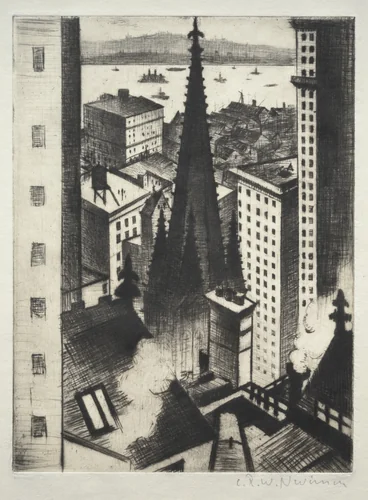
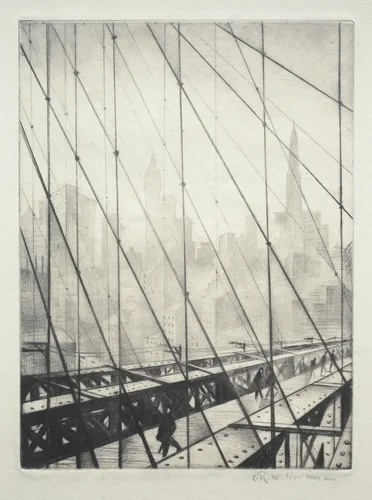
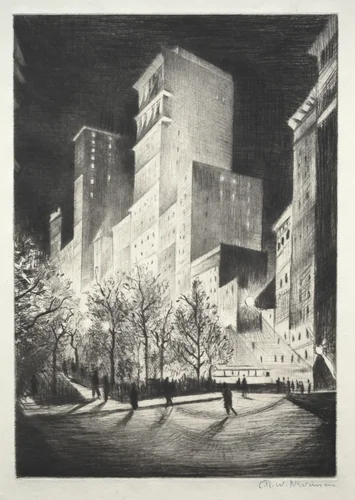
Following the armistice, Nevinson channeled his fascination with dynamism into depicting the energy of the modern metropolis, a significant departure from his earlier figure and landscape subjects. He brought the same rigorous, angular structure to his transatlantic work, exemplified by the dramatic perspectives in Temple of New York and Looking through Brooklyn Bridge. He was equally adept at capturing the focused industry of the home front, as seen in Building Aircraft: Making the Engine, which emphasizes the aesthetic potential of industrial power.
While known to his family as Richard, the artist consistently used his formal, arresting name throughout his career, perhaps recognizing that Christopher Nevinson prints commanded an authority fitting his subject matter. Works from his prolific output, including high-quality prints held in major institutions like the Cleveland Museum of Art, remain essential references for understanding the visual lexicon of early twentieth-century modernity.
Source: Wikipedia · CC BY-SA 4.0