Christophe Huet
Christophe Huet, a French painter, engraver, and designer active during the mid-eighteenth century, holds a distinct, if specialized, place within the development of the Rococo style. Operating during the height of Louis XV’s reign, Huet was known primarily for his genre and pastoral scenes involving animals. His aesthetic approach reflects the graceful frivolity and light touch popularized by contemporaries, most notably François Boucher, whose influence shaped much of Huet’s sensibility and palette. Huet specialized in translating courtly sensibilities into accessible, often highly humorous visual narratives suitable for high-end decorative schemes.
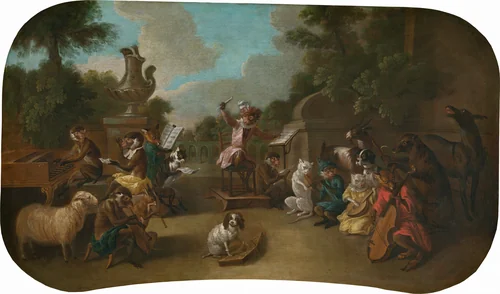
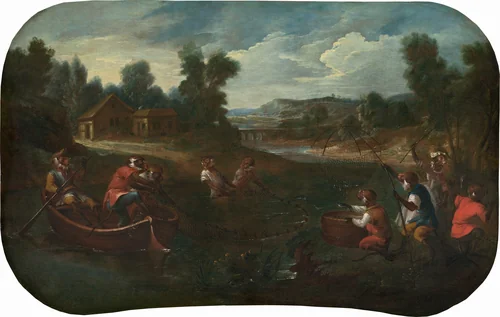
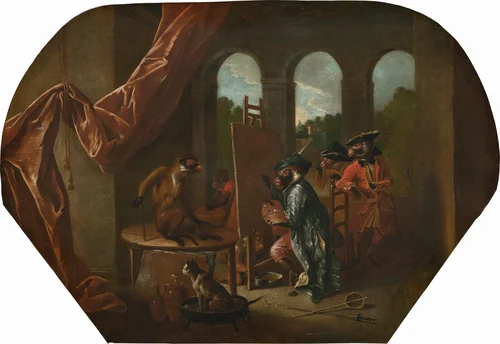
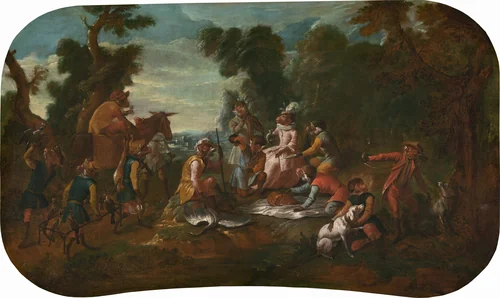
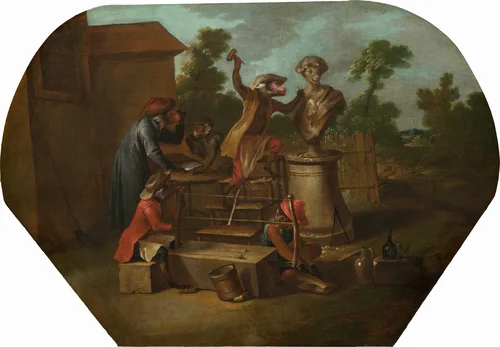
Huet’s enduring fame rests almost entirely upon his masterful execution of singerie subjects, a fantastical motif that achieved wide popularity across French decorative arts. This highly theatrical style involves depicting monkeys enacting complex human activities, often mimicking the mannerisms and elaborate dress of the aristocracy. The known set of five surviving paintings, all featuring this theme, include Singerie: The Concert and Singerie: The Painter. They illustrate Huet’s sophisticated ability to transpose human folly and high-society manners onto simian players.
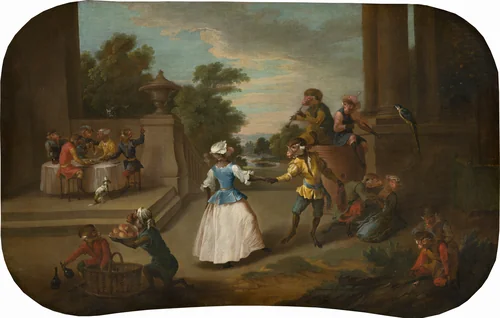
There is a delicious irony in observing these finely dressed primates engaging in activities such as Singerie: The Dance or Singerie: The Picnic; Huet uses this whimsical device not just for visual entertainment but as a gentle satire of the era's elaborate rituals. These Christophe Huet paintings cemented his reputation as a unique observer of societal behavior.
Although his known active period spanned a concise decade, from approximately 1739 to 1750, Huet’s carefully rendered output remains highly valued by institutions. Key works, alongside a singular drawing known to be in the public domain, are held in prestigious venues such as the National Gallery of Art and the Cleveland Museum of Art. His delicate, witty contribution to the Rococo decorative arts ensures continued interest. Today, his charming compositions are frequently sought out as downloadable artwork, allowing collectors and historians to study his high-quality prints directly.