Christoph Nathe
Christoph Nathe (1753-1808) was a distinguished German miniaturist, watercolorist, and etcher whose concise body of work illuminates the transition from Rococo draughtsmanship to the objective naturalism of the late eighteenth century. Active for over five decades, Nathe primarily dedicated himself to small-scale landscape studies and topographical documentation. His technical mastery, especially in rendering intricate natural details, has secured his position in major international collections, including the Rijksmuseum, the Metropolitan Museum of Art, and the National Gallery of Art, attesting to his enduring museum-quality reputation.
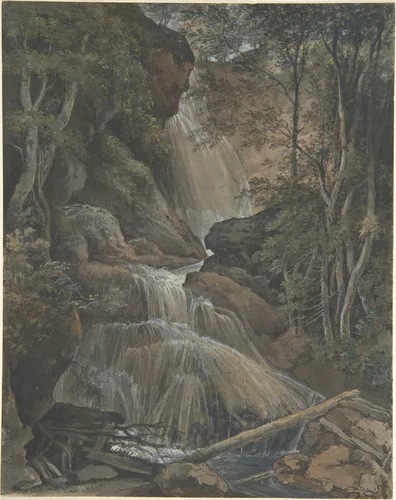
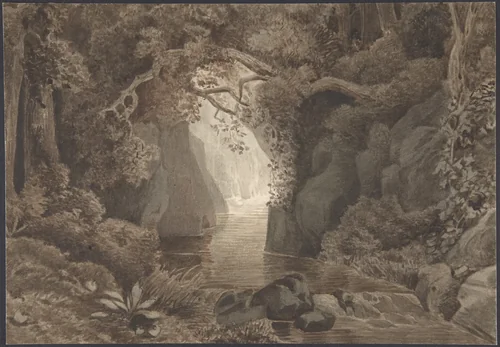
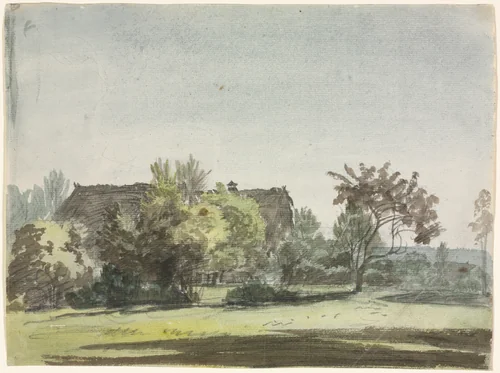
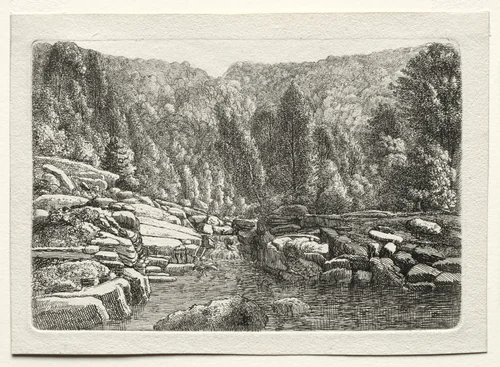
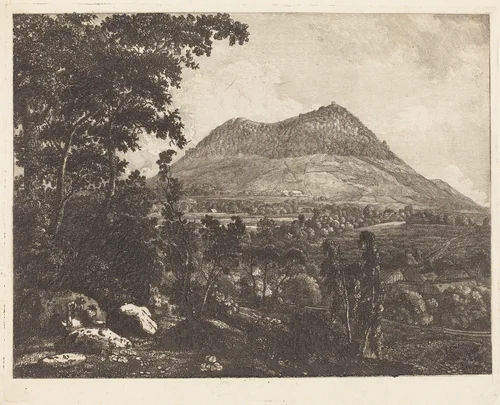
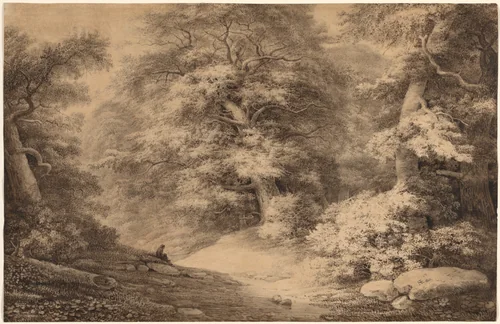
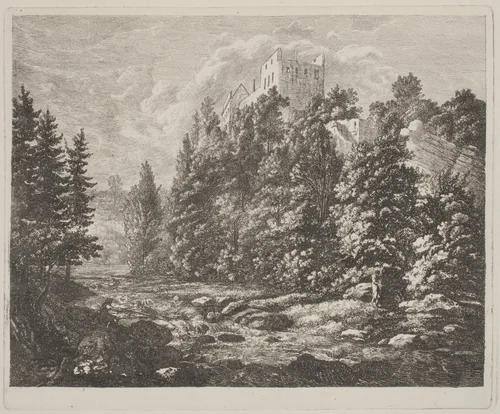
Nathe excelled in media that demanded precision and immediacy: etching and watercolor. Unlike contemporaries who often used drawing purely for preparatory sketches, Nathe elevated these media to finished art forms. His surviving graphic output, including five prints and seven drawings, showcases an intimate understanding of composition and atmospheric perspective. These works frequently focused on localized scenes of the German countryside, documenting rural structures and specific geological features with almost scientific dedication. Works such as A Waterfall in a Forest at Langhennersdorf and Wooded Landscape with a Creek reveal a consistent effort to capture light and texture without sacrificing the clarity of the line.
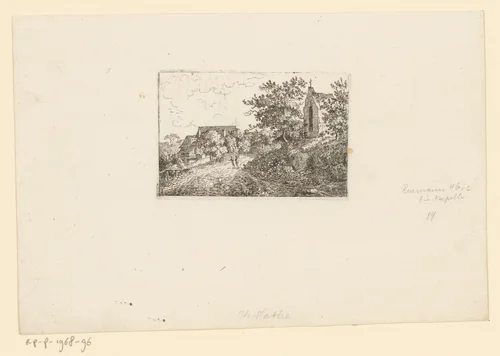
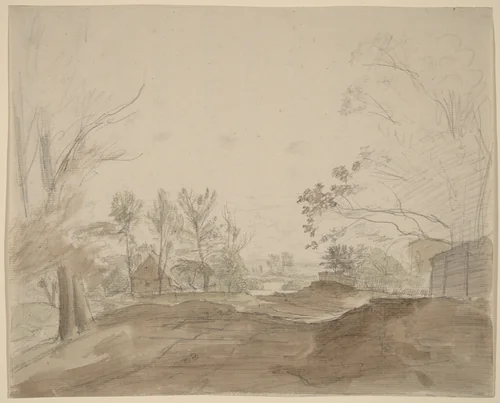
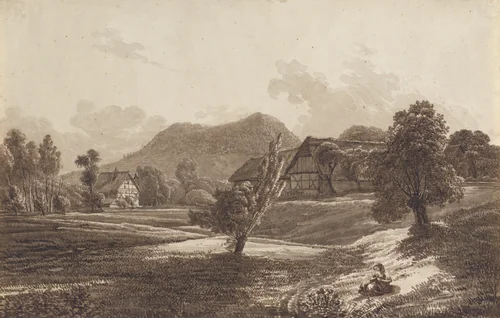
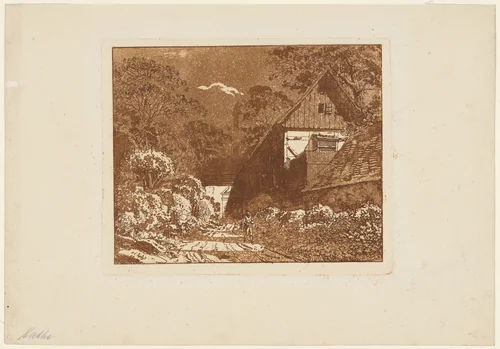
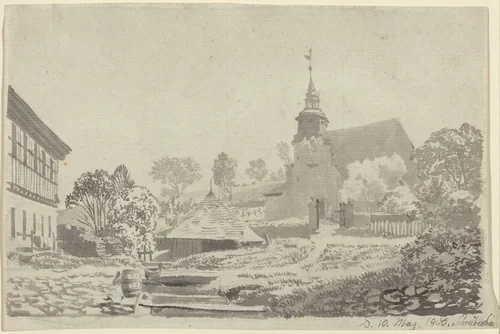
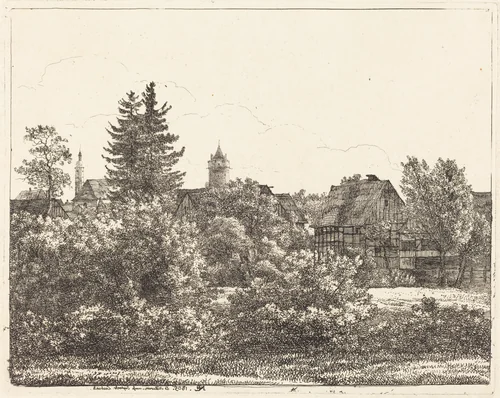
The aesthetic of Nathe is marked by a quiet diligence that often precluded the dramatic sublime favored by some later Romantic painters. One might observe that Nathe rarely risked an earthquake in his compositions, preferring instead the dependable charm of the provincial German countryside. His careful documentation of daily life, seen in pieces like A Road through a Country Village and Farmhouse behind Trees, provides valuable insight into the visual culture of his era, focusing on the intimate experience of walking through the landscape rather than heroic, monumental views.
Nathe’s legacy rests on his refined contributions to graphic arts. Due to the historical period of his output and subsequent institutional acquisitions, much of his work, including original Christoph Nathe prints, now resides within the public domain. This shift has ensured greater accessibility, enabling collectors and scholars worldwide to study the artist’s oeuvre. Consequently, high-quality prints and downloadable artwork derived from Nathe's originals continue to affirm his role as a meticulous observer and chronicler of the late European Enlightenment landscape.
Source: Wikipedia · CC BY-SA 4.0