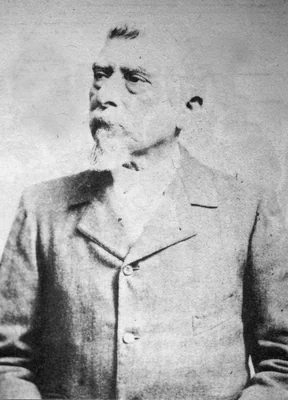
Christiano Junior
Christiano Junior, active during the mid-1860s, holds a distinct position among the early documentarians of 19th-century Brazilian urban life. Though his known output is small—comprising eight surviving photographic studies, prominently featured in institutional collections such as the Metropolitan Museum of Art—his work offers an indispensable, granular view of the social strata and occupational types of the period, particularly in Rio de Janeiro.
Junior utilized the formal constraints of the studio setting to confer a sense of monumentality upon subjects often ignored by high society portraiture. His carefully composed studies focus predominantly on street vendors, treating their working tools and merchandise as essential attributes of identity. Works like Studio Portrait: Female and Male Street Vendors with Baskets on Head, Brazil and Studio Portrait: Seated Woman and Standing Boy Street Vendors with Vegetable Baskets, Brazil function simultaneously as ethnographic records and powerful, high-quality prints of everyday realism. Each image catalogs specialized laborers—the carriers, the sellers, the itinerant professionals—who formed the essential infrastructure of the burgeoning urban economy.
The photographer achieved striking sobriety by avoiding the overt sentimentalism common in genre scenes of the era. Instead, his subjects are presented directly and without adornment, often posed in profile or frontally, emphasizing their physical presence and economic function. This unflinching focus sometimes extended beyond labor documentation to difficult physical realities, evidenced by the compelling, clinical study Studio Portrait: Man Standing with Swollen Leg and Foot Caused by Elephantiasis, Brazil. It is an unusual, singular portrait that transcends typical commercial expectations for documentation, forcing the viewer to confront the chronic illness and hardship endured by the urban poor.
Junior’s limited but potent body of work remains crucial for understanding the visual history of the Second Empire. The enduring clarity and detail of his compositions ensure that these historical artifacts meet contemporary standards for museum-quality viewing. Due to the diligent efforts of modern archivists, these photographs are increasingly available in the public domain, securing Christiano Junior’s legacy as a pivotal early chronicler of working-class Brazilian life.
Source: Wikipedia · CC BY-SA 4.0
![[Studio Portrait: Female and Male Street Vendors with Baskets on Head, Brazil] by Christiano Junior, photograph, 1864-1866](https://img.artbee.org/34deed24-d17e-4df3-9601-8db2750dd266/small.webp)
![[Studio Portrait: Male Street Vendor Standing in Profile Holding Basket, Brazil] by Christiano Junior, photograph, 1864-1866](https://img.artbee.org/39c52c59-84bd-4b12-875a-19f69cf189b5/small.webp)
![[Studio Portrait: Male Street Vendor with Barrel on Head, Brazil] by Christiano Junior, photograph, 1864-1866](https://img.artbee.org/0bad24f0-03c4-4683-9e3f-625e39f9b20d/small.webp)
![[Studio Portrait: Man Standing with Swollen Leg and Foot Caused by Elephantiasis, Brazil] by Christiano Junior, photograph, 1864-1866](https://img.artbee.org/37eca136-ce35-464a-90b3-d0e8e6f45c22/small.webp)
![[Studio Portrait: Seated Woman and Standing Boy Street Vendors with Vegetable Baskets, Brazil] by Christiano Junior, photograph, 1864](https://img.artbee.org/72624843-ee58-4a61-b612-425b1eadaf43/small.webp)
![[Studio Portrait: Two Male Street Vendors in Profile with Baskets, Brazil] by Christiano Junior, photograph, 1864-1866](https://img.artbee.org/28988400-d273-4579-96e8-5f08281cae95/small.webp)
![[Studio Portrait: Two Male Street Vendors in Profile, one Seated one Standing, Shaking Hands, Brazil] by Christiano Junior, photograph, 1864-1866](https://img.artbee.org/618e3c3f-963c-48de-82be-c3c33d6e4866/small.webp)
![[Studio Portrait: Woman Standing Wearing Shawl, Brazil] by Christiano Junior, photograph, 1864-1866](https://img.artbee.org/2ecdb861-fe09-423e-a821-ac0f6369c3e3/small.webp)