Christian Gottlieb Geyser
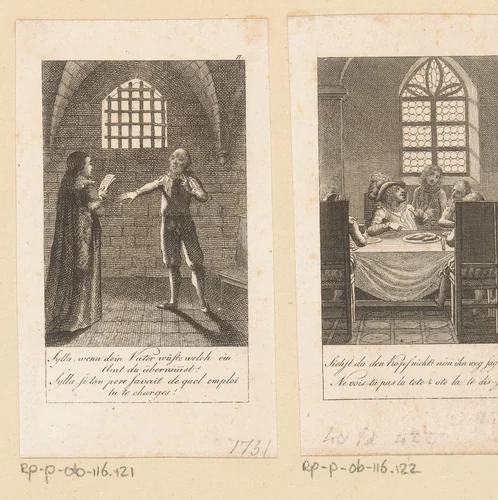
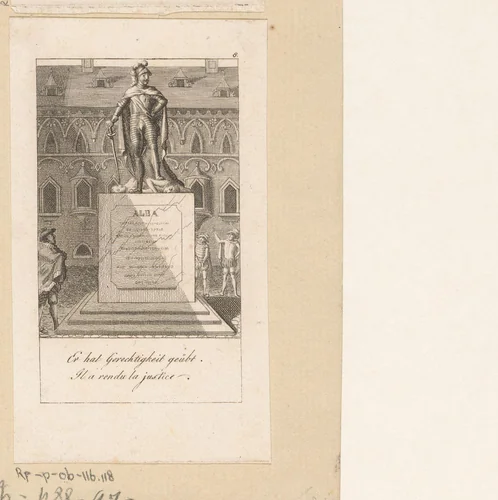
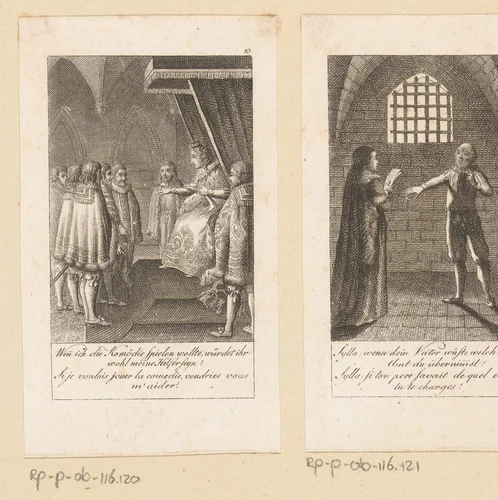
Christian Gottlieb Geyser established himself as a versatile and prolific German artist during the second half of the 18th century, mastering both painting and, more critically for his historical recognition, copper engraving. Active from 1752 to 1796, Geyser’s meticulous output secured his position within the European graphic arts tradition, leading to his representation in major international collections, including the Rijksmuseum and the National Gallery of Art, attesting to the museum-quality status of his work.
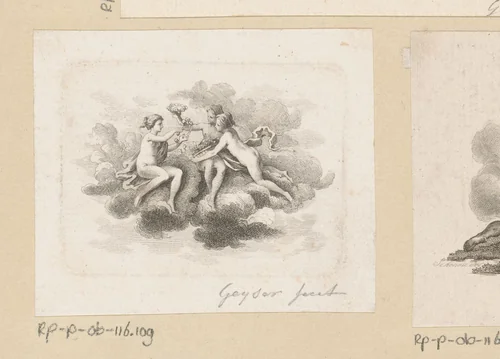
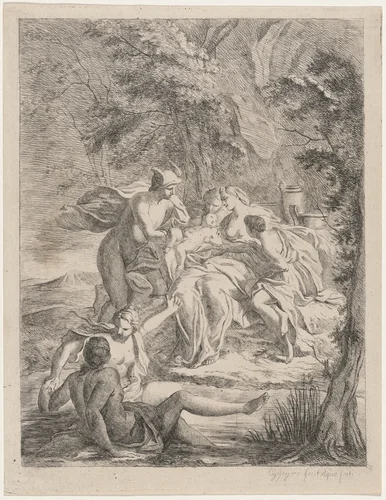
Geyser’s graphic oeuvre reflects the intellectual currents of the late Enlightenment, blending detailed mythological scenes with insightful portraiture of contemporary thinkers. His technical proficiency allowed him to translate complex classical compositions into the medium of print with clarity and light precision, as evidenced by works like Hermes Bringing the Infant Dionysus to the Nymphs. Equally representative of his technical grace are allegorical pieces such as Drie gratiën maken rozenkransen in de wolken, which display the nuanced draftsmanship characteristic of the neoclassical style prevalent in Dresden and Leipzig.
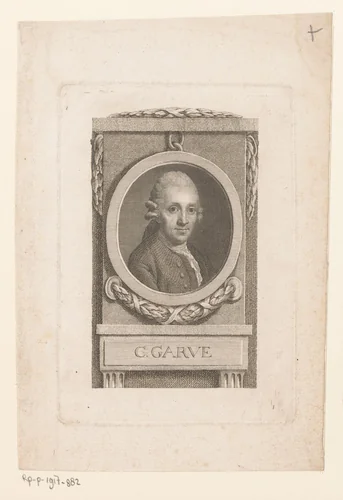
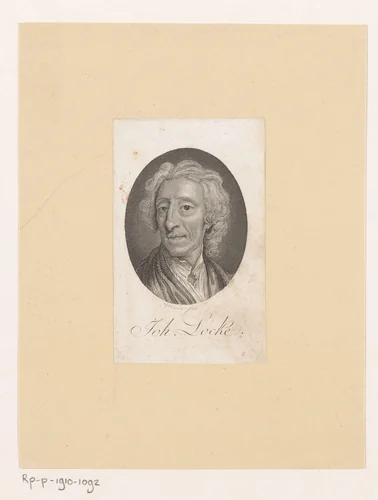
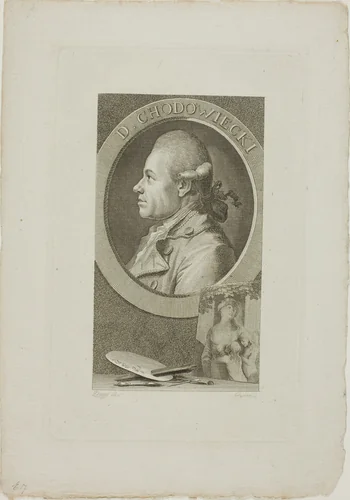
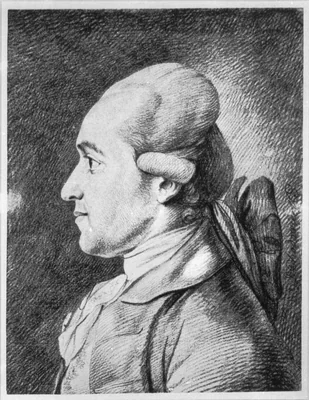
Perhaps Geyser's most enduring contribution was his pivotal role in disseminating intellectual ideas through the accessible format of the print. By engraving iconic likenesses of leading philosophers and fellow artists, he broadened the reach of these influential figures far beyond their immediate circles. His portraiture captures the solemnity and critical gaze of the Enlightenment, notably in his rendition of Portret van John Locke and the sharply defined Portret van Christian Garve. Moreover, his Portrait of Daniel Chodowiecki signals his stature within the German art community, where he was highly regarded by his peers. Geyser, in an interesting divergence from the primary portraitists of his age, appears to have specialized in immortalizing those intellectual figures whose critical thought was often slightly ahead of their official social standing, ensuring they received the visual recognition their intellect demanded.
The four-decade consistency of Christian Gottlieb Geyser prints ensures that his work provides essential visual documentation of 18th-century German culture. Due to the era of their creation and their wide publication, many of these images are now firmly in the public domain, making high-quality prints and downloadable artwork readily available for contemporary study and appreciation.
Source: Wikipedia · CC BY-SA 4.0