Chōkōsai Eishō
Chōkōsai Eishō was a distinguished Japanese ukiyo-e master active primarily during the late 18th century, a period often considered the zenith of woodblock printmaking in Edo (Tokyo). Operating under the secondary name Shōeidō (昌栄堂), Eishō established his reputation almost exclusively through the specialized genre of bijinga, or pictures of beautiful women. His output, though concentrated in a relatively short period compared to the lengthy 1615-1800 span sometimes associated with his career, reflects the sophisticated aesthetic preferences of the Kansei era.
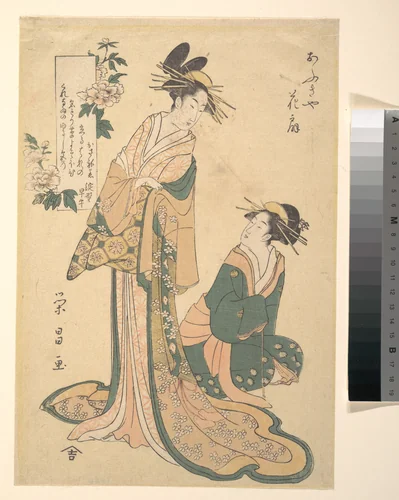
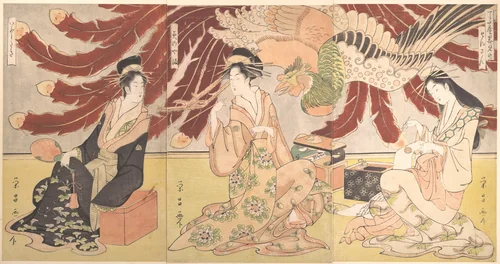
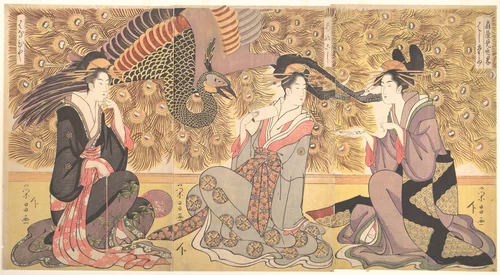
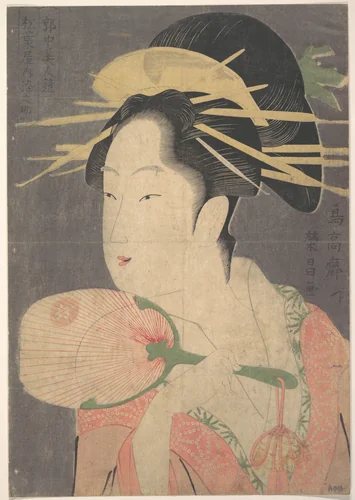
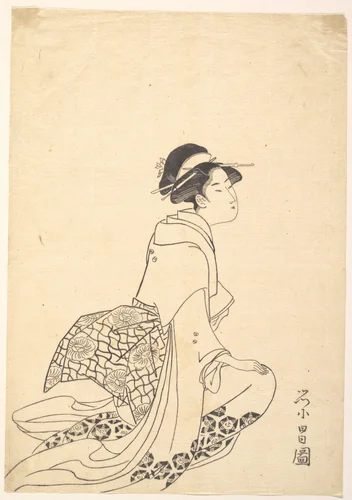
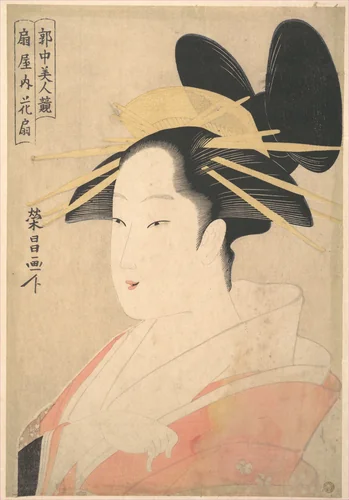
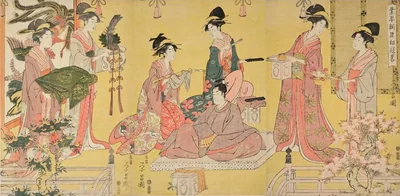
Eishō excelled in depicting the high-status courtesans and geisha of the licensed pleasure quarters, particularly the Yoshiwara district. Unlike artists who focused merely on generic ideals of beauty, Eishō was keen on capturing the specificity and identity of his subjects, often naming the establishments they belonged to. Works such as The Chōjiya Pleasure House by Day (Chōjiya hiru-mise) and Interior of the House called Ōgiya showcase his command of architectural perspective and interior detail, providing invaluable glimpses into the exclusive world of the ōkiya or high-class houses. His compositions are often characterized by subtle coloration and strong, elegant outlines that emphasize the elaborate hairstyles and intricate patterns of the women's kimono.
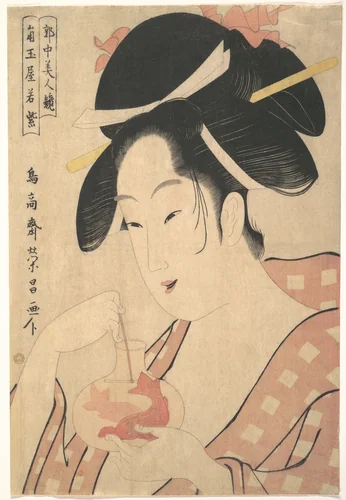
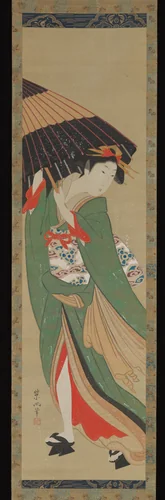
His notable works, including Courtesan and Her Maid and the portrait Wakamurasaki of the Kadotamaya, demonstrate a mastery rivaling his famous contemporaries, though his recognized output remains surprisingly small: seven documented prints and one surviving Chōkōsai Eishō painting. Observing his meticulous rendering of inner chambers, one senses not just an artist but perhaps a surprisingly attentive sociologist documenting the rigid hierarchy and ritualized glamour of the Floating World.
This small but museum-quality body of work is preserved today in major collections, including the Metropolitan Museum of Art. The public demand for access to these important historical records has led to the digitization of his output; consequently, high-quality prints of his work are increasingly available in the public domain, cementing Chōkōsai Eishō’s status as a refined interpreter of the late Edo period style.
Source: Wikipedia · CC BY-SA 4.0