Chokosai Eisho
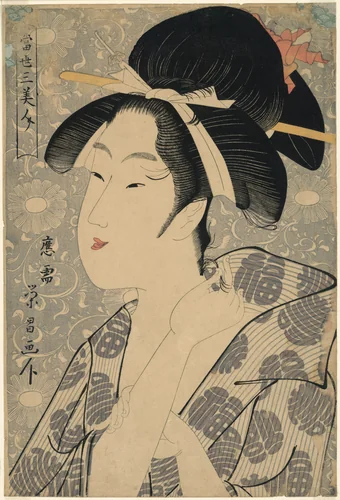
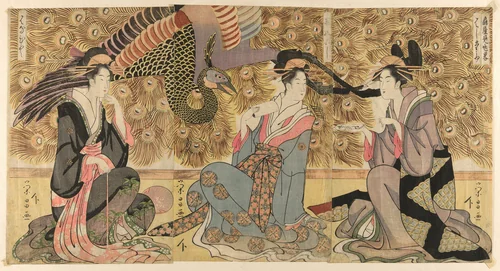
Chōkōsai Eishō was a prominent Japanese ukiyo-e artist who flourished during the late 18th century, a period often recognized as the zenith of woodblock printing in Edo (Tokyo). Active primarily between 1775 and 1792, Eishō established a strong reputation for bijinga, the genre dedicated to depictions of beautiful women, often drawn from the fashionable world of the licensed pleasure quarters. He operated professionally under the studio name Shōeidō, marking his position within the competitive artistic landscape of the era.
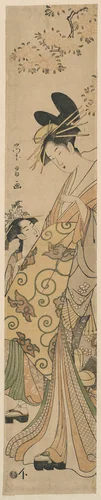
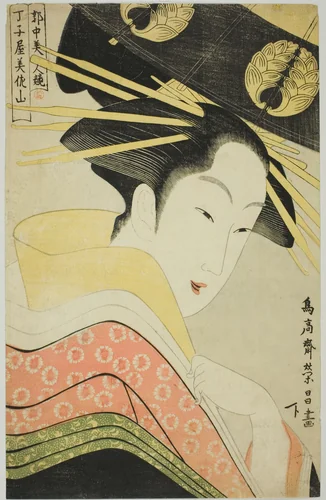
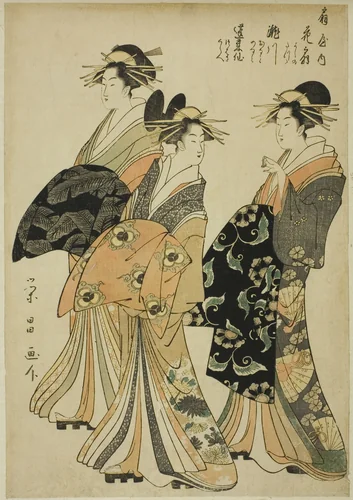
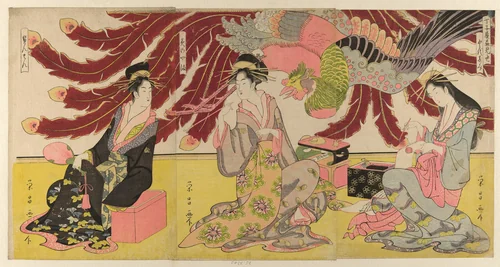
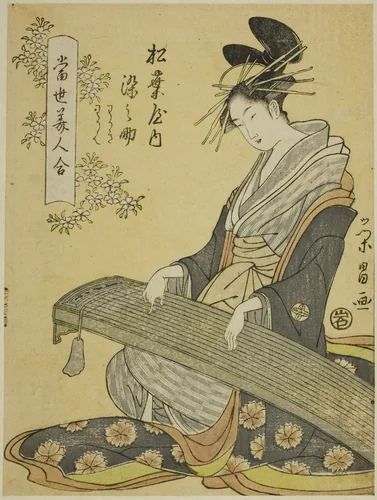
Eishō’s contributions bridged the significant stylistic conventions that defined the era, moving away from the reserved beauty standards of the earlier Harunobu school toward the dramatic, often elongated figures popularized by his contemporary, Kitagawa Utamaro. He specialized in depicting his subjects with this heightened elegance of form, transitioning the ideal aesthetic toward sophisticated, statuesque grace. This style is evident in iconic pieces such as Courtesan and her Attendant under Cherry Tree, where the figures possess a commanding presence and intricate detail.
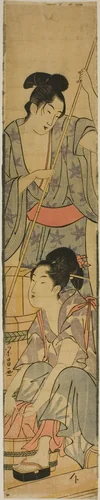
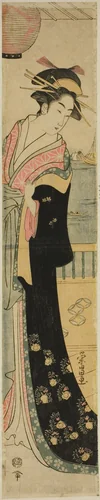
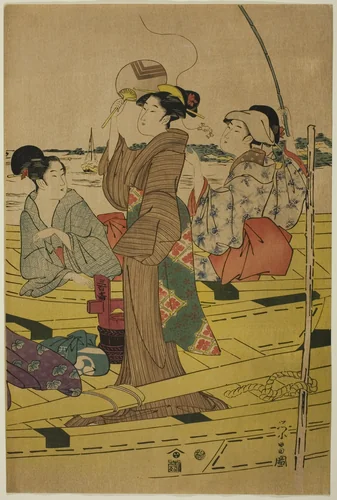
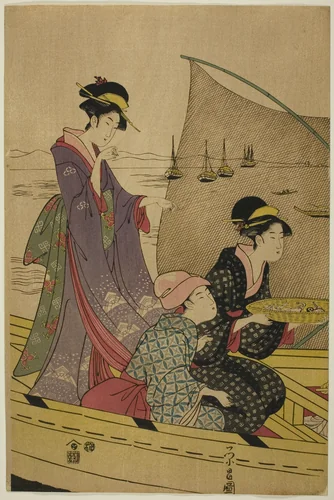
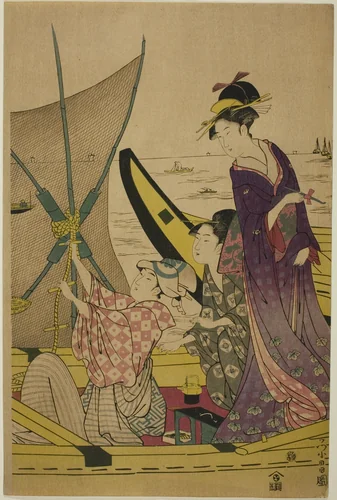
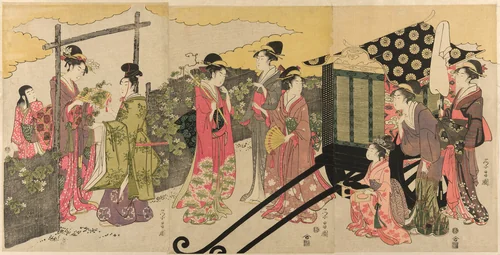
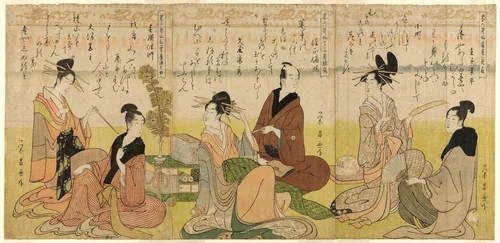
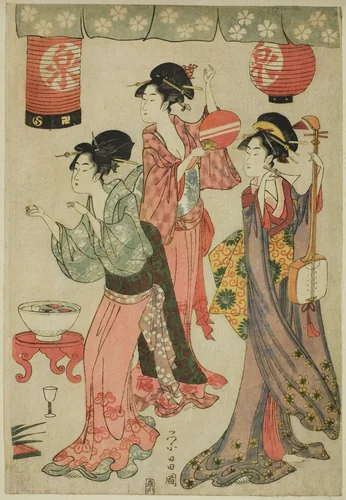
His surviving body of work, though highly focused-amounting to approximately fifteen known prints-is consistently sought after by collectors and institutions like the Art Institute of Chicago. Eishō excelled in creating compositions that captured subtle narrative moments, giving his subjects a complex interiority rarely seen in generalized portraiture. Pieces such as Two Beauties Reading a Letter or Women Standing on Veranda by a River demonstrate his mastery of line and color saturation, prioritizing the luxurious fabrics and elaborate hairstyles of high-ranking courtesans and women of the city. It is worth noting that he was also attentive to the details of the everyday working world, a subject often overlooked in the rush to idolize high society, evidenced in studies of common tasks, such as Washing Clothes or the dynamic arrangement of Women on a Fishing Boat.
Although his active career span was relatively brief, Eishō's technical consistency ensured that his works were consistently of museum-quality. Today, the scarcity of original impressions makes them extremely valuable, but thanks to meticulous institutional preservation, Chokosai Eisho prints and related compositions are available as high-quality prints via major institutional databases. These artifacts, having entered the public domain, continue to offer insight into the refined aesthetic sensibilities of 18th-century Japan.
Source: Wikipedia · CC BY-SA 4.0