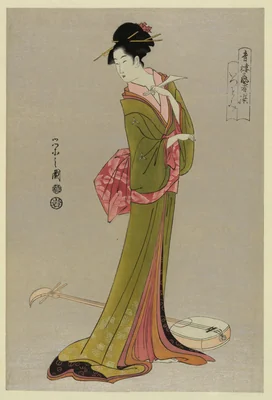
Chobunsai Eishi
Chobunsai Eishi was an artist documented as active between 1746 and 1782. Their surviving artistic output, concentrated in the medium of printmaking, is preserved in institutional collections, offering insight into the stylistic trends of the period.
The artist is represented in major collections by fifteen documented works, consisting primarily of fourteen prints and one other piece. The Art Institute of Chicago holds examples of the artist's output, establishing Eishi's presence in prominent international collections. These Chobunsai Eishi prints are indicative of the period’s focus on figurative narrative and specific cultural themes.
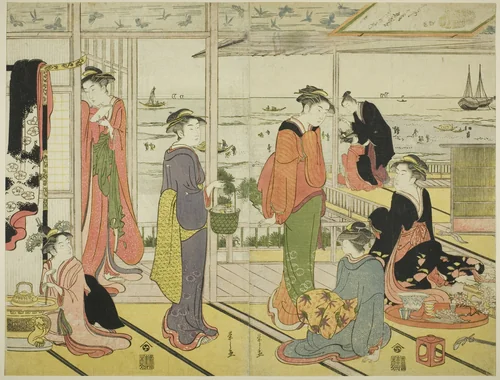
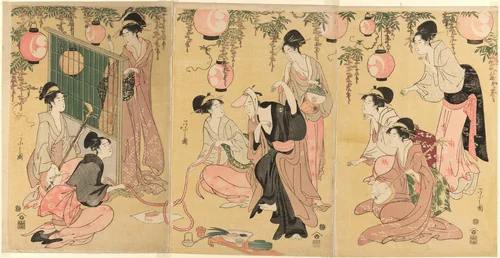
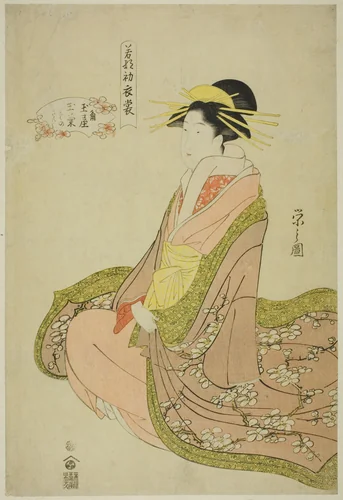
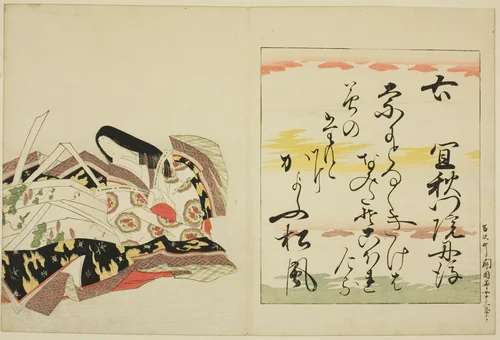
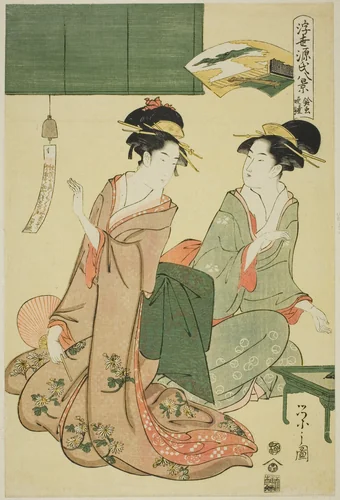
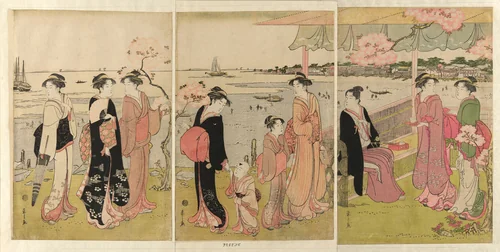
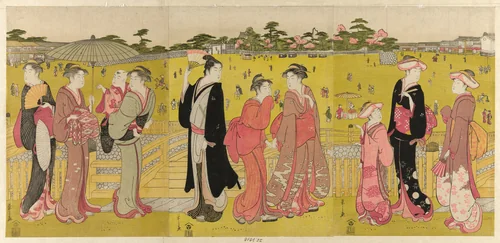
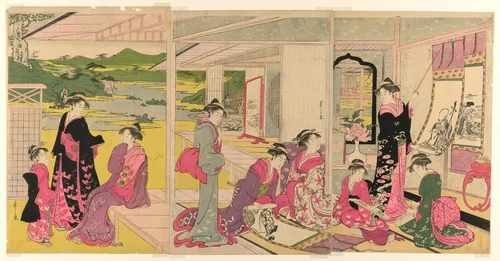
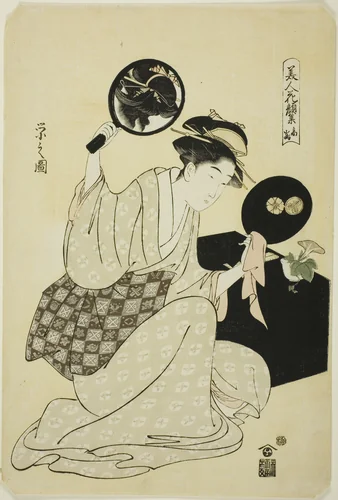
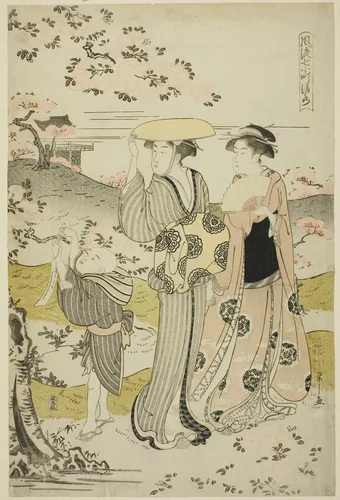
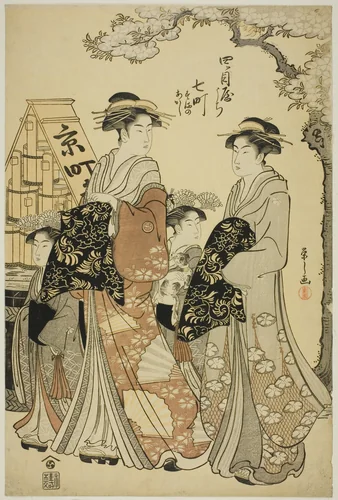
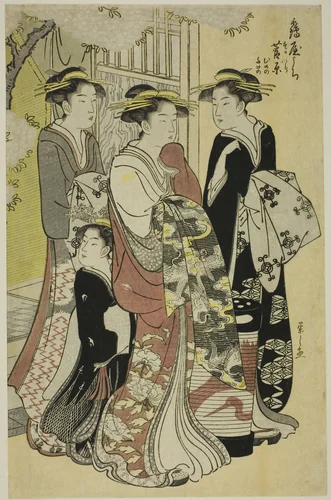
Notable works held in museum collections include In a Pleasure House in Shinagawa (Shinagawa no rojo) and the related thematic piece, A Parody of Yuranosuke in the Pleasure Quarters (Mitate Yuranosuke yukyo). Other documented pieces address seasonal and literary subjects, such as New Clothes for the Festival of New Herbs (Wakana no hatsuisho), featuring Tamagiku of the Kadotamaya with attendants Kikuno and Kikuji. Eishi’s contribution to serial print projects is also represented by The Poetess Gishumon-in no Tango, from the series The Thirty-six Immortal Women Poets, and Ukiyo Genji hakkei : Suzumushi no bansho. The technical execution displayed in these compositions ensures their enduring value as museum-quality artifacts. Today, many of these high-quality prints are available through public domain resources, ensuring broad access to the artist's documented works.
Source: Wikipedia · CC BY-SA 4.0