Chinese
The artist known as Chinese established a singular creative profile spanning the 18th and 19th centuries, maintaining documented production between 1700 and 1871. This remarkably extensive career focused primarily on highly specialized material practices, particularly textiles, whose technical complexity and durability place them among the most significant examples of Qing Dynasty decorative arts. Today, their works are preserved in major institutional holdings, including the Metropolitan Museum of Art and the Art Institute of Chicago.
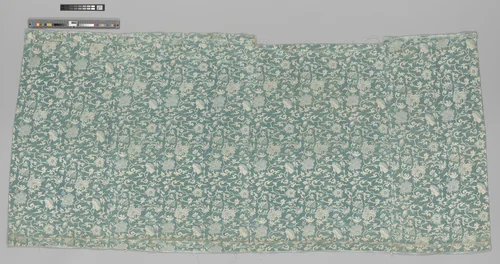
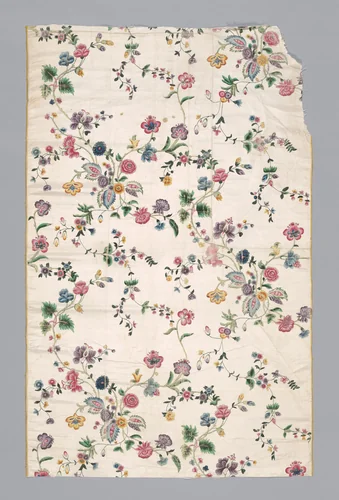
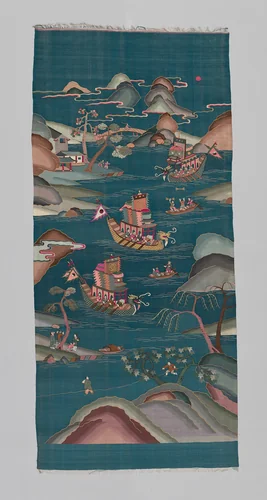
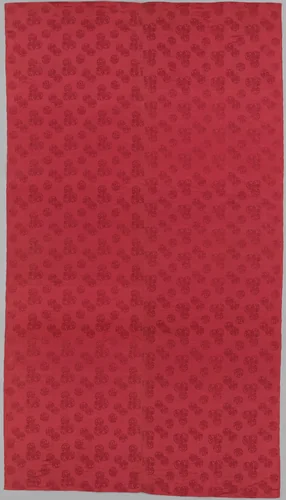
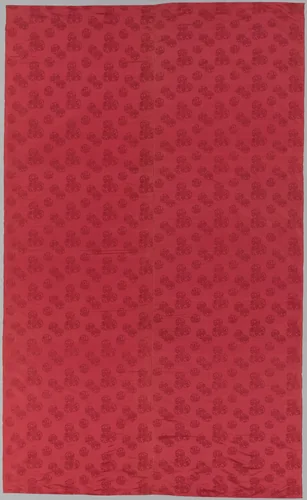
The surviving oeuvre consists predominantly of five textile pieces, complemented by one drawing. The artist’s mastery of woven and painted materials is evident in pieces such as Length of Painted Silk and the detailed functional piece, Panel (Furnishing Fabric), suggesting significant expertise in both private and possibly court-commissioned interior decoration. The works demonstrate an aesthetic that balanced traditional motifs with the refined precision expected of high-quality prints and woven goods of the era. The detailed execution inherent in these pieces highlights the artist’s understanding of structure, color, and practical application.
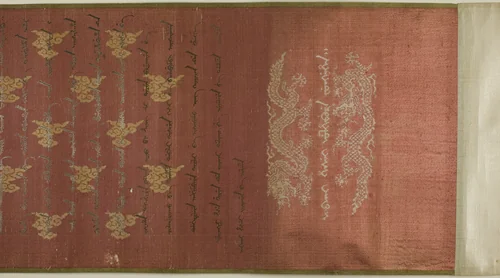
Perhaps the most compelling item in the documented inventory is the Imperial Edict. Its inclusion suggests that the scope of the artist’s work extended beyond strictly decorative arts and into the realm of official documentation and state commission, blurring the lines between bureaucratic record and artistic creation. Such documents required not only calligraphic skill but also the specialized preparation of the textile support itself. To sustain such varied, high-level production across 171 years confirms an unparalleled commitment to craft continuity. It is this extraordinary longevity that remains the most unusual characteristic of the artist’s historical record.
The collective impact of these material works provides critical insight into the relationship between the Qing court and professional textile production during a period of profound global and political change. The surviving museum-quality pieces, spanning simple Fabric to the complex Panel (see also 1975.1.1932), offer an invaluable resource for studying historical Chinese prints and textile arts. These works are often made available as downloadable artwork or through public domain collections, ensuring continued scholarly access to their historical and material significance.
Source: Wikipedia · CC BY-SA 4.0