Chimú
The Chimú culture, governed by the centralized political structure of Chimor, established the most expansive and formidable kingdom of the Peruvian Late Intermediate Period, flourishing from approximately 900 CE until its conquest in 1470 CE. Succeeding the Moche culture, Chimor rapidly expanded its dominion, ultimately controlling 1,000 kilometers of the modern-day Peruvian coastline. This vast empire fueled a highly specialized artistic economy dedicated to serving the state and its ruling elite.
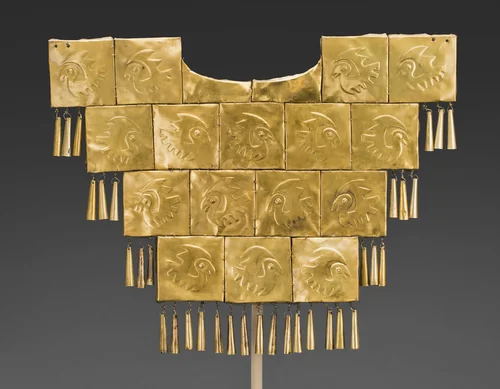
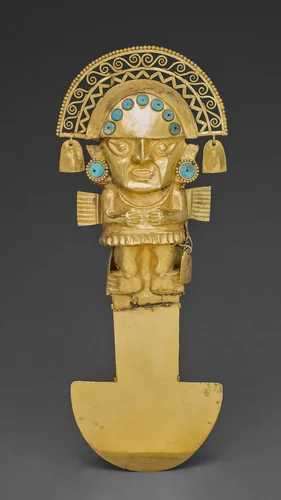
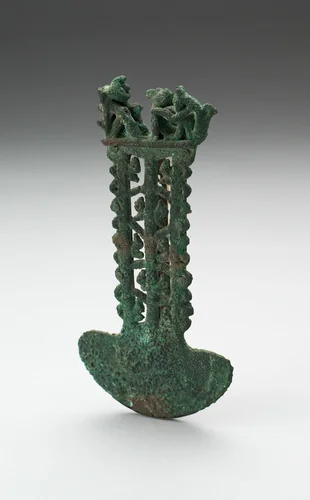
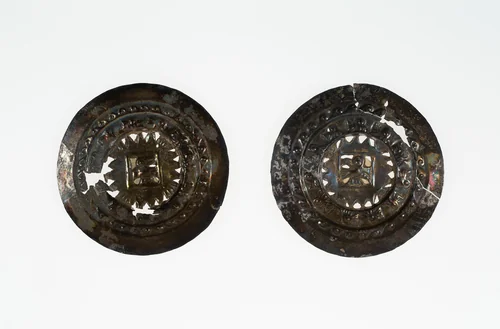
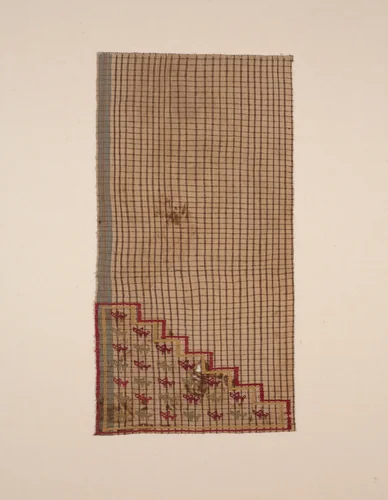
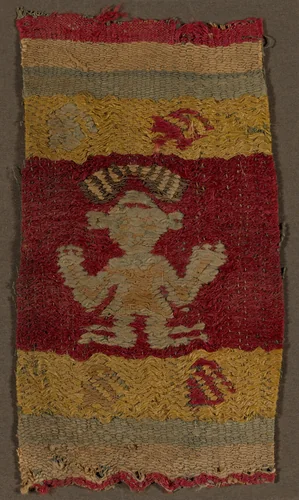
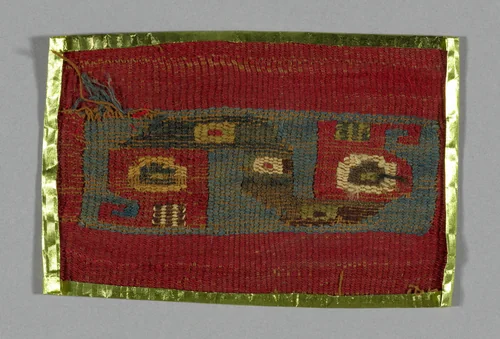
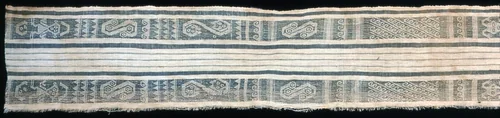
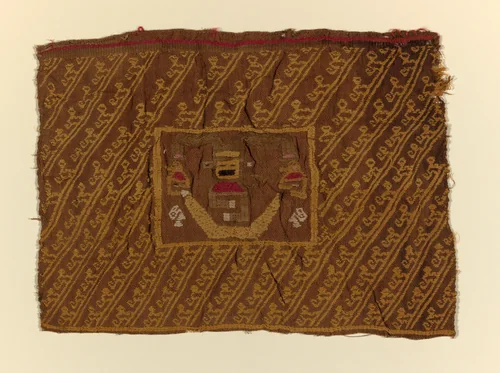
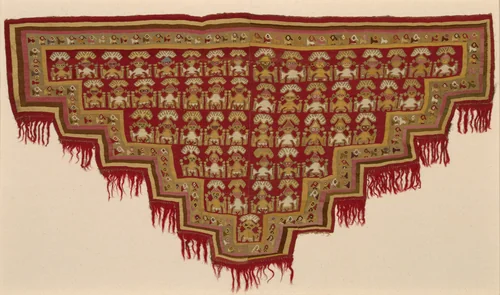
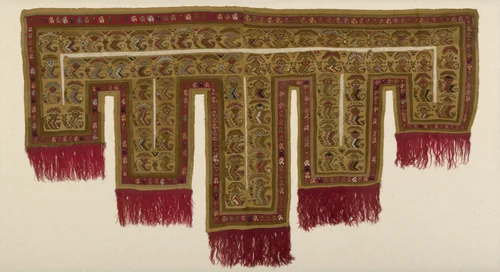
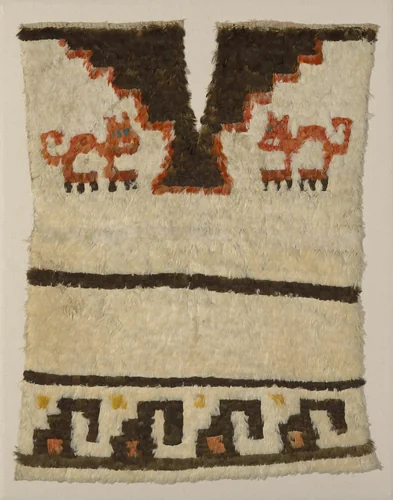
Chimú artisans excelled in two primary media: textiles and advanced metallurgy. While the arid coastal climate preserved numerous complex Chimú textiles, the culture’s greatest technical renown rests in its masterful manipulation of gold, silver, and copper alloys. Workshop specialization allowed for the consistent creation of stunning ceremonial objects and regalia. Works such as the monumental Breastplate and the series of sophisticated tumi knives attest to a comprehensive knowledge of techniques including gilding, lost-wax casting, and meticulous repoussé work. Pieces like the Ceremonial Knife (Tumi) With Figural Scene and Zoomorphic Figures showcase an exacting, narrative detail suitable for high-ranking ritual use. The sheer scale and consistent execution confirm the presence of high-quality, professional workshops capable of producing museum-quality artifacts.
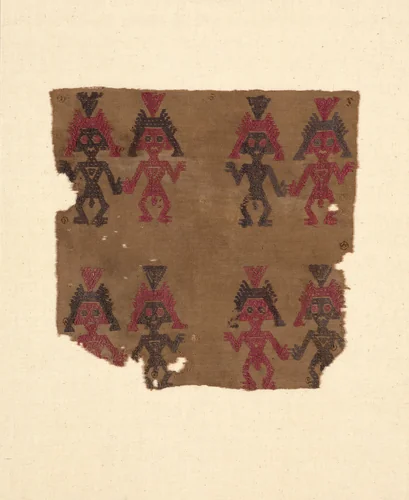
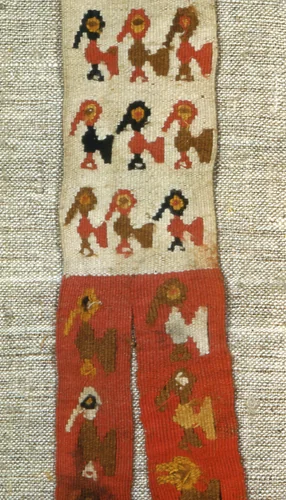
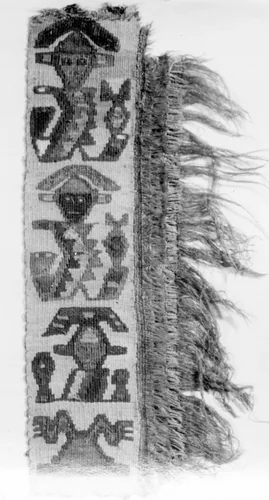
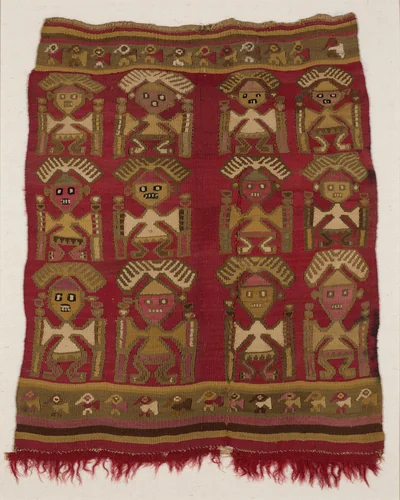
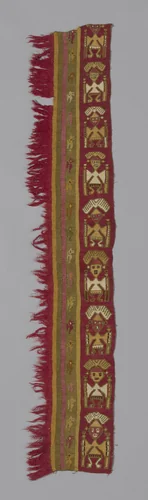
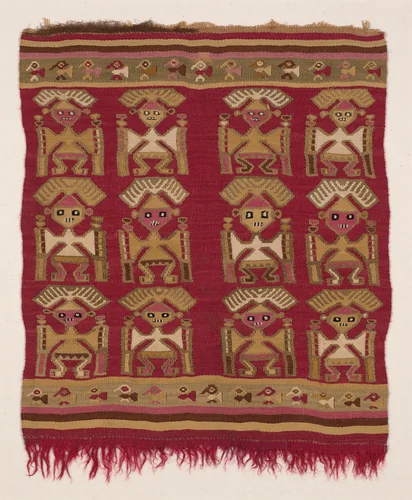
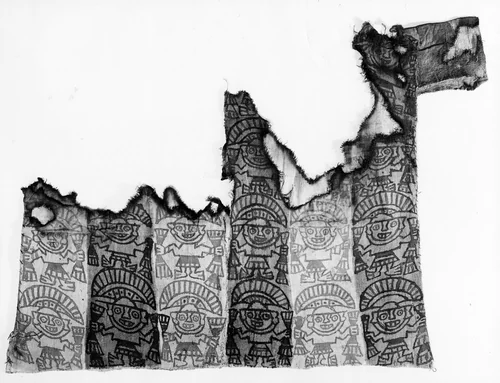
The iconography of Chimú art is strongly influenced by its maritime environment, often featuring repetitive patterns of fish, birds, and sea creatures. While the symbols are standardized, there is a fascinating commitment to ornamental density, lending the visual field a rhythmic quality that is at once strictly orderly and slightly overwhelming.
This period of artistic productivity came to an end around 1470 CE, when the kingdom was annexed by the Inca emperor Topa Inca Yupanqui, just fifty years before the arrival of the Spanish. Though the political structure of Chimor dissolved, its technical achievements survived; the Inca were quick to assimilate Chimú metallurgical expertise. Today, the enduring legacy of Chimor is preserved in major international collections, ensuring that studies of Chimú prints and specialized decorative arts remain available for research and analysis, often as royalty-free documentation.
Source: Wikipedia · CC BY-SA 4.0