Chelsea Keramic Art Works
The Chelsea Keramic Art Works (CKAW) holds a crucial, formative position in the history of American studio ceramics. Active from 1872 to 1878 under the direct management of the Robertson family in Chelsea, Massachusetts, CKAW was one of the nation’s first enterprises dedicated solely to the production of artistically driven, high-quality decorative pottery. This early venture established the technical and aesthetic standards that would later define the family’s long-running and highly influential Dedham Pottery.
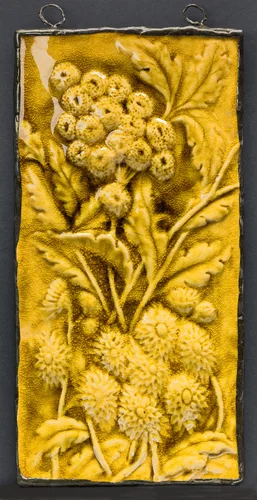
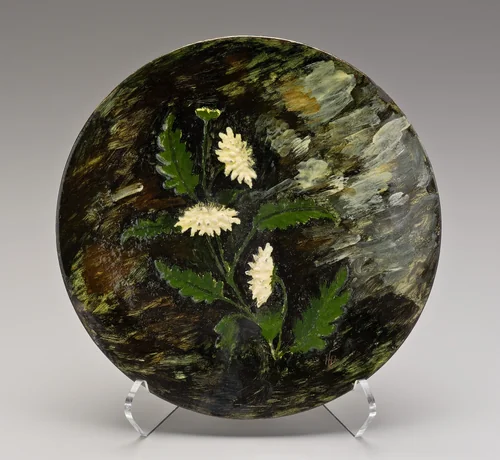
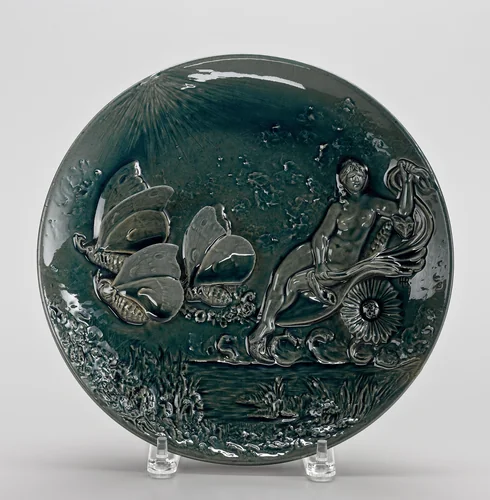
Operating during a period of intense artistic and industrial transition, CKAW sought to move beyond simple utilitarian earthenware, pioneering the exploration of sophisticated glazes and complex firing processes. The company’s early repertoire included highly coveted objects such as ceramic tiles and intricate plaques, many of which were intended for architectural integration or as standalone decorative statements in the home. These items required painstaking control over the kiln environment, setting the stage for the meticulous technical achievements achieved later by the Robertsons.
While the primary focus was on three-dimensional objects, the artistic excellence of these early designs signals an immediate desire for museum-quality status. This phase of production, often supplemented by output under the subsequent name "Chelsea Pottery U.S.," provided the essential research into glaze chemistry that would eventually lead to the Dedham firm’s signature high-fire stoneware, celebrated for its controlled, fine crackle glaze and distinctive cobalt border designs.
The enduring success of the Robertson family’s endeavors—spanning nearly seventy years across several corporate identities—is a rare phenomenon in American manufacturing, demonstrating a continuous, generations-long commitment to ceramic perfection. Although the output consisted of objects rather than traditional paper works, researchers and enthusiasts today seek out surviving examples of Chelsea Keramic Art Works prints documenting these pieces, recognizing their fundamental importance to the movement. These early achievements are now preserved in prestigious collections, including the Metropolitan Museum of Art, and high-quality prints and photographs of the plaques and tiles remain vital resources for studying the genesis of American Art Pottery. CKAW’s short lifespan cemented its legacy as a necessary technical bridge, elevating American ceramics to a truly international standard.