Charles William Bartlett
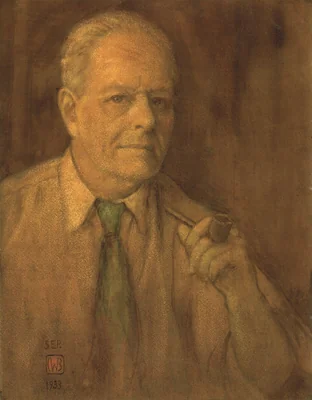
Charles William Bartlett (1860-1940) was an English artist whose distinguished career traversed the traditional disciplines of painting and the burgeoning field of color printmaking, culminating in his eventual settlement in Hawaii. While classically trained, Bartlett’s most significant contribution to visual history resides in his evocative graphic work, characterized by precise detail and an astute sensitivity to atmosphere.
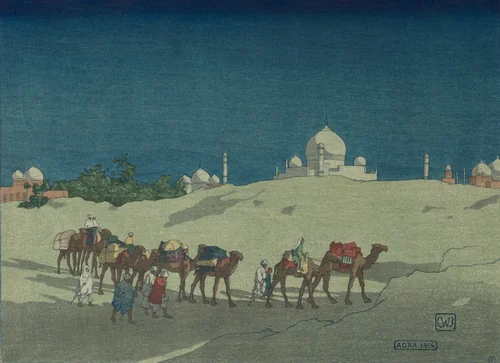
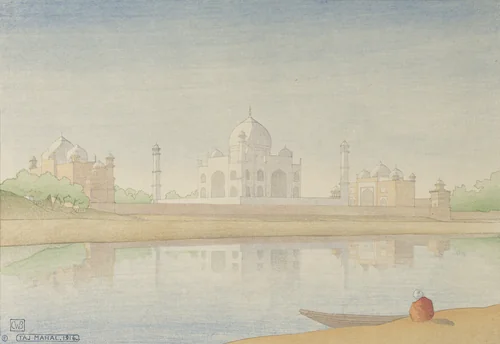
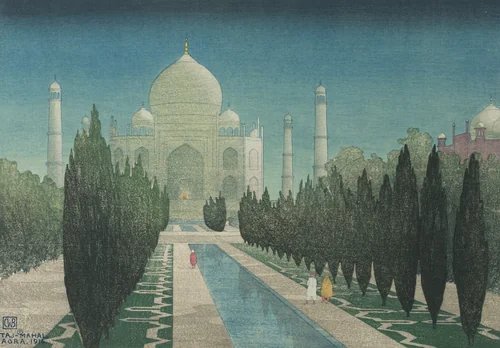
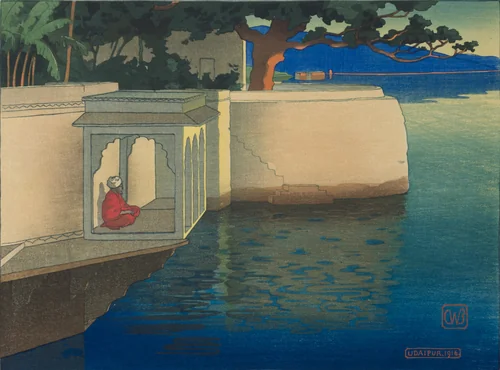
His artistic achievements are intrinsically linked to his extensive international travel, which inspired a sophisticated series of prints documenting locales across the globe. A pivotal sequence of his production focused intently on the Indian subcontinent, demonstrating a profound appreciation for both monumental architecture and serene topographical features. Works such as Udaipur, Agra, and his multiple sensitive studies of the Taj Mahal reveal a masterful control of color layering and composition.
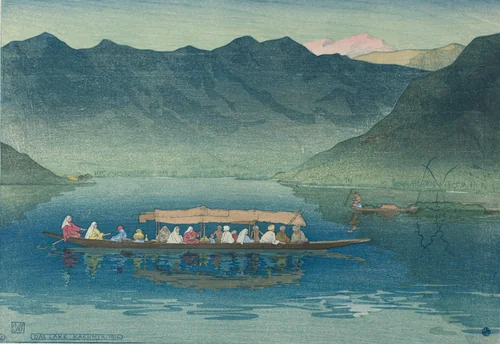
These Charles William Bartlett prints often drew aesthetic inspiration from the refined techniques of Japanese ukiyo-e woodblock artistry. This influence allowed him to transcend simple documentation, instead creating enduring images that capture the unique quality of light particular to locations such as Dal Lake, Kashmir. Through this innovative approach, he achieved deep, luminous saturation uncommon in European printmaking of the time.
His works entered the permanent collections of notable institutions, including the Cleveland Museum of Art, securing his position in the global history of graphic arts. It is perhaps one of art history’s pleasant ironies that the meticulous chronicler of ancient Mughal stone architecture ultimately chose the lush, volcanic landscape of Honolulu for his final residence. Today, the enduring appeal of these high-quality prints ensures their wide recognition. Many of the artist's most celebrated visions are now available through the public domain, allowing global audiences to study and appreciate Bartlett’s elegant synthesis of travel, culture, and technique.
Source: Wikipedia · CC BY-SA 4.0