Charles Roscoe Savage
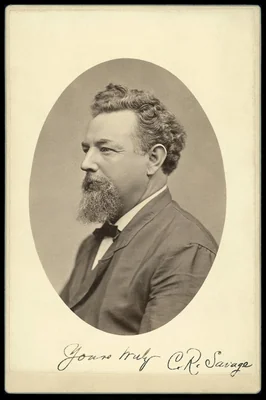
Charles Roscoe Savage (1832-1909) stands as one of the pivotal documentarians of the nineteenth-century American frontier. A British-born landscape and portrait photographer, his influential images chronicle not only the rugged topography of the intermountain West but also the rapid industrial expansion that structurally connected the continent.
Savage’s journey to America was catalyzed by his early conversion to the Church of Jesus Christ of Latter-day Saints while living in England. After serving a mission in Switzerland, he migrated to the United States. He first honed his craft taking portrait commissions in the East before settling permanently in Salt Lake City, Utah, with his family. There, he established the Art Bazar, a successful commercial venue where he sold his varied photographic output, developing a reputation for technical skill across multiple formats.
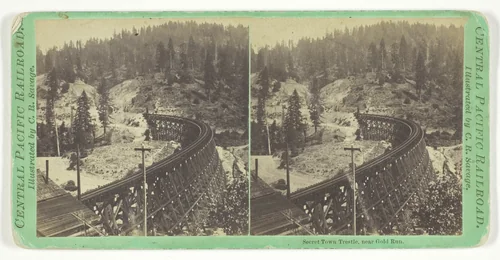
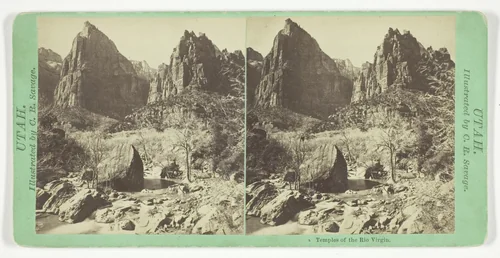
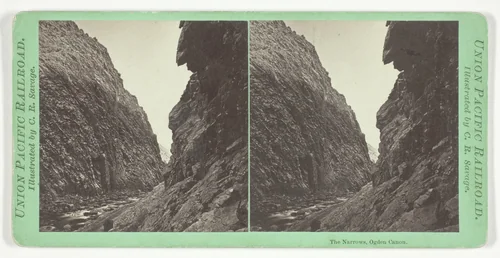
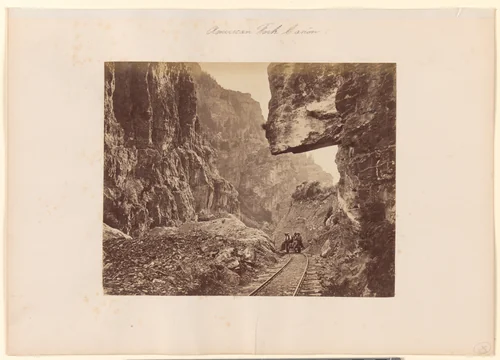
Savage’s practice focused primarily on three areas: producing meticulous family portraits, scenic landscape views, and crucial documentary records. His dedication to capturing the monumental engineering projects of the era yielded his most enduring and historically significant work. This includes the acclaimed 1869 series documenting the linking of the first transcontinental railroad at Promontory Summit, Utah. Images such as Secret Town Trestle, near Gold Run, from the Central Pacific Railroad series, demonstrate his acute eye for scale, effectively placing human endeavor against immense natural backdrops. His catalog expanded beyond infrastructure to include iconic natural formations, resulting in powerful views like The Narrows, Ogden Canon and Temples of the Rio Virgin.
Savage successfully navigated the shift from Eastern studio portraiture to rugged Western documentary photography. Given the immense logistical challenges inherent in large-format field work during the 1860s, achieving his level of detail suggests uncommon tenacity or perhaps just extremely patient assistants. His meticulously composed photographs quickly became popular among tourists and settlers alike, making him a major figure in Western visual culture. Today, his extensive collection of Charles Roscoe Savage prints is widely celebrated as museum-quality work. Much of his visual record is now available in the public domain, offering researchers and institutions access to high-quality prints that document a transformative period of American history.
Source: Wikipedia · CC BY-SA 4.0