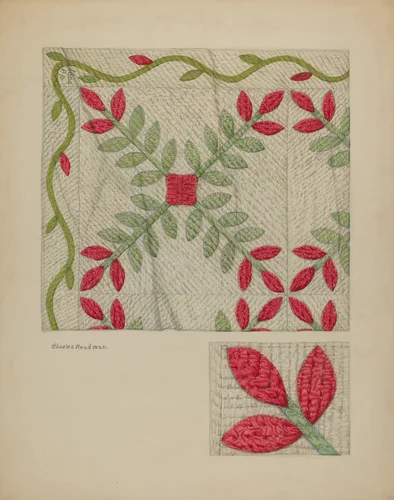
Charles Roadman
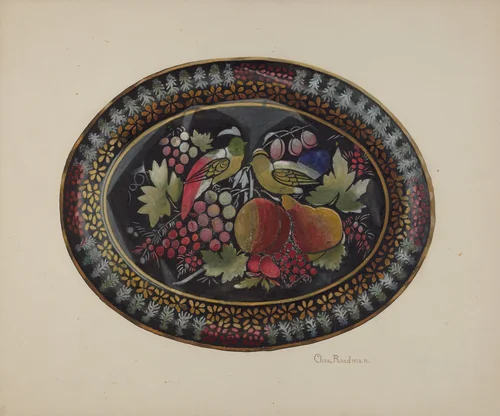
Charles Roadman (active 1935-1941) holds a distinctive, if understated, place in the historical preservation of American vernacular design. His work emerged during a critical period when cultural institutions sought systematically to catalogue the breadth of the nation’s craft heritage. Roadman contributed significantly to this effort through meticulous renderings of everyday and ceremonial artifacts, focusing his precise eye on the foundational elements of regional folk art.
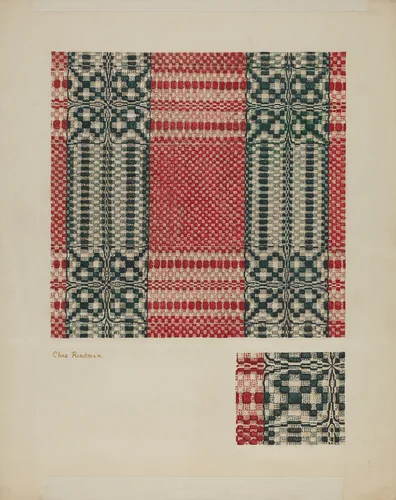
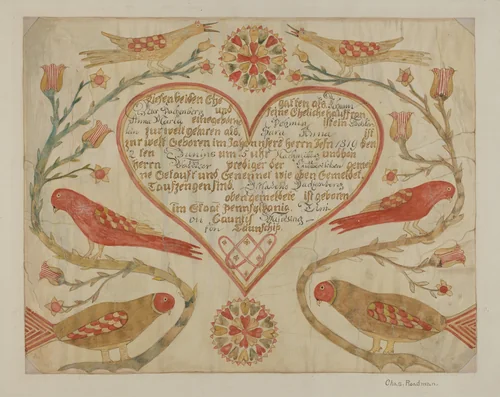
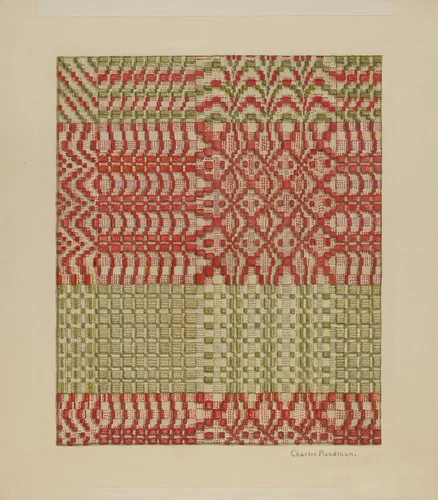
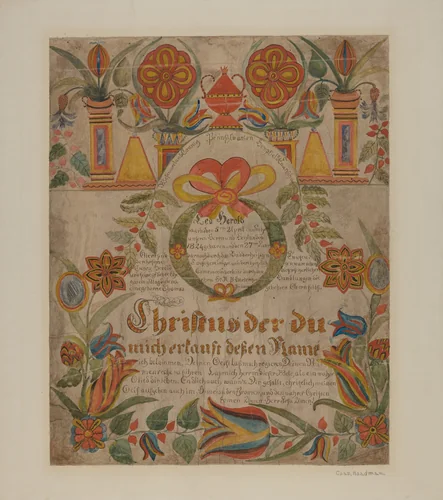
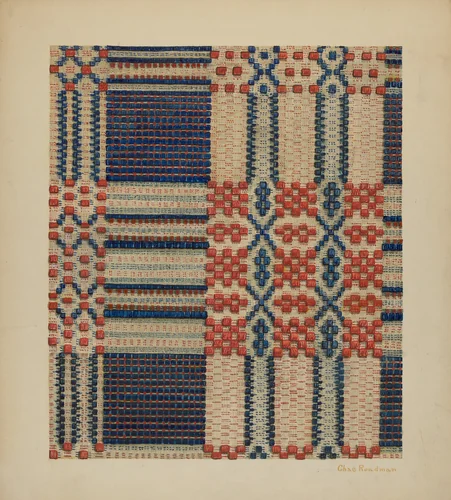
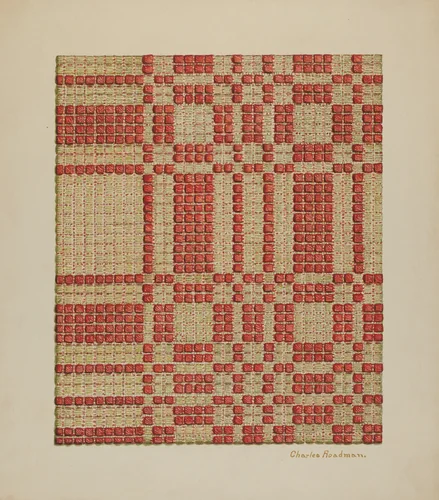
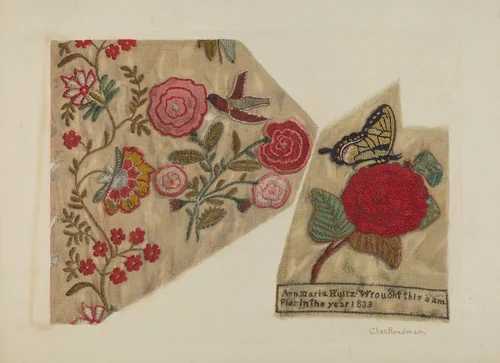
His central documented output is the 9 index of american designs, a comprehensive series that moved beyond mere illustration to serve as foundational documentation for historians and preservationists. This index focused heavily on intricate domestic textiles and manuscripts. He dedicated significant attention to objects such as the woven coverlet and the decorative birth certificate, capturing the specific typography, iconography, and geometric complexity inherent in these pieces. His drawings of the Fractur tradition, in particular, reveal a deep engagement with the Pennsylvania German aesthetic, translating ephemeral paper documents into durable, objective artistic records.
Roadman’s methodology ensured fidelity to the original sources, allowing for the precise study of regional variations and material culture across the eastern United States. This rigorous approach elevated craft documentation to an artistic pursuit in itself. Today, the enduring clarity and museum-quality detail of his work ensure that Roadman’s legacy continues to inform design scholarship. Because much of this output was created under institutional patronage, the majority of the 9 index of american designs is now in the public domain, offering widely available downloadable artwork that maintains its academic utility. These precise drawings are frequently sought out for the creation of high-quality prints that capture the original integrity of early American motifs.
Roadman’s collection of designs resides permanently within the National Gallery of Art, a lasting testament to his brief but impactful period of activity. Interestingly, while Roadman established a reputation for preserving the visual history of the past, the family line forged a future dedicated to a markedly different form of national service. Roadman, who was himself an Air Force flight surgeon and command pilot, set a precedent that was continued by his son, Charles H. Roadman II, who would later serve a distinguished career as the 16th United States Air Force Surgeon General.