Charles Meynier
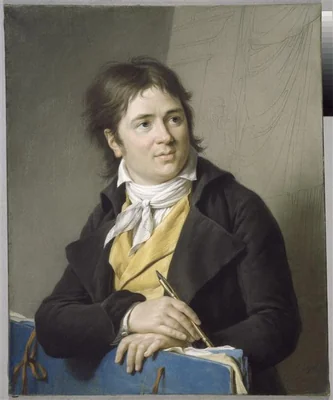
Charles Meynier stands as a significant figure in the highly codified environment of French painting during the late 18th and early 19th centuries. Active primarily between 1792 and 1802, Meynier specialized in historical subjects, a demanding genre requiring rigorous academic training and meticulous execution. His career unfolded alongside pivotal contemporaries, including Antoine-Jean Gros and the towering figure of Jacques-Louis David, whose Neoclassical principles defined the aesthetic standards of the era. Meynier adhered closely to the established academic practices that valued linear precision, classical restraint, and thematic complexity.
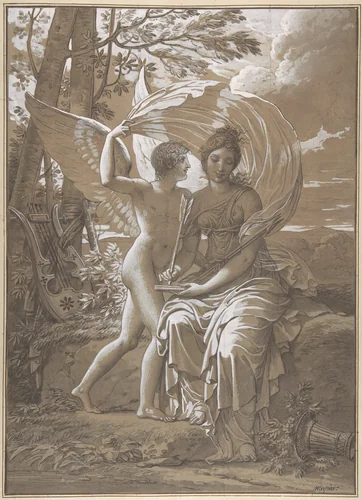
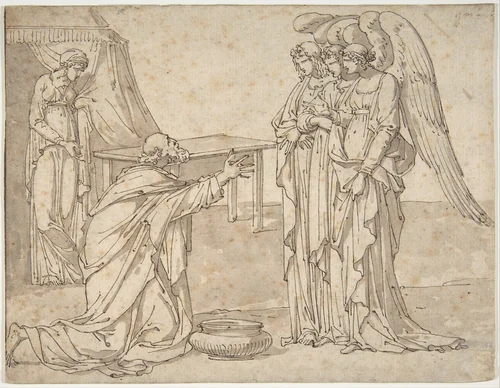
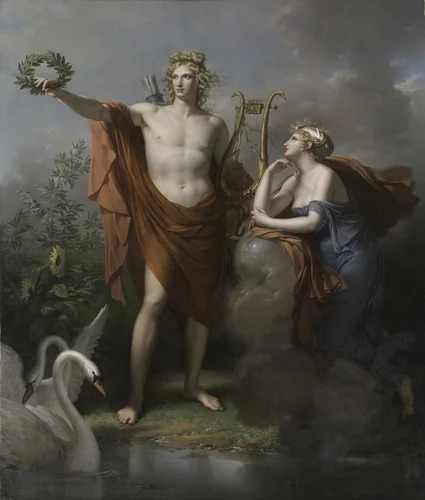
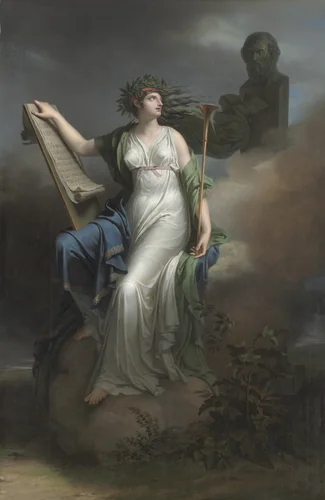
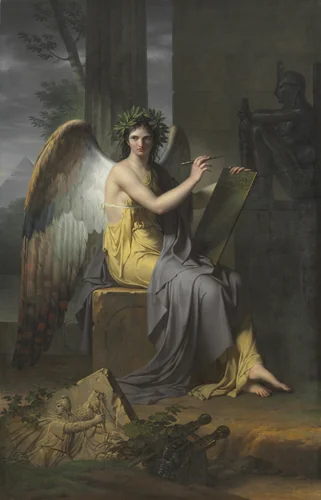
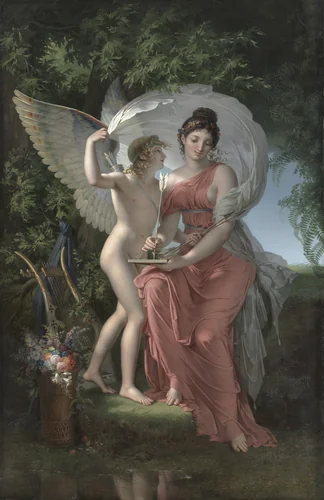
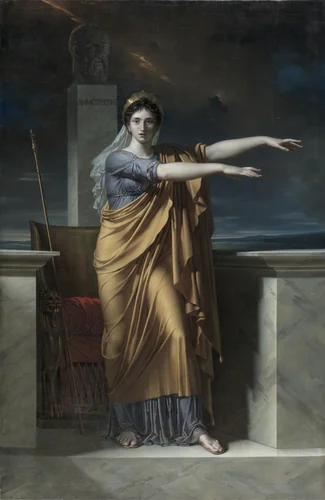
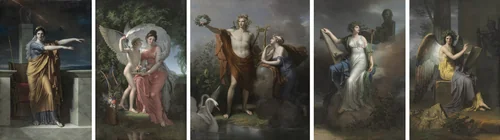
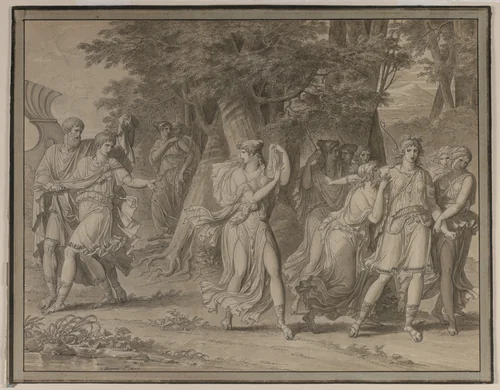
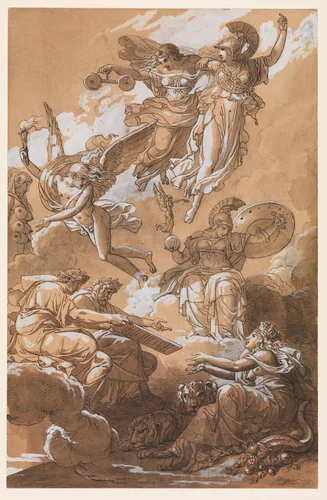
Meynier’s artistic output, though modest in its surviving quantity, comprising six known paintings and four drawings, provides a clear insight into the exacting demands of the French Academy during a period of revolutionary upheaval and subsequent Napoleonic consolidation. Unlike the dramatic battle scenes popularized by Gros, Meynier focused intensely on classical allegory and the intellectual architecture of mythology. His canvas, The Muse Erato Writing Verses Inspired by Love, is a superb example of this Neoclassical discipline, prioritizing clarity of line and idealized form over emotive coloring. He consistently treated his figures, such as those featured in Calliope, Muse of Epic Poetry and Clio, Muse of History, not merely as decorative subjects but as precise representations of intellectual discipline and moral virtue. The sheer length of his titles, often cataloging every philosophical attribute of the depicted deity, offers a subtle and sometimes amusing insight into the pedantic academic cataloging favored by the age. His works consistently demonstrated the formal balance necessary to elevate narrative content, whether mythological, as in Apollo, God of Light, Eloquence, Poetry, and the Fine Arts with Urania, Muse of Astronomy, or biblical, as seen in Three Angels Visiting Abraham.
While not possessing the overwhelming output of his immediate peers, Charles Meynier paintings represent a critical link in the stylistic evolution of academic painting under the Consulate. His works are today held in prestigious international institutions, including the Metropolitan Museum of Art and the Cleveland Museum of Art, ensuring their lasting study and appreciation as museum-quality examples of French Neoclassicism. Thanks to widespread digitization, high-quality prints and imagery of Meynier’s classical compositions are increasingly available to researchers and collectors who wish to explore the refined discipline of this exacting master.
Source: Wikipedia · CC BY-SA 4.0