Charles Louis Clérisseau
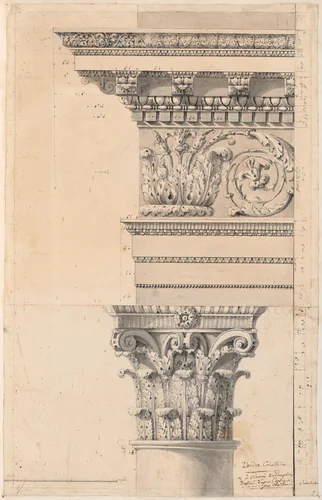
Charles-Louis Clérisseau (1722-1768) stands as one of the definitive figures in the European transition from Rococo sensibility to rigorous Neoclassical architecture. A prolific French architect, draughtsman, and dedicated antiquary, he secured his international reputation by becoming the foremost authority on the meticulous study and imaginative reconstruction of ancient Roman ruins in Italy and France during the mid-eighteenth century.
Clérisseau’s influence extended far beyond French borders, directly impacting the intellectual and building trends in Russia, England, and the nascent United States. His commitment to archaeological precision served as the foundational grammar for the burgeoning Neoclassical movement, providing the models necessary for architects and patrons seeking the moral clarity and proportional purity of antiquity. Key clients, including Empress Catherine the Great of Russia and American polymath Thomas Jefferson, utilized his extensive visual documentation as essential reference material for some of the most significant architectural projects of the period.
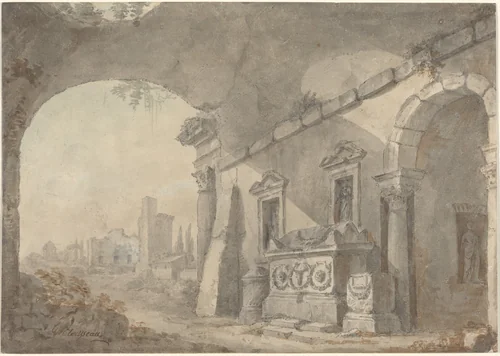
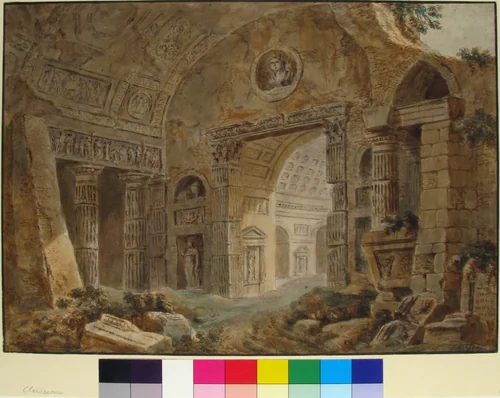
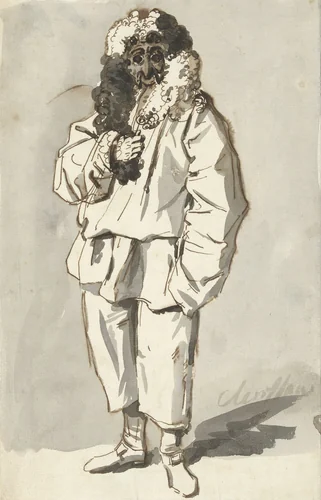
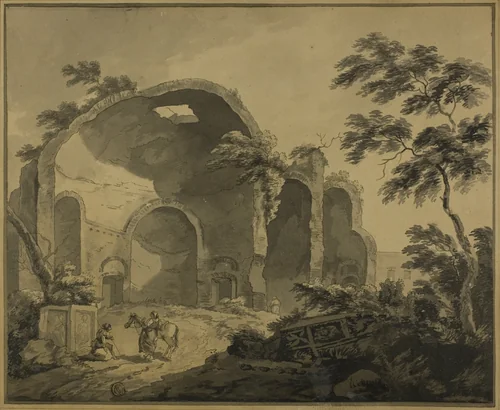
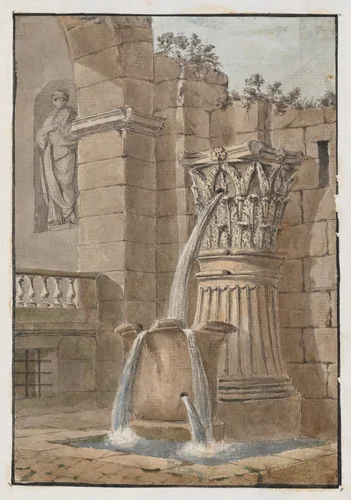
His output, predominantly focused on drawing, offered a unique blend of scholarly accuracy and atmospheric fantasy. Works such as Roman Ruins with a Sepulchre and Architectural Fantasy with Roman Ruins exemplify this duality, pairing vast, decaying monumental structures with sharp, clear detail. His compositions often balance the grandeur of the ancient world against the mundane realities of contemporary life, occasionally injecting a subtle, almost humorous observation—such as the depiction of a harlequin in carnival costume amidst the serious archaeology of Romeinse polichinelle in vastenavondkostuum.
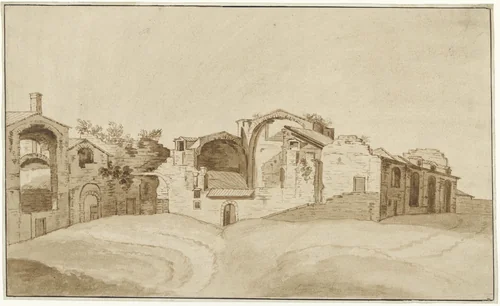
Clérisseau’s career was centered on establishing a visual lexicon for the classical revival, ensuring that the principles of antiquity could be accurately disseminated and applied. His comprehensive documentation, now held in major institutions like the Metropolitan Museum of Art and the Rijksmuseum, continues to inform historical scholarship. Today, much of this invaluable visual legacy, including essential studies like Gezicht op de Thermen van Diocletianus te Rome, is in the public domain, allowing access to high-quality prints and downloadable artwork. These exceptional Charles Louis Clérisseau prints remain critical artifacts, charting the genesis of international Neoclassical architecture during a pivotal moment in European art history.
Source: Wikipedia · CC BY-SA 4.0