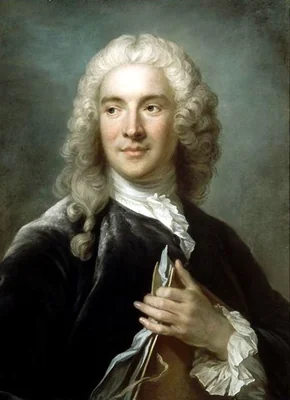
Charles Joseph Natoire
Charles Joseph Natoire (1700-1775) stands as a foundational figure in French Rococo painting, a style characterized by its light touch, compositional grace, and emphasis on mythological and idyllic scenes. Critically lauded during his active period, he was considered the artistic peer of his great contemporary, François Boucher. This evaluation underscores the major role Natoire played in defining the visual sensibilities of early to mid-eighteenth-century France. Trained under the eminent master François Lemoyne, Natoire quickly absorbed the dramatic flair and compositional rigor necessary for successful large-scale academic painting.
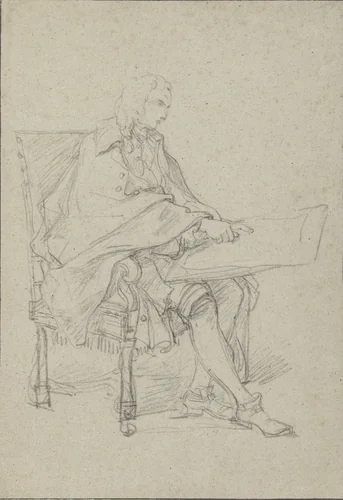
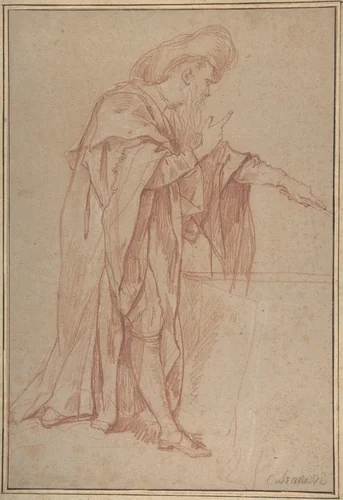
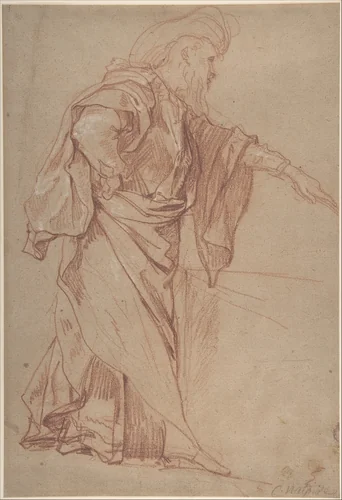
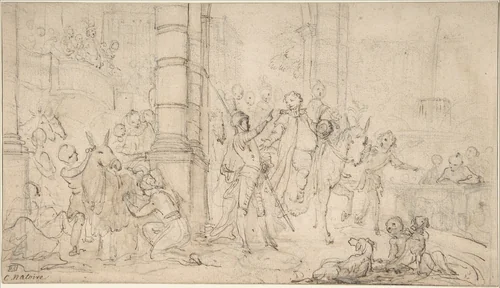
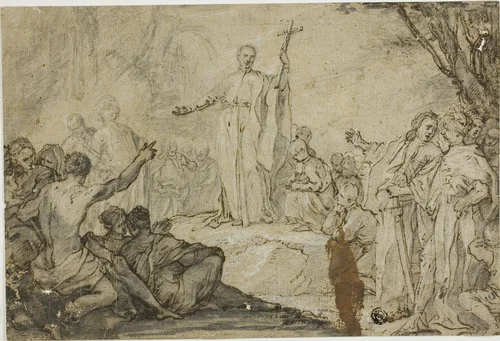
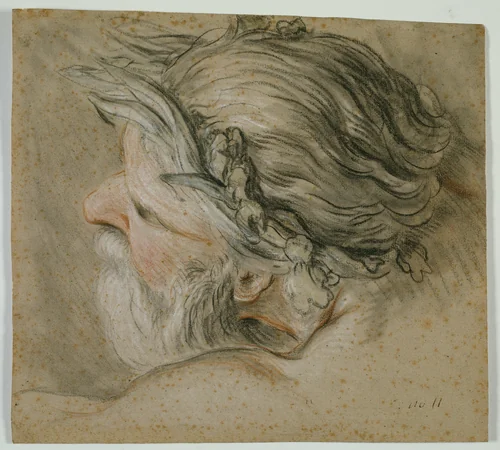
Natoire’s authority extended far beyond the easel. His career culminated in the prestigious directorship of the French Academy in Rome, a powerful post he held for nearly a quarter century, from 1751 until 1775. This tenure cemented his influence on the next generation of French artists traveling to Italy, ensuring the perpetuation of the Grand Manner tradition, even as artistic tastes gradually shifted toward Neoclassicism. He was particularly celebrated for his mastery of preparatory drawing, where his hand is evident in the dynamic energy captured by studies such as Standing Male Figure with Left Arm Extended and the meticulously rendered academic posture found in Figuurstudie voor de leraar in een afbeelding van een tekenacademie. One might observe that, unlike Boucher, whose output often catered explicitly to courtly whims, Natoire maintained a slightly more elevated, historical seriousness, bridging the dramatic demands of Baroque spectacle with the intimacy of the new Rococo mode.
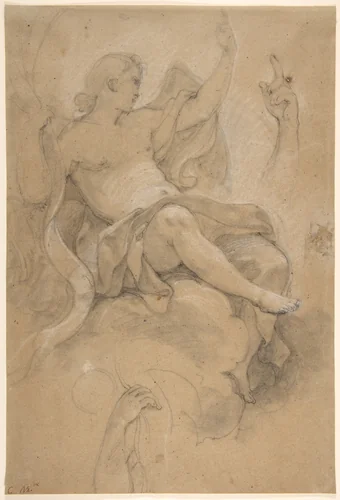
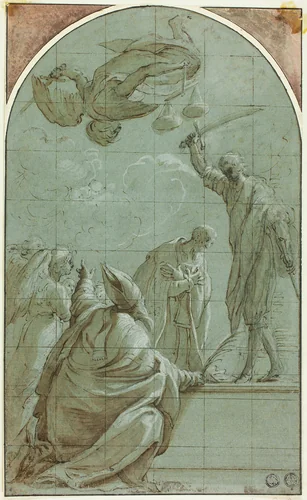
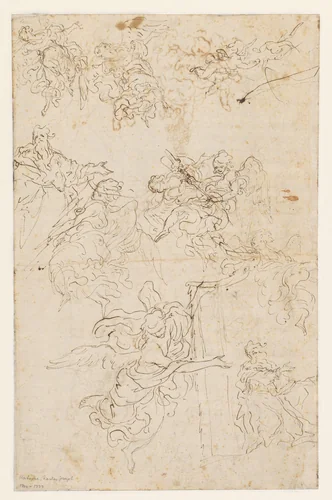
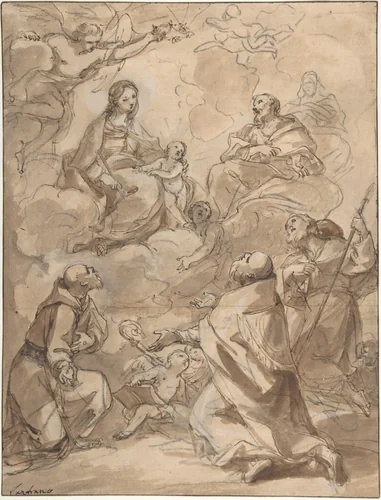
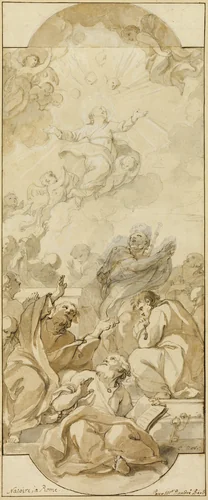
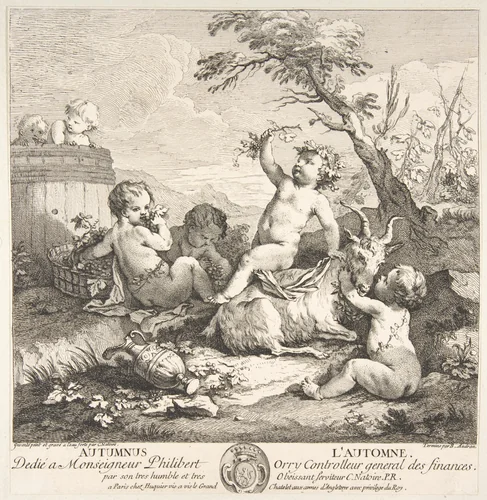
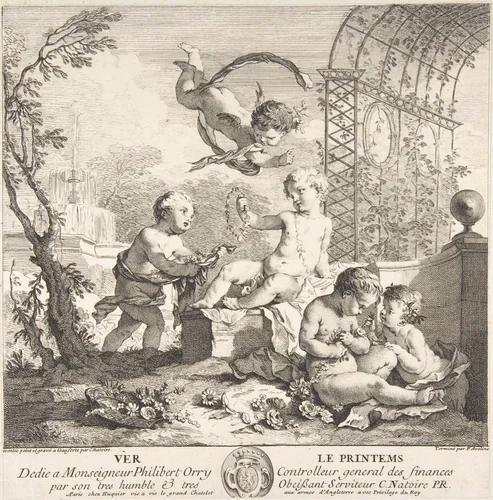
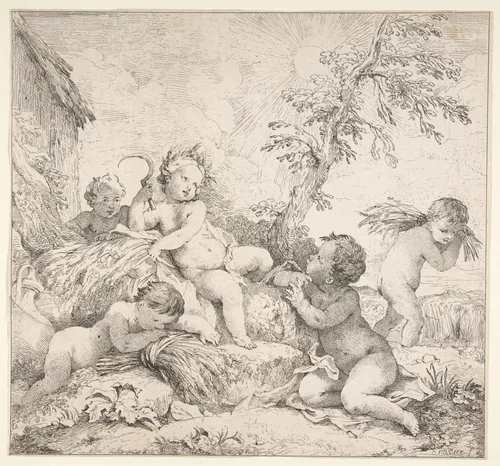
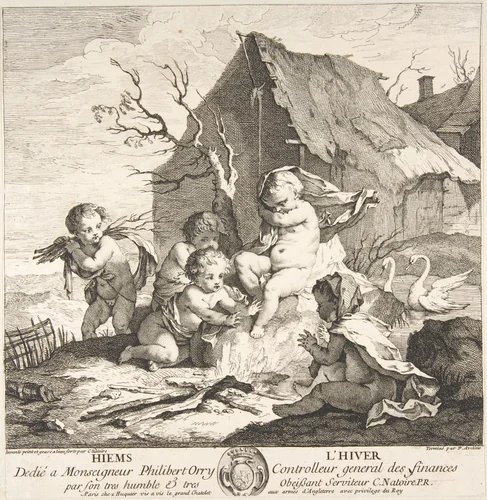
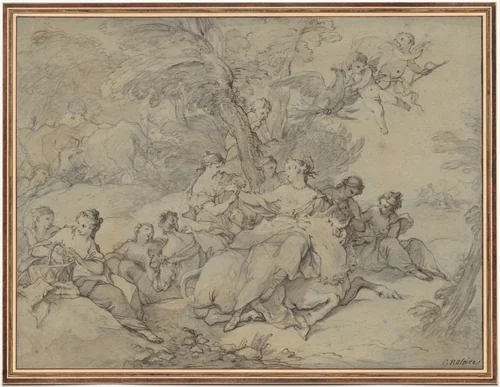
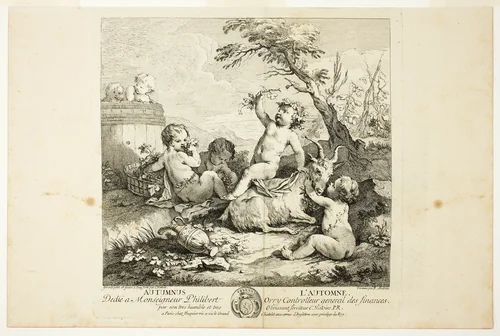
Though highly successful in producing Charles Joseph Natoire paintings, much of his enduring scholarly relevance lies within his prolific output of studies and prints, which reveal the inner mechanisms of his workshop practice. Examples such as Studies van een heilige en van engelen demonstrate his commitment to technical refinement and the academic drawing tradition. Today, Natoire's works are held in major institutional collections globally, including the Rijksmuseum, the Metropolitan Museum of Art, and the Art Institute of Chicago. Fortunately for researchers and enthusiasts, many of his sketches and studies, including Angel Holding a Banderole, have entered the public domain, offering opportunities for accessible scholarship. High-quality prints of his works are readily available, allowing modern audiences to engage directly with the refined precision that defined French academic art during the height of the ancien régime.
Source: Wikipedia · CC BY-SA 4.0