Charles Joseph Hullmandel
Charles Joseph Hullmandel was the central figure responsible for establishing lithography as a commercial and artistic force in early 19th-century Britain. Operating from Great Marlborough Street, his lithographic establishment, founded around 1819, was the first of its kind in London and served as the definitive epicenter for the dissemination of this groundbreaking reproductive technology until his death.
Hullmandel did not merely practice the new medium; he relentlessly refined it. His most significant technical contribution was the perfection of the lithotint, a proprietary process that allowed for soft, atmospheric gradations and washes previously elusive on Bavarian limestone. This innovation dramatically enhanced the tonal range available to artists and elevated the aesthetic potential of the medium well beyond simple line drawing. Crucially, the commercial implementation of lithography offered economies of scale that greatly reduced the cost of reproducing artwork compared to older, labor-intensive methods, such as copperplate engraving. This affordability democratized visual culture, making high-quality prints and topographical studies accessible to a far wider audience and contributing significantly to numerous illustrated publications throughout the period.
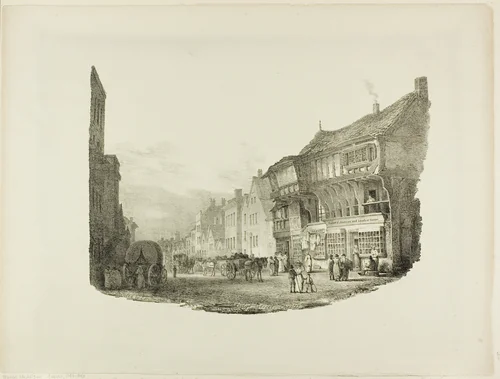
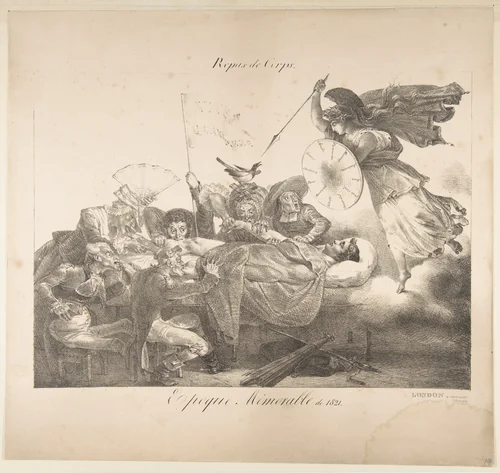
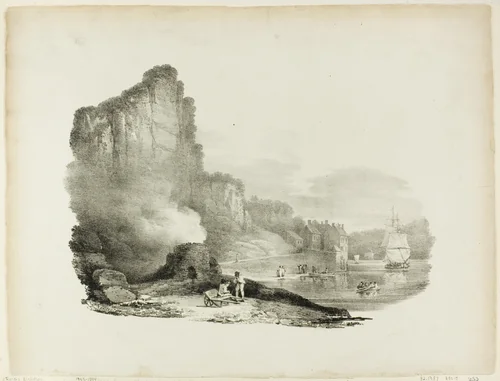
The quality and consistency of Hullmandel’s firm ensured its enduring relevance. A survey of his surviving works, from the detailed topographical study S.E. Vincent's Rock near Bristol to the socially charged Repas de Corps. Epoque Mémorable de 1821, illustrates the versatility of the establishment’s output. Examining images such as Bridge Street, Chester, from his Lithographic Impressions of Sketches From Nature, reveals the meticulous standard he maintained. Interestingly, while many contemporaries focused solely on the speed of the press, Hullmandel’s firm successfully prioritized atmospheric complexity, ensuring that lithography held its ground artistically against traditional techniques.
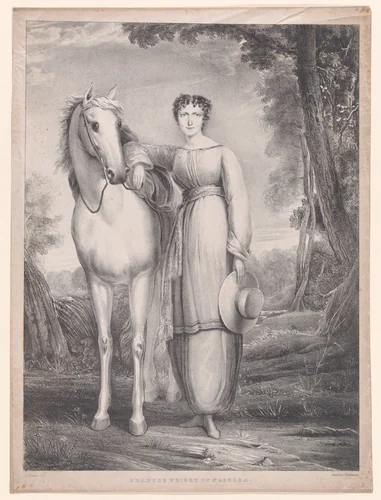
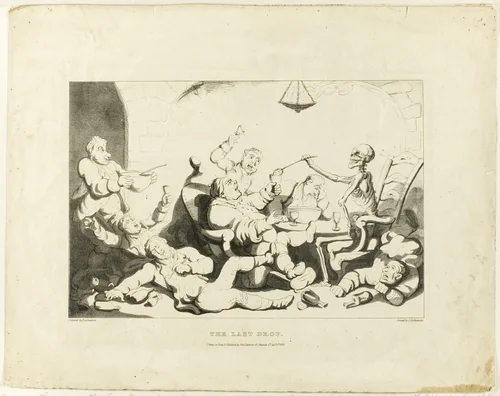
Today, examples of Charles Joseph Hullmandel prints, including the portrait Frances Wright of Nashoba and the darkly suggestive The Last Drop, are preserved as museum-quality documents of the era in institutions like the Art Institute of Chicago and the Metropolitan Museum of Art. As many of these historic images enter the public domain, they continue to inform scholars and are increasingly sought after as downloadable artwork. His work remains a testament to the crucial role technology played in shaping nineteenth-century visual accessibility.
Source: Wikipedia · CC BY-SA 4.0