Charles Hunt
Charles Hunt (1803–1877) was a prolific British printmaker whose artistic activity centered on etching and aquatint during the early decades of the nineteenth century. Active primarily between 1817 and 1837, Hunt established himself as a master of rendering motion, technical infrastructure, and the emerging drama of the industrial age. His specialized focus on sporting events and popular views secured his position within the market for high-quality prints aimed at a growing, affluent audience interested in documenting British leisure and travel.
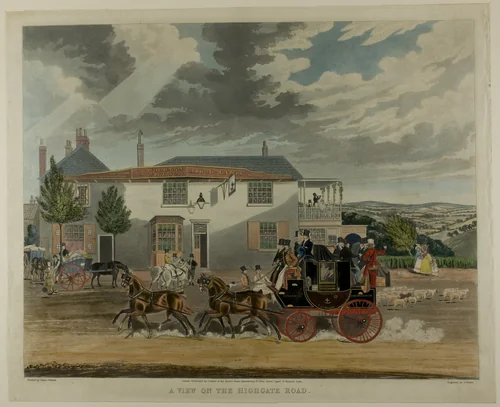
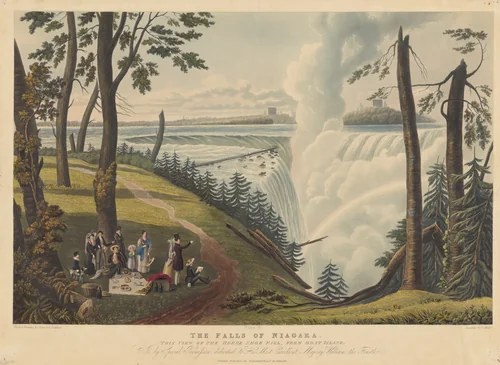
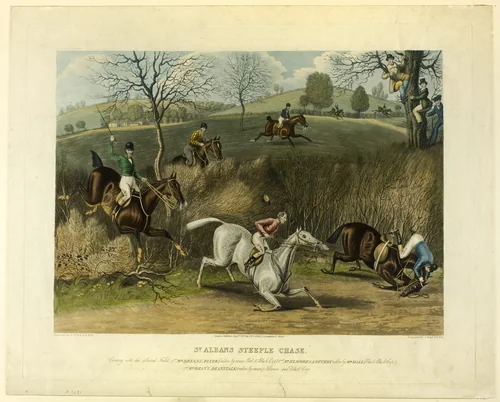
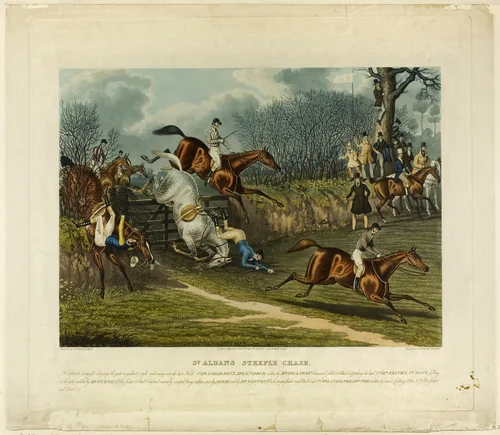
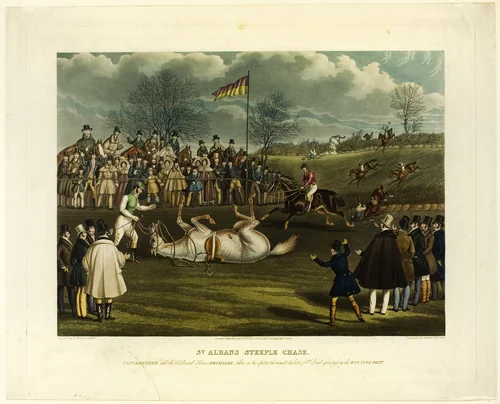
Hunt’s technical skill lay in his ability to imbue his often-collaborative aquatints with palpable energy. This dynamism is nowhere more evident than in his series chronicling a single, defining event of English equestrian sport. The sheer dedication shown to the subject is striking, with multiple plates devoted exclusively to the Saint Albans Steeplechase, capturing the intense energy of the race across various stages. Alongside these celebrated sporting scenes, Hunt documented crucial infrastructure projects, demonstrating a keen eye for architectural detail and movement, as seen in works like A View on the Highgate Road. His subjects were not confined to the British Isles, however; works such as Falls of Niagara attest to the period’s fascination with the American sublime and the grandeur of natural phenomena.
His consistent output ensured that Charles Hunt prints were widely distributed across Britain and America, frequently through major publishing houses, thereby shaping the visual understanding of contemporary life. He excelled in the exacting process of producing large-scale color aquatints, a medium that required meticulous handling to achieve the deep tonal variations and sharpness necessary for compelling visual narratives.
Today, Hunt’s works are held in significant institutional collections, including the Art Institute of Chicago and the National Gallery of Art, attesting to their enduring museum-quality and historical value. Although many of the original plates and prints are available within the public domain, the enduring interest in Hunt’s meticulous capture of movement ensures his legacy as a central figure in early Victorian graphic art.
Source: Wikipedia · CC BY-SA 4.0