Charles Henning
Charles Henning’s primary contribution to American visual culture is rooted in his involvement with the Index of American Designs (IAD), a major New Deal initiative under the Federal Art Project (1935-1942). Active between 1935 and 1940, Henning was among the dedicated visual researchers tasked with systematically documenting the breadth of pre-industrial American decorative and folk arts, capturing objects often overlooked by traditional art institutions.
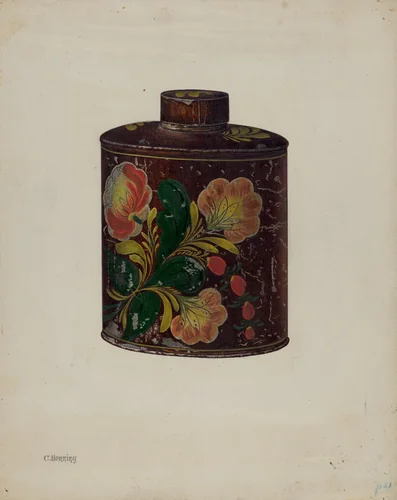
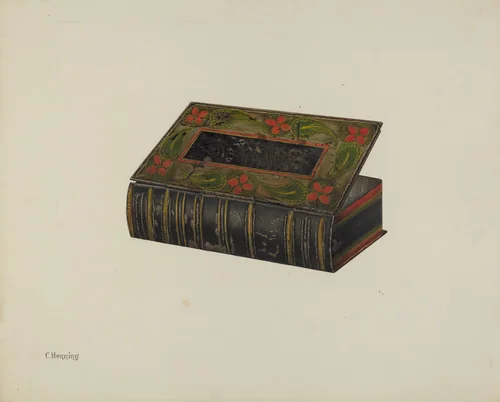
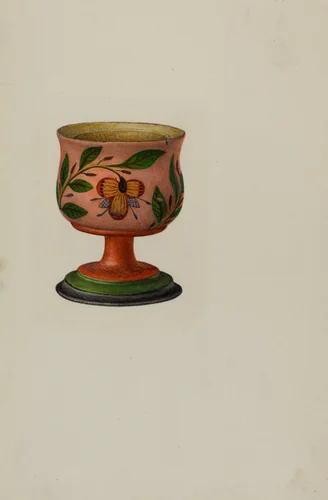
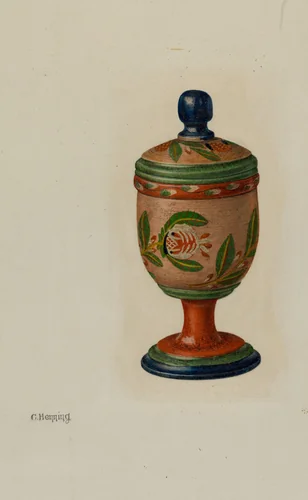
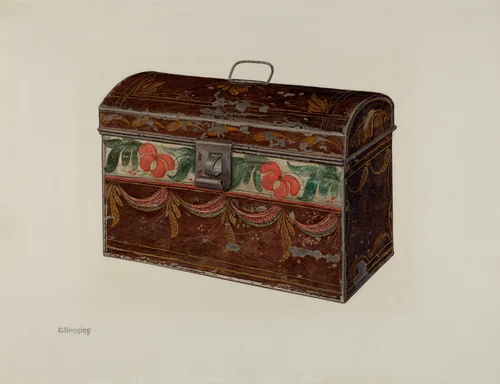
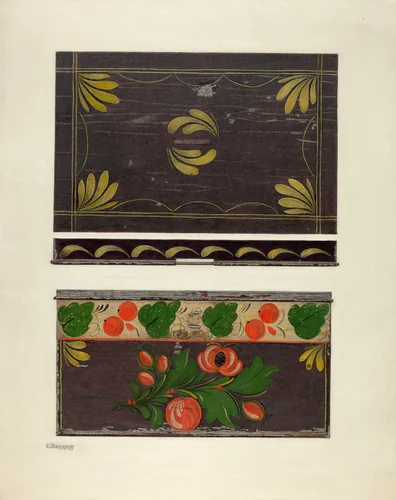
His output, comprising approximately fifteen detailed renderings housed in the National Gallery of Art, focuses specifically on the vibrant material culture of regional craftspeople. Henning specialized in documenting specific folk traditions, including the detailed application of decorative painting to everyday objects. His studies of Pennsylvania German culture provide invaluable insight into early American aesthetics, notably captured in his precise documentation of the Pa. German Saffron Box.
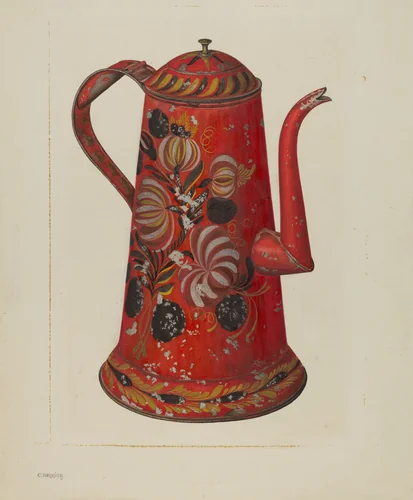
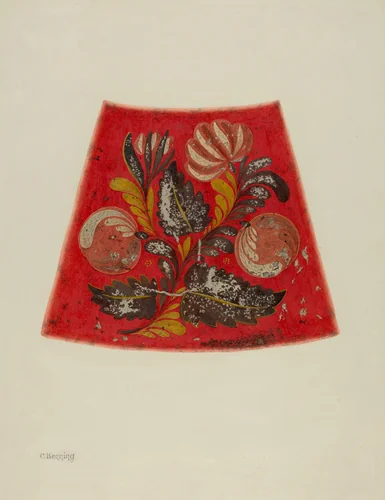
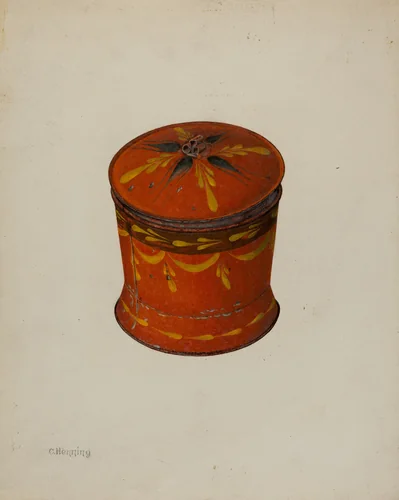
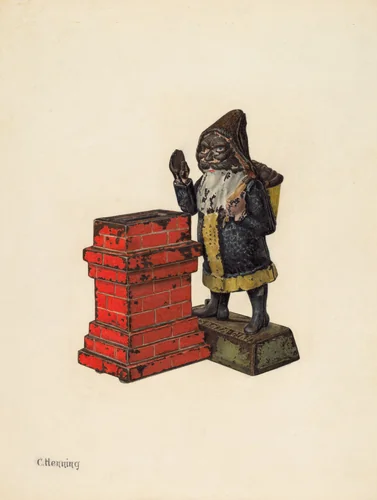
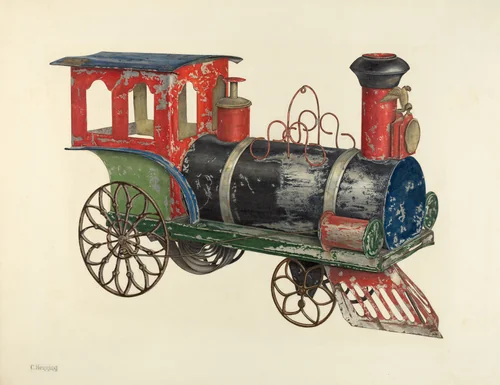
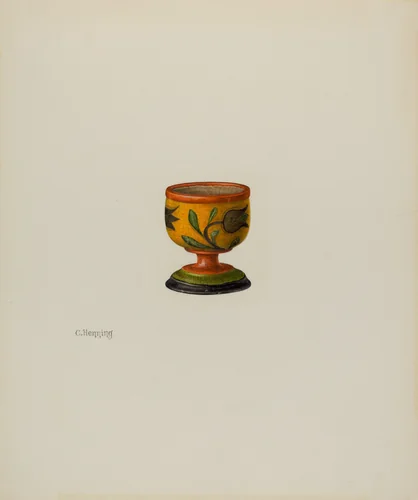
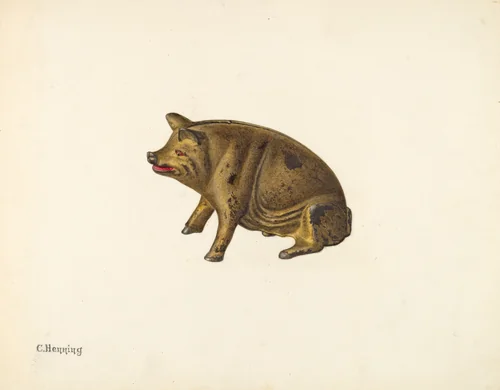
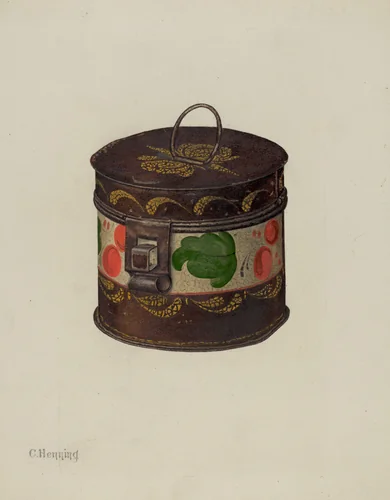
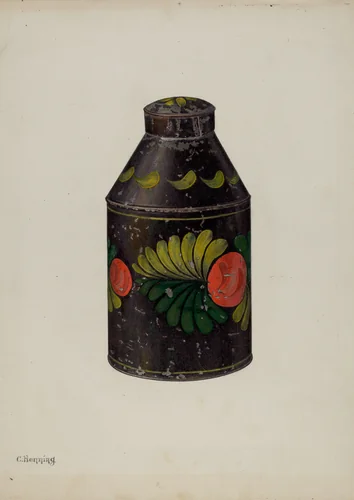
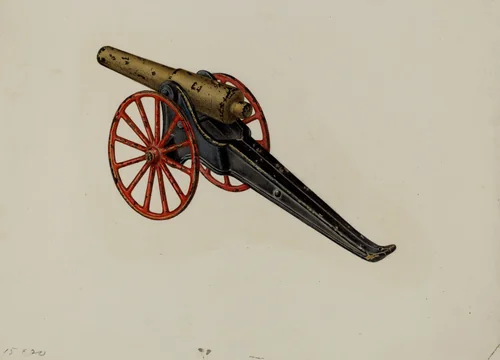
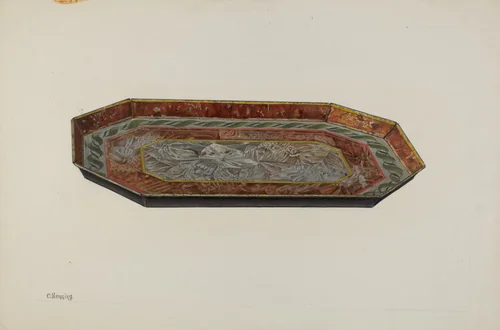
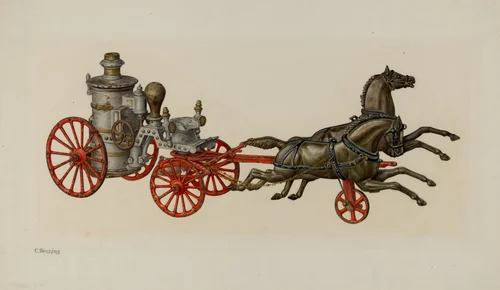
Henning’s work is characterized by its technical realism and the faithful recording of texture, color, and aging. These renderings are invaluable records, showcasing items like various examples of toleware, including the brightly patterned Toleware Coffee Pot and the coordinating Toleware Sugar Bowl. He also captured mechanical folk novelties, evidenced by the detailed drawing of the Metal Toy: Trick Pony Bell Ringer, which documents a level of craftsmanship now highly valued by historians. The high-quality detail found in his original works ensures that Charles Henning prints are considered vital references for scholars of American design.
It is noteworthy that the individual responsible for these meticulous recordings of early American artifacts, Charles Harriot Henning, possessed an entirely distinct career trajectory later in life. After serving as an Australian military officer and farmer, he transitioned into politics, serving as a Liberal Party member of the Legislative Council of Western Australia from 1951 until his death. This unexpected dual identity contrasts the quiet, archival focus of his American output with the complexities of public governance abroad. Today, Henning’s fifteen contributions to the IAD remain preserved as vital visual documentation, ensuring that his artistic legacy endures as a celebrated part of the public domain.
Source: Wikipedia · CC BY-SA 4.0