Charles H. Woodbury
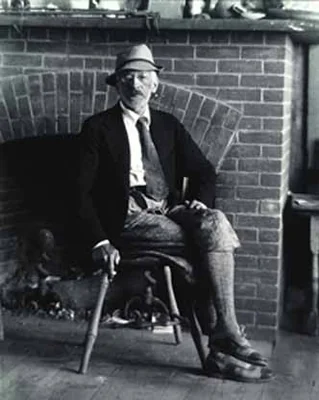
Charles Herbert Woodbury (1864-1936) was a foundational figure in American art known primarily for his powerful interpretations of the sea. Operating during the transition from the golden age of sail to the mechanized twentieth century, Woodbury’s work stands apart due to his rigorous draftsmanship and equal mastery across various media, including oil paintings, drawings, and etching. His reputation as an American marine painter was established early, reflecting a sustained focus on the turbulent vitality of the New England coastline.
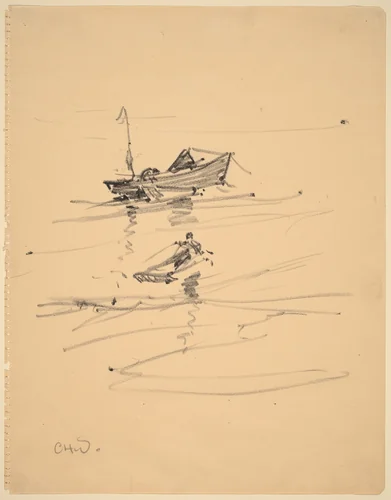
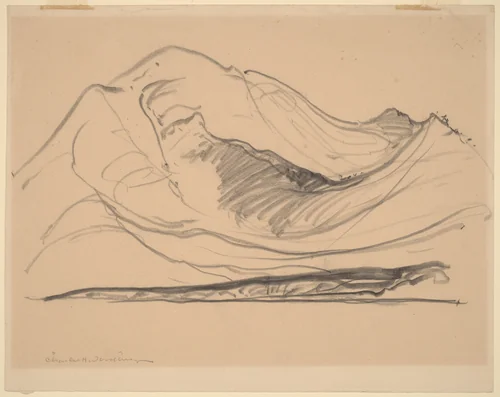
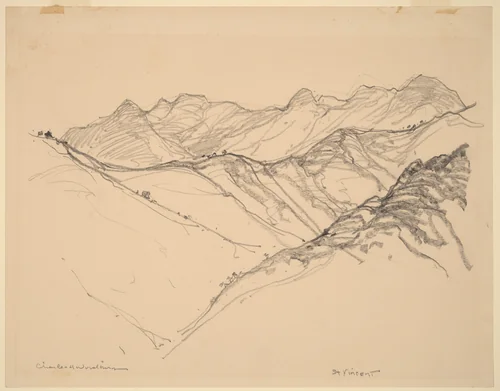
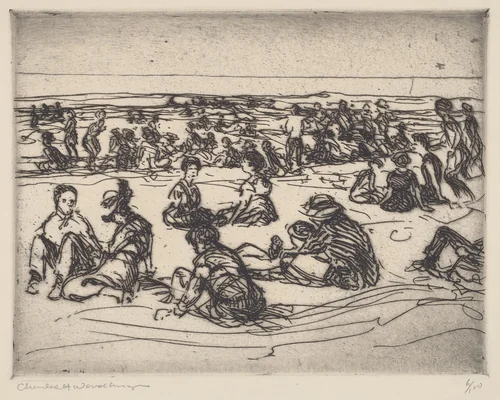
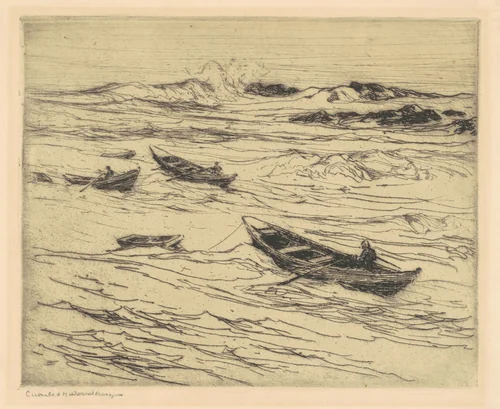
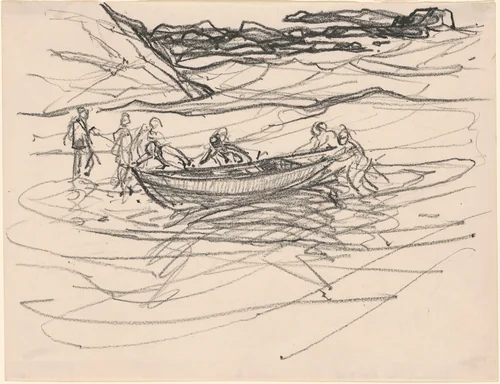
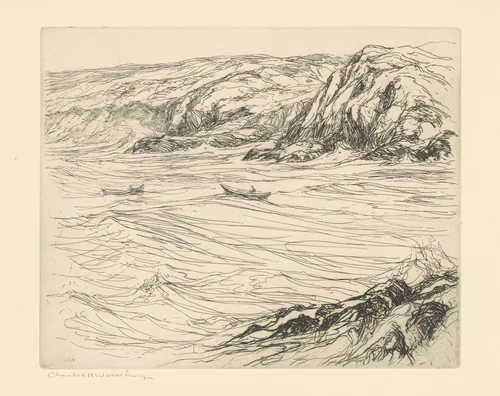
While his Charles H. Woodbury paintings are highly regarded, his technical versatility is perhaps best displayed in his graphic output. Woodbury embraced etching and drypoint, producing refined images that capture the interplay of light and shadow on water and vessel. The detailed realism of works like the etching Ogunquit Fisherman reveals his dedication to documenting the harsh realities of coastal commerce. His interests were not confined to the domestic shore; through extensive travel, he produced rapid, economical sketches documenting international ports, as seen in the quick visual notes of St. Kitts and St. Vincent. This willingness to explore differing maritime zones, alongside his depictions of New England life, established him as an observer of global maritime culture.
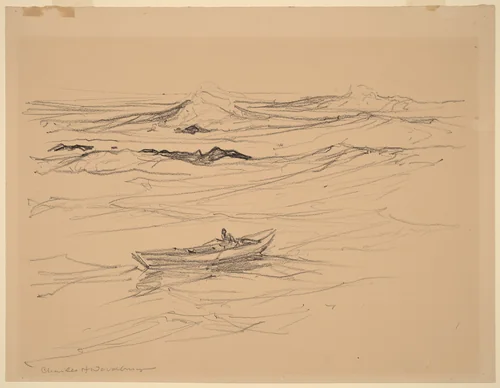
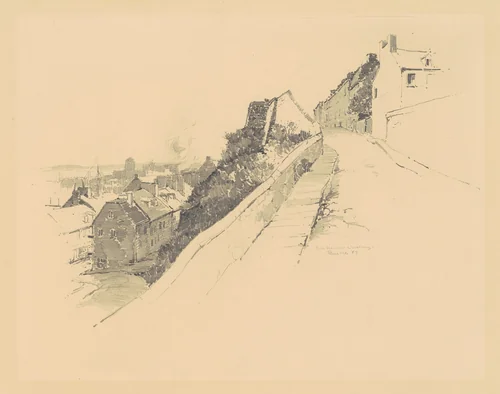
Woodbury possessed a distinctly modern sensibility, showing equal interest in the poetry of success and the mechanics of failure. This is subtly evident in the focused tension of the drawing Engine Trouble, a work that captures the vulnerability of man against the power of industrial technology when it falters. His skill in rendering movement and atmosphere, whether capturing the bustling street life in Near Hope Gate, Quebec or the endless motion of the open sea, ensured his place among the era’s leading marine artists.
Today, Woodbury’s legacy is preserved in major institutions, including the National Gallery of Art, which holds a significant collection of his drawings and prints. As many of his key works have entered the public domain, the opportunity to study his technique has expanded considerably. Researchers and collectors frequently seek Charles H. Woodbury prints, and the availability of high-quality prints and downloadable artwork has ensured that his nuanced vision of the sea remains accessible to a wide audience.
Source: Wikipedia · CC BY-SA 4.0