Charles Frederick William Mielatz
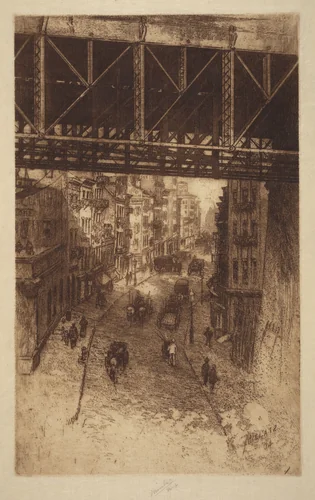
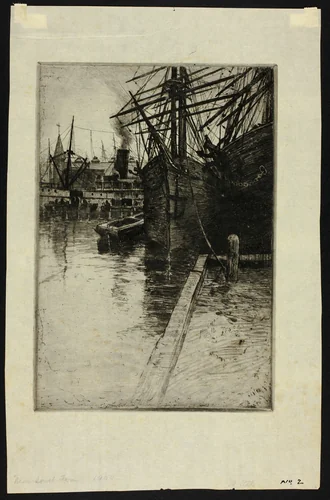
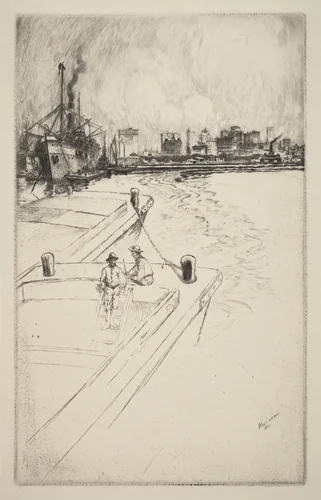
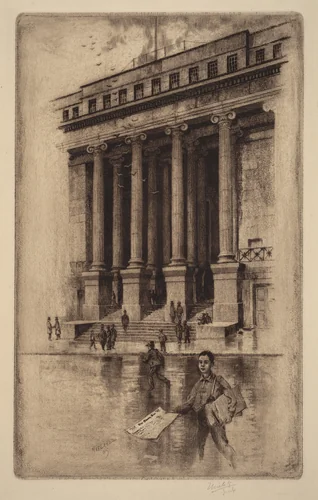
Charles Frederick William Mielatz (1864-1903) was a foundational figure in American printmaking at the turn of the 20th century. Born in Prussia, he established himself as a profoundly versatile American graphic artist, excelling equally as an etcher, painter, lithographer, and influential educator. He is justly celebrated as the preeminent etcher of architectural subjects in the United States, providing a meticulous visual record of a rapidly changing nation. His technical command and dedication to urban structure secured his place in major institutional holdings, including the Art Institute of Chicago and the National Gallery of Art.
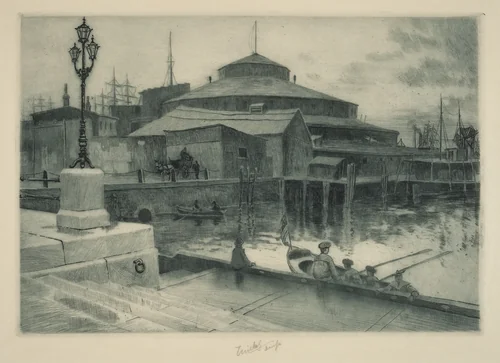
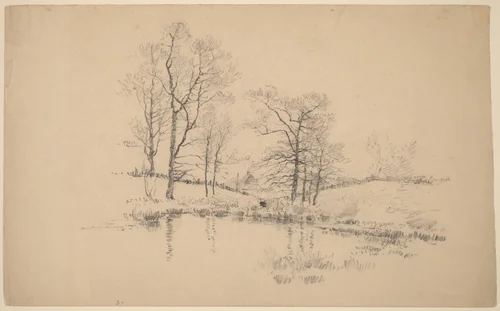
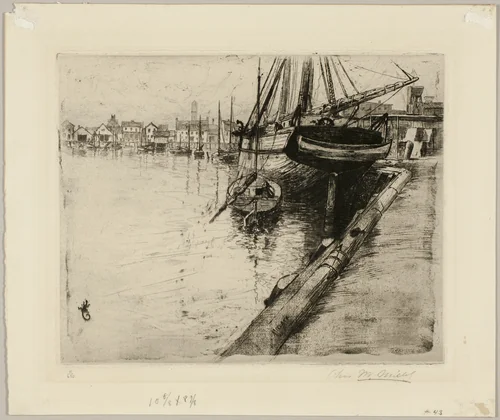
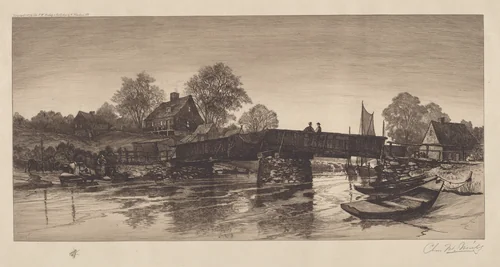
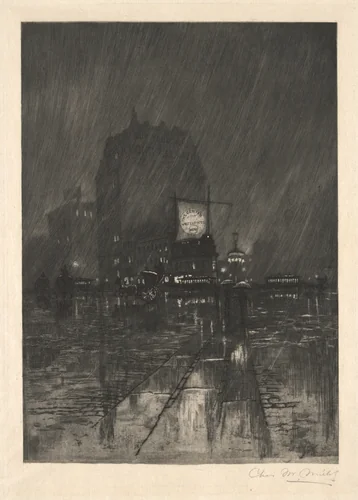
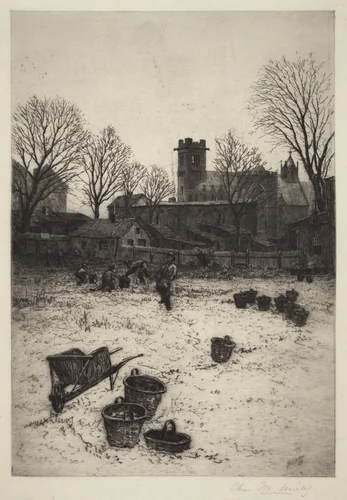
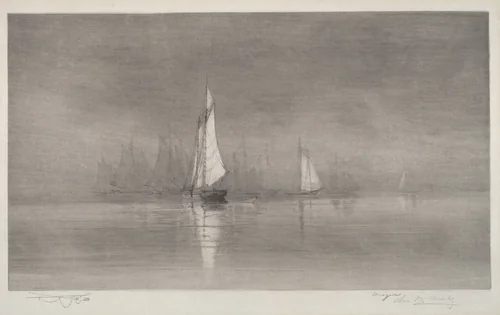
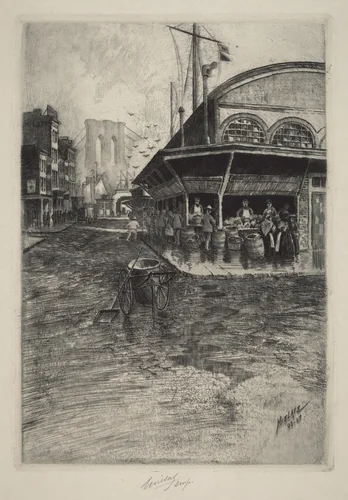
While Mielatz worked across media, producing both drawings and Charles Frederick William Mielatz paintings, his most enduring legacy lies in the fidelity and detail of his prints. He possessed an extraordinary ability to utilize line to convey texture, atmosphere, and the immense weight of stone and wood. His subject matter was expansive, moving effortlessly from naturalistic scenes, such as the evocative early etching Meadow Pond, New York, to detailed depictions of civic history and architecture, exemplified by the important work Castle Garden. The consistent quality of his production ensured that his finished impressions were often considered museum-quality works even during his active years.
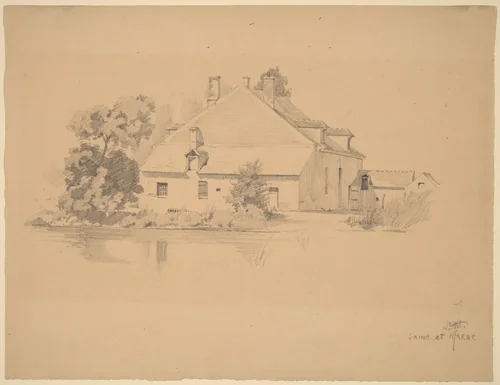
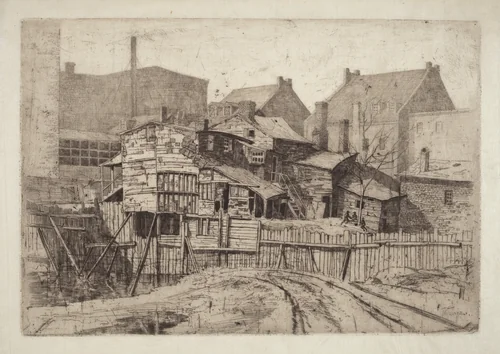
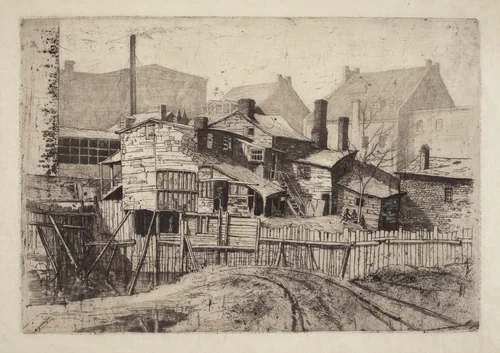
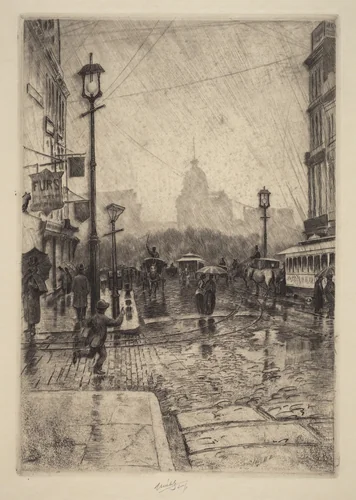
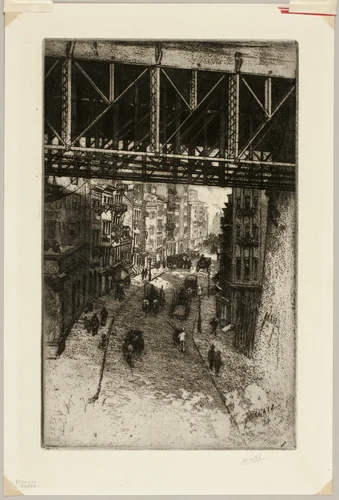
Mielatz was active during a critical period of American urbanization and the modernization of print technology. Unlike peers who focused solely on dramatic natural vistas, Mielatz possessed a specific fascination with the geometry of the built environment. He treated the common city street and the utilitarian structure, such as the subjects of his pair of works titled Untitled (Wooden House in City), with the same gravitas usually reserved for classical monuments. It is perhaps telling that an artist known primarily for capturing the immovable reality of American architecture also spent time abroad, documenting regions such as the French countryside in his print Seine et Marne, suggesting a necessary artistic curiosity about the roots of European design traditions.
Today, Mielatz’s consistent focus on precise rendering elevated architectural etching from mere documentation to a high art form. As much of his work enters the public domain, his legacy continues to expand, allowing collectors and historians to access high-quality prints and downloadable artwork. These royalty-free resources ensure that Charles Frederick William Mielatz prints remain central to the study of fin-de-siècle American graphic arts.
Source: Wikipedia · CC BY-SA 4.0