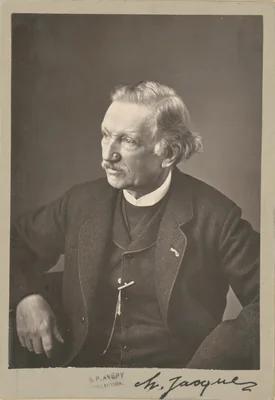
Charles Émile Jacque
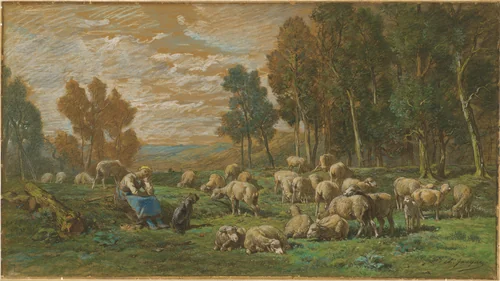
Charles Émile Jacque (1813-1888) holds a crucial position in the history of nineteenth-century French landscape art, standing alongside Jean-François Millet as a principal figure of the Barbizon School. While the movement is generally celebrated for its naturalistic depiction of the forest and open fields, Jacque carved a distinct specialty within Pastoralism, focusing on the intimate relationship between the peasant, their domestic animals, and the architecture of the farmstead.
Jacque’s technical prowess, particularly in printmaking, was rooted in an unexpected early training. Prior to launching his artistic career, he spent seven years in the French Army where he received extensive instruction engraving military maps. This rigorous foundation in line work transferred directly to his art, allowing him to render the texture of wool, the roughness of bark, and the patina of old plaster with exceptional authority. This discipline set him apart, transforming his etchings and drypoints from mere reproductions into highly original works, establishing him as a master graphic artist during the revival of etching in France.
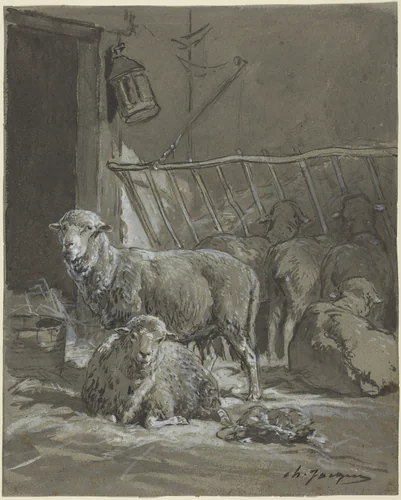
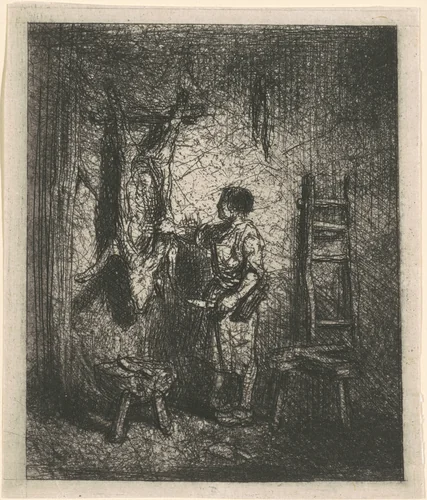
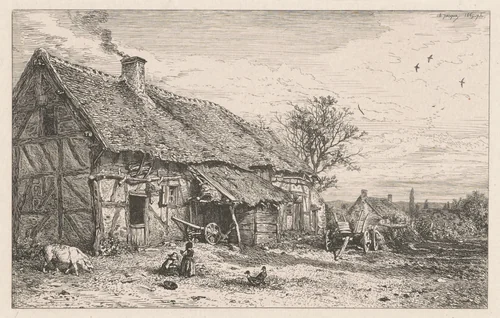
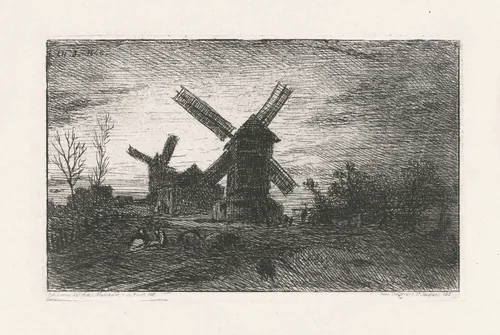
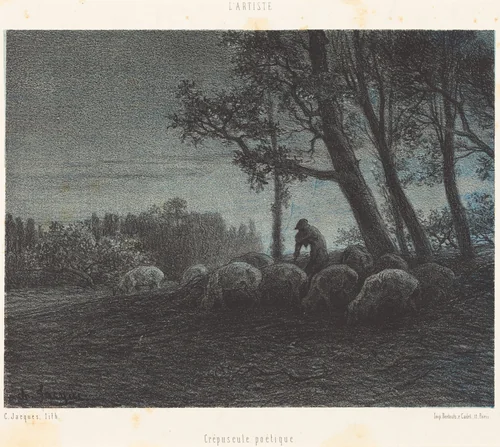
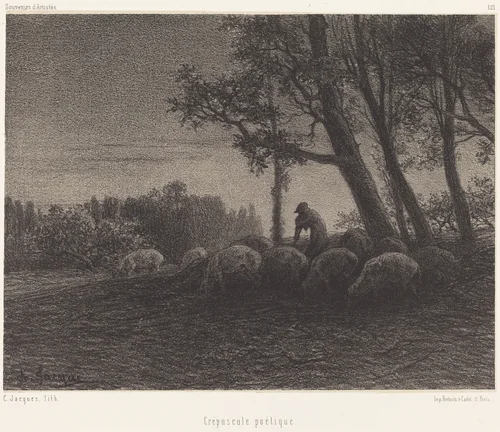
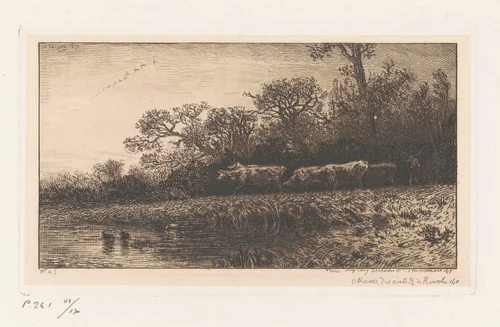
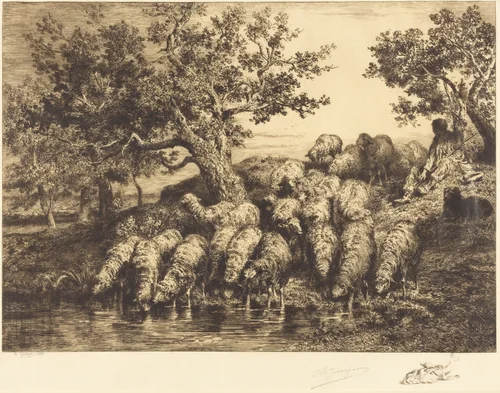
His oeuvre encapsulates the rural mood of the era, moving between sweeping views, such as Two Windmills at Montmartre, and detailed genre scenes capturing daily life, including The Pig Butcher and the contemplative Peasant's House. Jacque’s true innovation lay in elevating subjects often relegated to mere background elements; his animals, such as those in the celebrated study Sheep in a Manger, are treated not as supporting actors but as primary, dignified subjects.
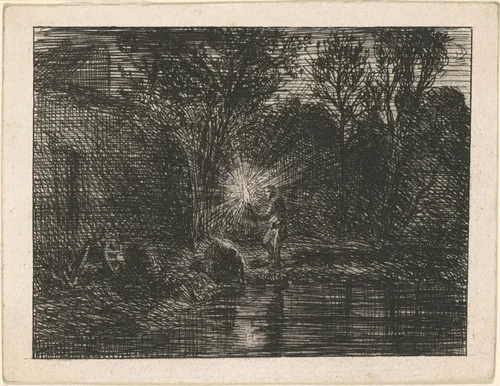
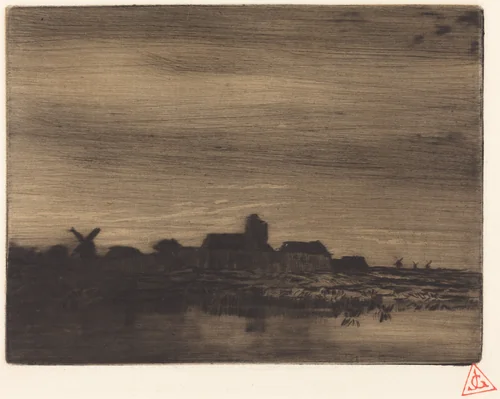
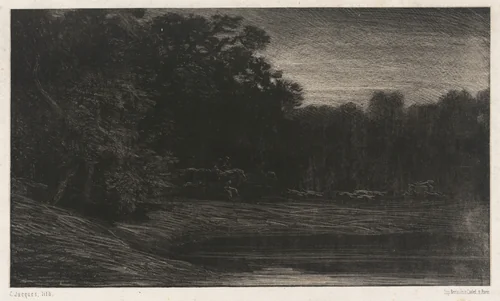
Jacque’s dual commitment to oil painting and high-quality prints cemented his influence. He possessed a keen ability to manipulate light and atmosphere, whether capturing the quiet tension of Riverbank at Night or the bright interior of a stable. Today, major institutions like the National Gallery of Art maintain substantial collections of his work. While his Charles Émile Jacque paintings remain highly valued, the technical mastery of his Charles Émile Jacque prints ensures his enduring legacy, many of which are now accessible within the public domain for enthusiasts and scholars alike.
Source: Wikipedia · CC BY-SA 4.0