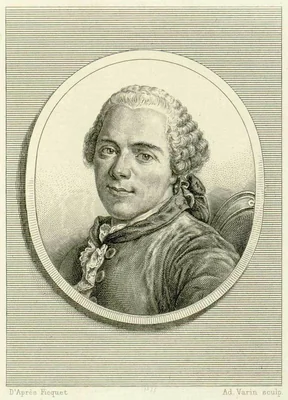
Charles Eisen
Charles-Dominique-Joseph Eisen was a key French painter and engraver active throughout the mid-eighteenth century, a transitional period spanning the late Rococo exuberance and the first stirrings of Neoclassical precision. Operating primarily between 1700 and 1765, Eisen was not principally a creator of large-scale canvas work, but rather a master of intimate, highly detailed graphic arts. This focus allowed him to exert substantial influence on the visual culture of the Enlightenment, defining the aesthetic standard for sophisticated book illustration and courtly genre scenes.
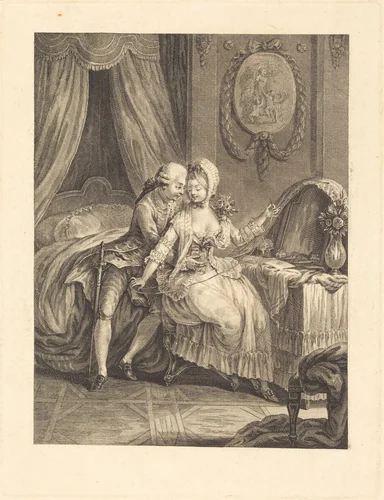
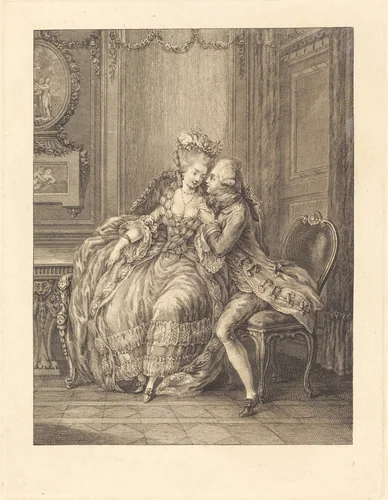
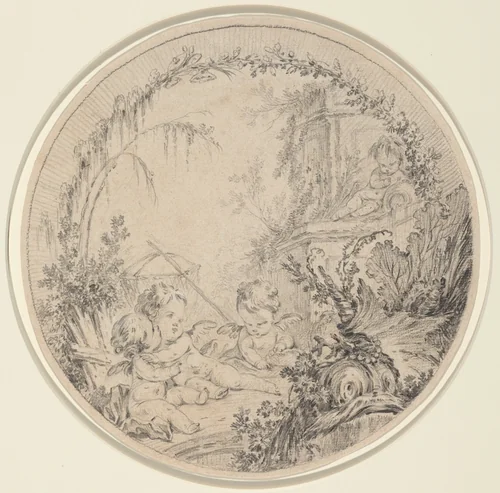
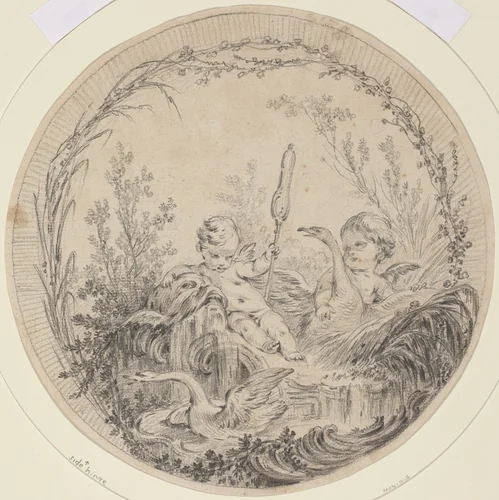
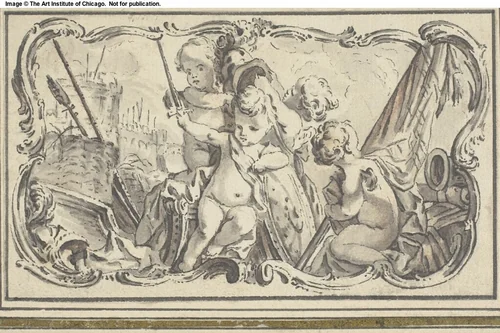
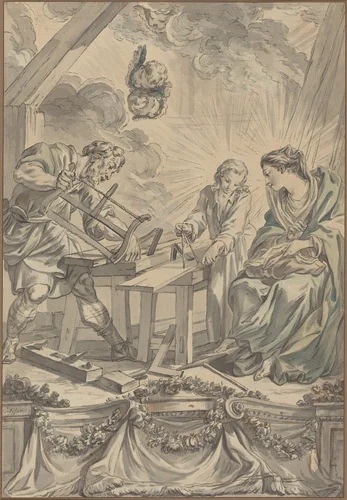
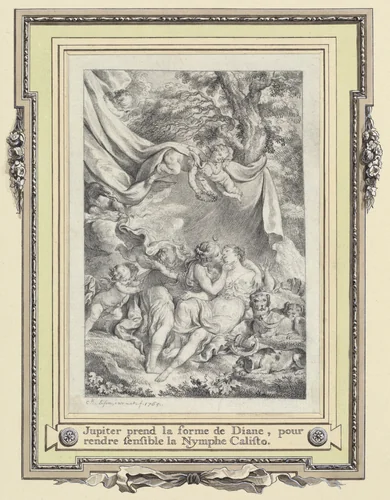
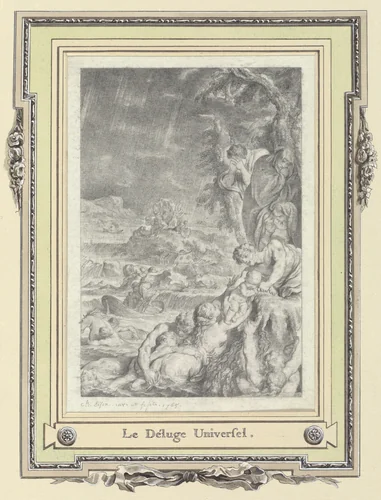
Eisen specialized in producing preparatory drawings and finished engravings that captured the characteristic refinement and frequently witty eroticism of Parisian aristocratic life. His subjects often occupied the elegant space between lighthearted mythological allegory and perceptive contemporary genre observation. This duality is demonstrated in the contrast between the private, intimate mood of the drawing Dame a sa toilette and the dynamic, classical exuberance found in compositions such as Three Putti with a Fishing Net and Cupids at War. Works like L'amant pressant further solidify his skill in depicting complex, staged interactions with an economy of line, a hallmark of excellent draftsmanship.
His dedication to graphic mediums ensured that Charles Eisen prints and illustrations reached a significantly wider audience than the works of contemporaries who focused solely on monumental painting or fresco cycles. This accessibility made his compositions highly sought after by collectors and publishers seeking visual sophistication. The recognition of his technical mastery is reflected in the retention of his original works in major American collections, including the Art Institute of Chicago and the National Gallery of Art.
Today, his oeuvre continues to be studied for its technical brilliance and historical representation. Many of his elegant and charming compositions are considered museum-quality examples of eighteenth-century printmaking, and due to their age, are readily available in the public domain. These works, whether viewed as original impressions or as high-quality prints, confirm Eisen’s position as a crucial but understated figure whose visual vocabulary continues to resonate.
Source: Wikipedia · CC BY-SA 4.0