Charles Demuth
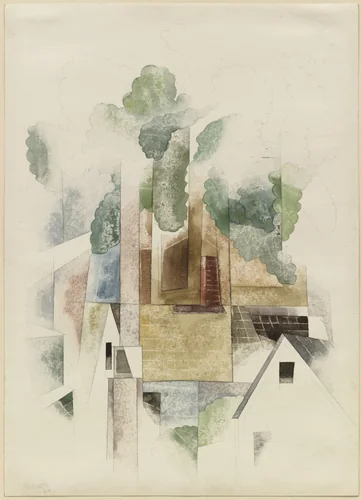
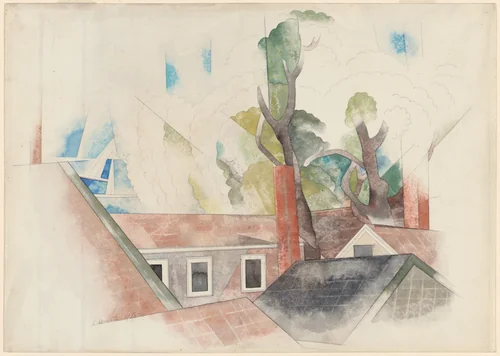
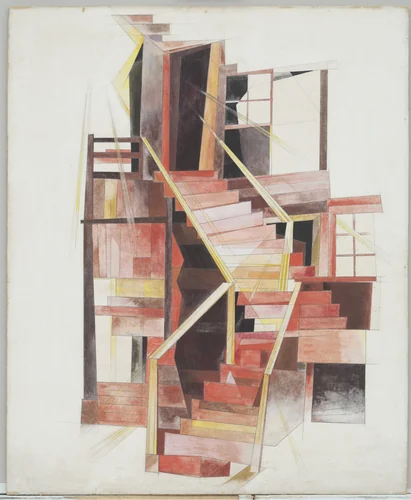
Charles Demuth (1883-1935) holds a pivotal position in American Modernism, having been instrumental in defining and developing Precisionism, a movement that rigorously applied Cubist structural logic to themes of American industrial and urban architecture. A prodigious draftsman, Demuth specialized for the majority of his career in watercolors, turning to oils only late in life to execute his iconic geometric studies. His work is characterized by a sophisticated visual wit and a technical command of transparency and light, bridging the European avant-garde with a uniquely American sensibility.
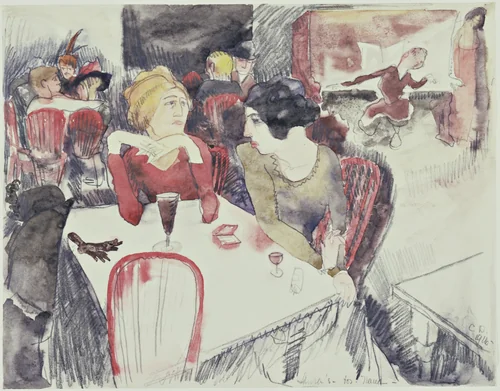
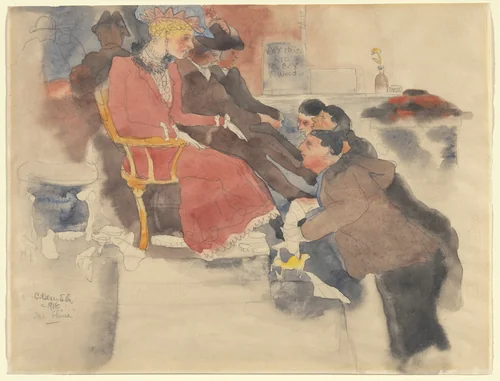
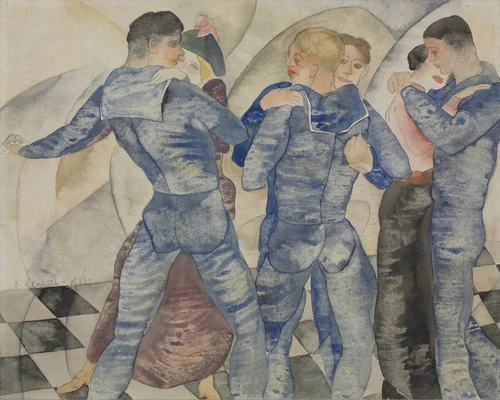
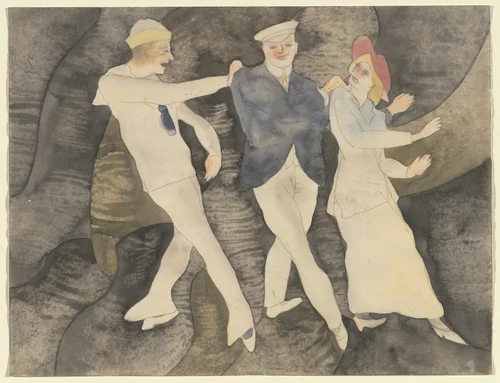
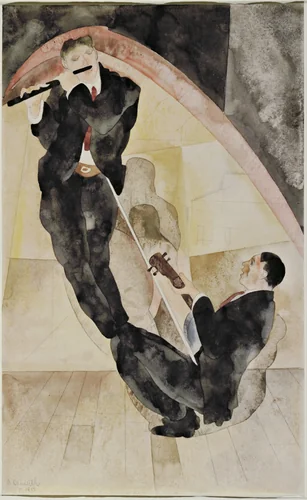
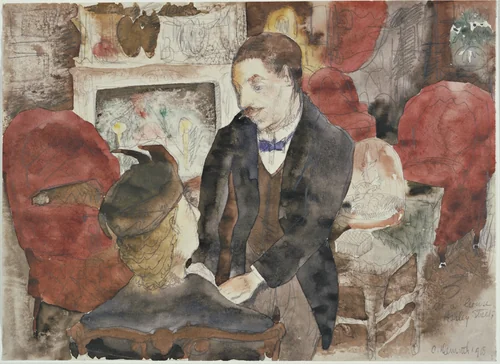
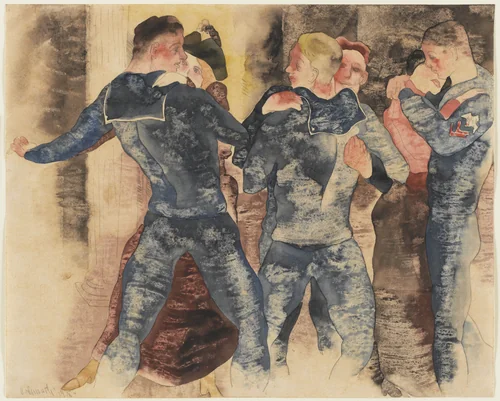
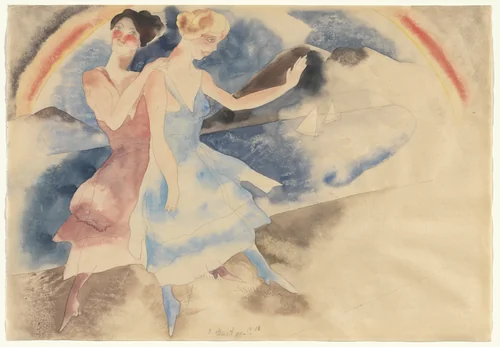
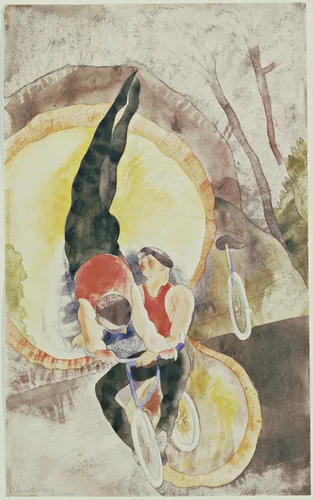
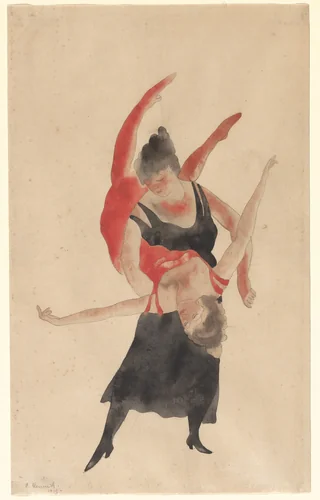
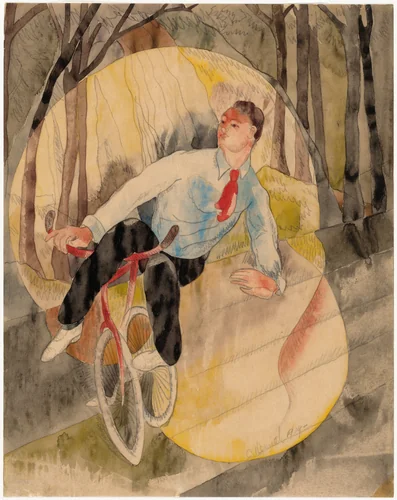
Between 1916 and 1919, Demuth produced a concentrated series of watercolors and drawings that cemented his reputation as a master observer of contemporary culture. This body of work often captured the shifting social mores and complex energies of the modern city, focusing heavily on vaudeville, nightlife, and literature. Illustrations such as the highly complex Nana (Seated Left) and Satin at Laure's Restaurant, derived from Emile Zola’s novel, showcase his ability to define character and atmosphere through sparse, resonant detail. Similarly, works like The Shine, Dancing Sailors, and Vaudeville Musicians explore the electric, often gritty, spectacle of public entertainment with an elegant objectivity.
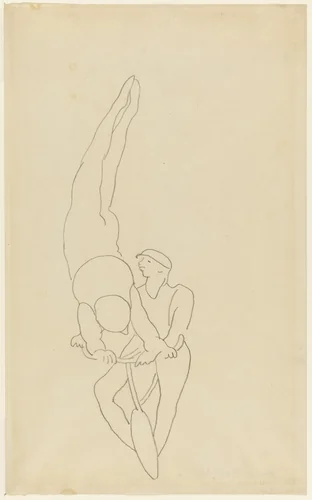
Demuth’s figural studies are remarkable for their blend of technical precision and narrative suggestiveness. He was a tireless observer of metropolitan life, capturing these lively, often daring scenes while battling diabetes, an illness that severely restricted his mobility and complicated his working life. These influential drawings are today recognized as museum-quality foundational pieces of American figurative art, residing in major institutions including the Museum of Modern Art, the National Gallery of Art, and the Cleveland Museum of Art.
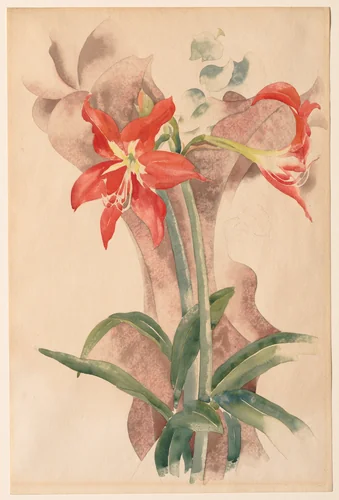
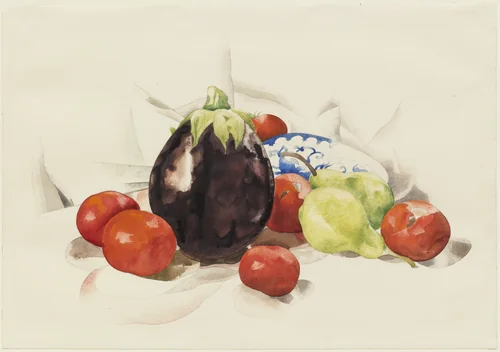
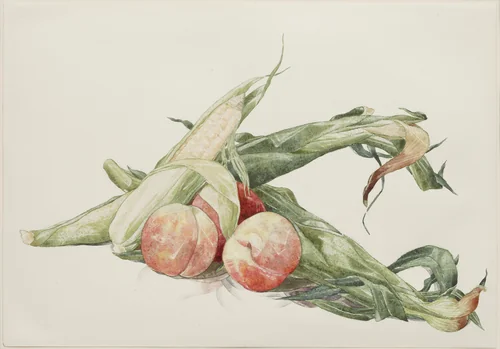
Though he is best known for his stark, geometric Charles Demuth paintings depicting silos and factories in oil, it is his nuanced handling of the saturated wash that remains his greatest technical legacy. For contemporary collectors and historians, the accessibility of his visual output has increased significantly; many of his important works are now within the public domain. This ensures that Demuth’s distinctive synthesis of structure, satire, and atmospheric clarity remains widely studied, with his work readily available as high-quality prints for new audiences.
Source: Wikipedia · CC BY-SA 4.0