Charles DeForest Fredricks
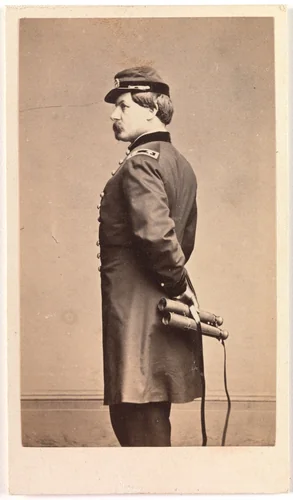
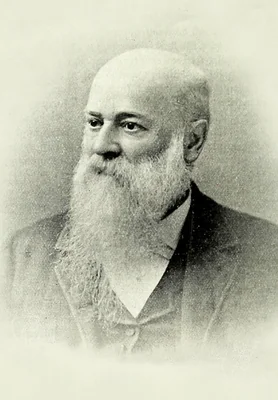
Charles DeForest Fredricks secured his place in the nascent history of American photography during a brief but pivotal period, active primarily between 1855 and 1862. Identified simply as an American photographer, his surviving oeuvre suggests an artist keenly engaged with both the commercial demands of portraiture and the conceptual limits of the medium. Working during the crucial technological transition from the unique Daguerreotype to the reproducible format of the Carte de Visite, Fredricks demonstrated a technical fluency necessary to capture the delicate balance between documentation and artistic expression.
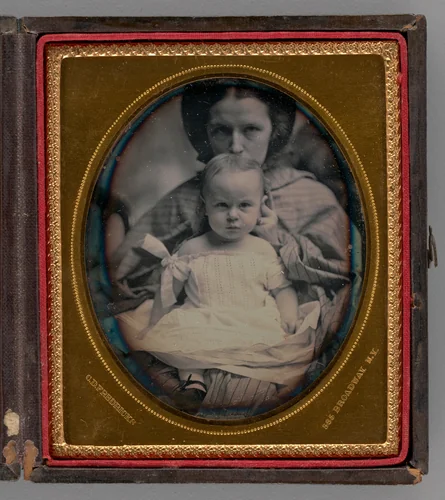
Fredricks is particularly noted for his explorations of the double portrait and his willingness to tackle unusual studio subjects, evidenced by the arresting character study, Clown. While conventional portraiture, such as Untitled (Portrait of a Woman holding a Child), demonstrates the technical mastery required of successful commercial studios, his more advanced works challenge the static nature of the contemporary photograph. Pieces like Double Portrait of Man Seated and Standing at a Desk and Double Portrait of Man Facing Self from Both Sides of a Desk utilized precise multiple exposures to represent a figure in simultaneous action, creating a complex visual narrative within a single frame. This careful technique allowed the sitter to become both observer and observed, generating a subtle, internal commentary on self-presentation common in Victorian society.
That Fredricks’s relatively small body of work achieved immediate institutional recognition speaks to its enduring museum-quality. Today, examples of his photography reside in major collections, including the Metropolitan Museum of Art and the Art Institute of Chicago, testifying to their artistic and historical value. Many of these important Charles DeForest Fredricks prints, recognized for their clarity and pioneering technique, have since been digitized and entered the public domain. This accessibility allows researchers and enthusiasts worldwide to study these early experiments, often viewing high-quality prints derived from the original plates.
Given the era’s demanding chemical processes and extremely slow shutter speeds, Fredricks’s successful execution of complex double exposures demands respect. It takes a certain unflappable patience, bordering on audacity, to ask a paying client to sit perfectly still for two separate, lengthy exposures, knowing the slightest shift in the camera or subject would ruin the image entirely. His focused, impactful output secures his status as a key, if slightly elusive, figure in the early development of American visual culture.
Source: Wikipedia · CC BY-SA 4.0
![[Clown] by Charles DeForest Fredricks, photograph, 1855-1865](https://img.artbee.org/c63c5768-5941-4294-b4cf-1db11df6d0ca/small.webp)
![[Double Portrait of Man Facing Self from Both Sides of a Desk] by Charles DeForest Fredricks, photograph, 1860-1869](https://img.artbee.org/7928288d-8e7b-402e-80f4-6aaaba887754/small.webp)
![[Double Portrait of Man Seated and Standing at a Desk] by Charles DeForest Fredricks, photograph, 1860-1869](https://img.artbee.org/9899257a-88c4-41cc-b353-9c47dd85be54/small.webp)
![[Unidentified Man] by Charles DeForest Fredricks, photograph, 1860-1869](https://img.artbee.org/1c350b5b-6360-4747-aa70-b9d351aa0ee1/small.webp)