Charles D. Fredricks
Charles DeForest Fredricks was an American photographer who established a rigorous, high-profile studio practice during the crucial transitional period of the mid-nineteenth century, approximately 1855 to 1860. Working at the cusp of modern mass media, Fredricks operated when photography was rapidly evolving from unique, expensive Daguerreotypes to easily reproducible formats such as the carte de visite. His success is measured less by volume and more by the extraordinary caliber of his sitters, whose portraits now constitute essential visual documents of the era.
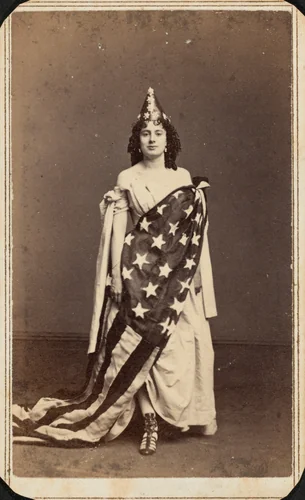
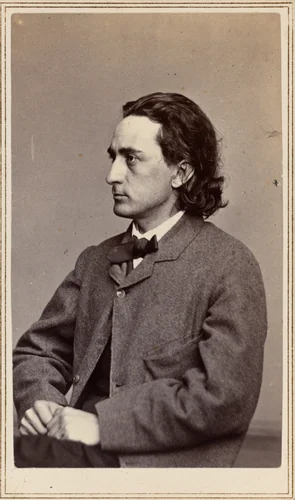
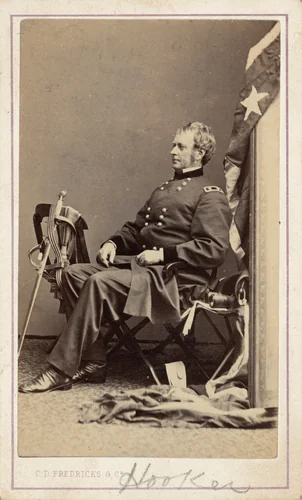
The surviving documentation of Fredricks’s output, housed notably in the collections of the National Gallery of Art, confirms his access to the foremost figures in American culture, finance, and conflict. His portfolio includes theatrical figures such as the celebrated tragedian Edwin Booth, as well as society portraits, exemplified by his study of Isabelle “Belle” Freeman. Fredricks also captured key military leadership, providing a rare studio view of General Joseph Hooker before the weight of the Civil War defined his public image.
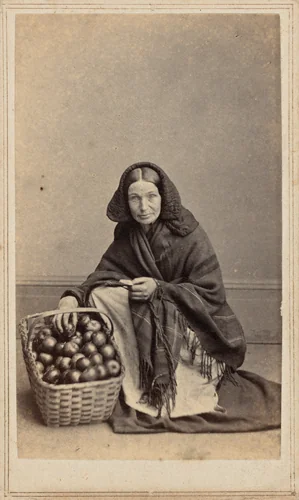
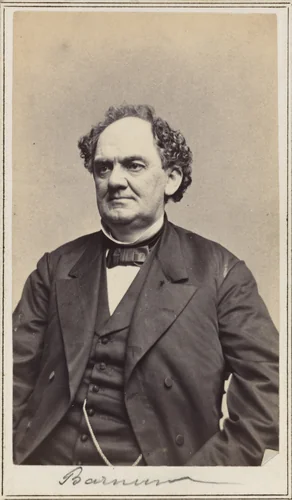
Technically, Fredricks prioritized clarity and solemnity in his compositions. His sittings typically deployed deep focus and controlled lighting designed to convey authority, a method particularly evident in his dignified Portrait of a Woman. Perhaps his most commercially significant achievement, however, was securing the likeness of the great showman, P. T. Barnum. To capture Barnum, a figure whose very livelihood depended on the careful crafting and saturation of his own public image, confirms Fredricks’s position in the upper echelon of American commercial photography and underscores his innate understanding of celebrity representation.
Though documentation of his active period is concise, Fredricks’s works are invaluable for historians studying the visual culture of the period. These museum-quality photographs, which have long since entered the public domain, represent a significant photographic legacy. Researchers often seek Charles D. Fredricks prints, recognizing their historical import. Today, the detailed precision captured in his original work remains highly valued, with many institutions making high-quality prints and downloadable artwork available for non-commercial study.
Source: Wikipedia · CC BY-SA 4.0