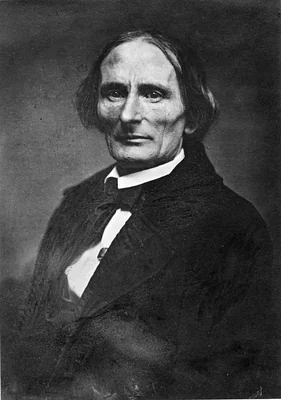
Charles Cromwell Ingham
Charles Cromwell Ingham (1796-1863) occupies a unique and historically significant position in the development of American visual culture. An Irish-born painter who immigrated to the United States around 1816, he quickly established himself as one of New York’s foremost portraitists during the early nineteenth century. Though his body of work is relatively concise, spanning an active period from approximately 1796 through 1846, his historical importance extends well beyond his canvas output; he was a pivotal co-founder of the National Academy of Design (NAD), providing structure and institutional legitimacy to the burgeoning American art world.
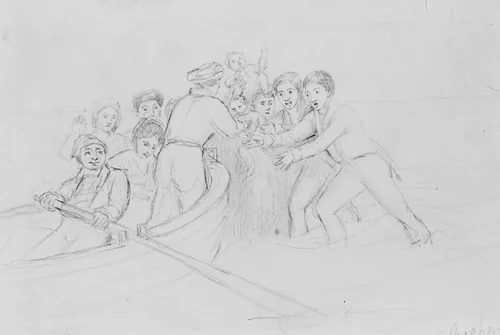
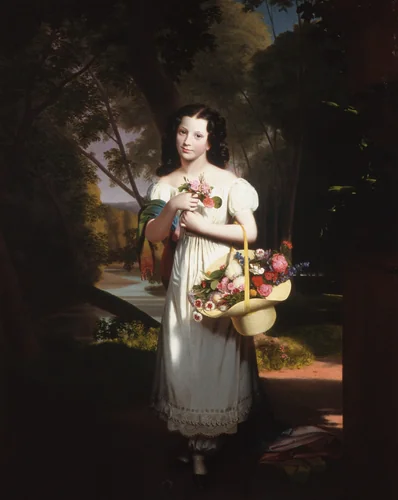
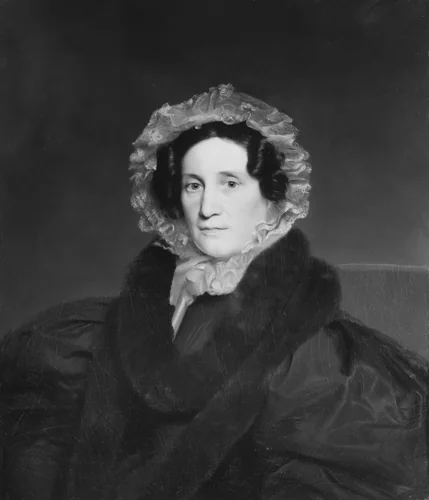
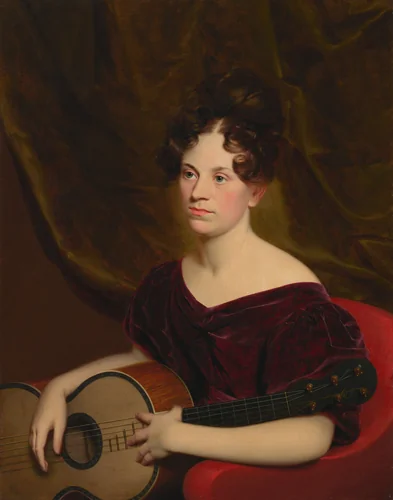
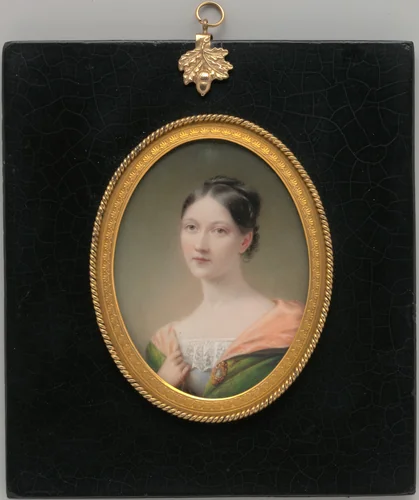
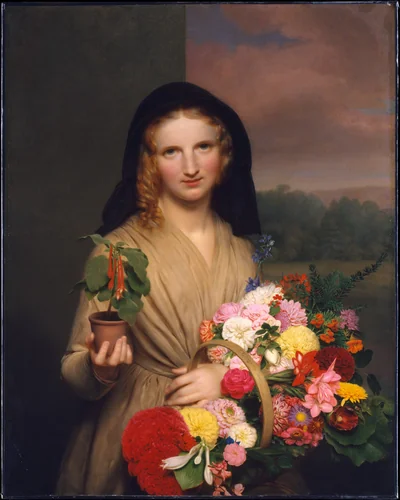
Ingham’s style was defined by a highly refined, meticulously detailed technique, reflecting the influence of Irish and British academic training. While capable of historical subjects, such as the dramatic maritime scene Shipwreck, his reputation rested firmly on his ability to capture the texture and social nuance of contemporary high society. He specialized in creating polished, almost porcelain-like finishes on skin, coupled with extraordinary attention to the details of fabrics, lace, and jewelry. He was notably successful in rendering the likenesses of women and children, often infusing his subjects with an engaging, if formally controlled, vitality, as exemplified by his acclaimed canvas, Little Girl with Flowers (Amelia Palmer). Ingham’s focus on permanence and idealized depiction perhaps explains a curious aspect of his career: he reportedly harbored a staunch, though ultimately futile, skepticism toward the emerging technology of photography, viewing the mechanical process as an inadequate substitute for the artist’s unique interpretive skill.
The creation of the National Academy of Design in 1825 stands as Ingham’s most lasting institutional legacy. Along with figures like Samuel F.B. Morse, Ingham helped steer the NAD away from the more exclusionary and cumbersome practices of earlier art organizations. He served the Academy zealously in various capacities, including as Vice-President, providing a crucial administrative foundation for formal art instruction and exhibiting opportunities in a city that was rapidly solidifying its role as the nation’s cultural capital. This effort helped legitimize painting as a serious, professional endeavor in the United States, setting standards that would influence generations of American artists.
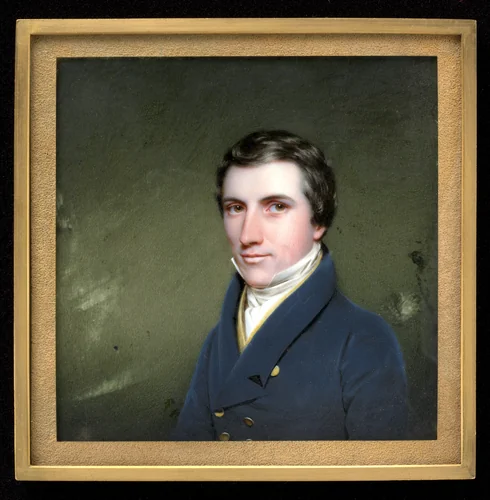
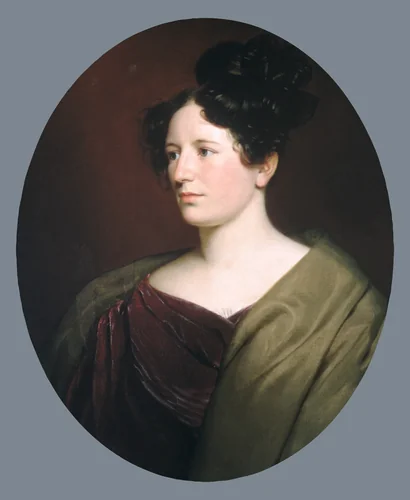
Ingham’s surviving Charles Cromwell Ingham paintings constitute a valuable visual record of early New York’s cultural elite. His clientele included significant figures such as Benjamin Moore McVickar, Mrs. David Cadwallader Colden, and the celebrated patron Mrs. Luman Reed. These high-quality prints and original works are preserved in major public repositories, including the Metropolitan Museum of Art and the National Gallery of Art. Due to the age of these crucial artworks, many of Ingham’s works are now in the public domain, ensuring that scholars worldwide can access downloadable artwork and utilize royalty-free images of this foundational American portraitist.
Source: Wikipedia · CC BY-SA 4.0