Charles Clément Bervic
Charles Clément Bervic (born Balvay) holds a significant place in the history of French reproductive printmaking, active during the complex years spanning the late 18th and early 19th centuries (circa 1780-1802). As an engraver, Bervic distinguished himself through exceptional technical specificity, working exclusively in intaglio and mastering the burin, the precision tool necessary for the deepest and finest lines. This commitment to the most rigorous methods allowed him to translate the texture, light, and anatomical subtleties of contemporary painting into monochrome engravings characterized by remarkable tonal depth and textural fidelity.
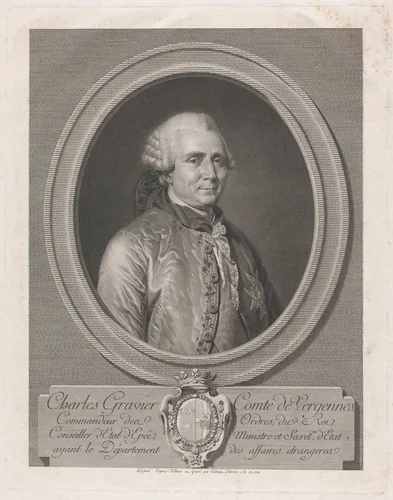
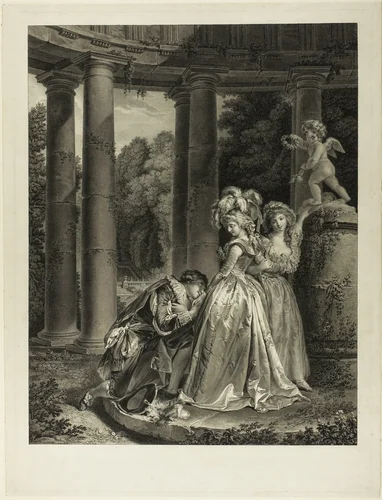
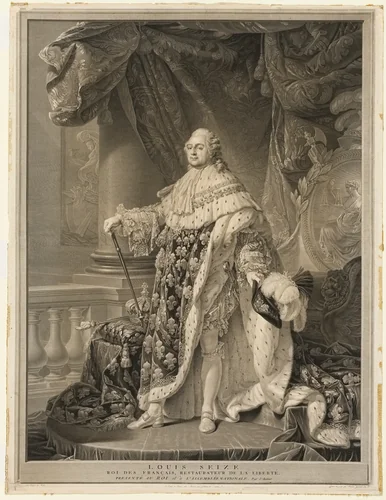
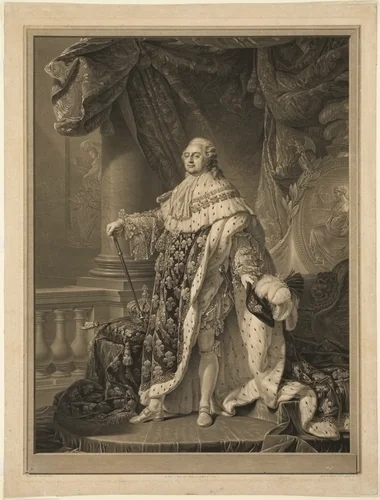
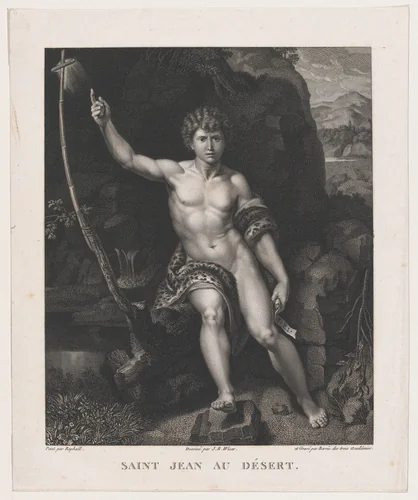
Bervic’s work flourished during a pivotal era for print culture. Before widespread photographic reproduction, engravers held the crucial societal role of disseminating the likenesses of political, military, and religious leaders. His major output centered on monumental portraiture, allowing figures such as the ill-fated Louis XVI and the powerful diplomat Charles Gravier, Count of Vergennes, to be known across France and Europe. These engravings function both as artifacts of state documentation and as exceptional examples of neoclassical draftsmanship. The print La Déclaration further grounds his practice in the realm of contemporary political life, providing insight into governmental communications during the turbulent years of revolution and transition. Beyond political portraiture, Bervic demonstrated versatility in religious subjects, such as Saint John the Baptist in the Desert, showcasing his ability to render complex compositions, human figures, and subtle atmospheric effects with rigorous technical control.
A subtle irony attends Bervic’s legacy of exacting technical precision: owing to an early error in transcribing the baptismal register, the artist is also sometimes known inaccurately as Jean Guillaume Bervic. Regardless of the minor historical confusion over nomenclature, the enduring quality of his production is undisputed. His dedication to craft ensured that his works quickly attained recognition, entering important collections internationally. Today, Bervic’s major pieces, found in institutions including the Metropolitan Museum of Art and the Art Institute of Chicago, represent some of the era's finest museum-quality prints. Fortunately for researchers and enthusiasts, much of this detailed historical documentation is now digitized and widely available within the public domain as high-quality prints.
Source: Wikipedia · CC BY-SA 4.0