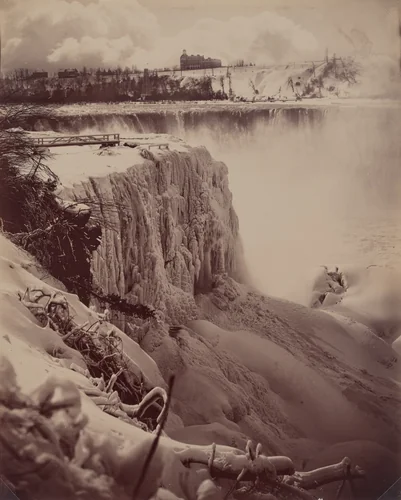
Charles Bierstadt
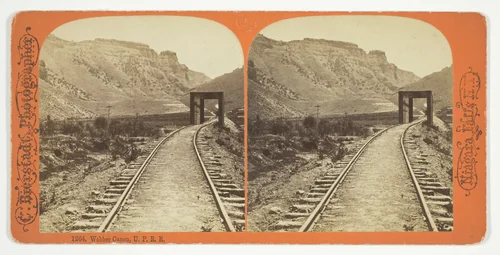
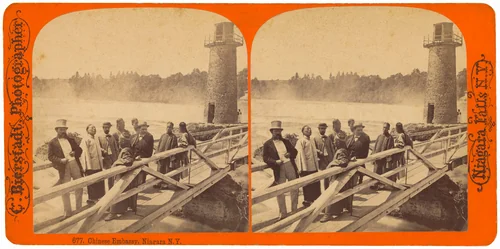
Charles Bierstadt (1819–1903) was a pivotal figure in American nineteenth-century photography, defined by his specialization in the stereoscopic view. Active professionally from roughly 1863 to 1880, Bierstadt operated during a transitional era when photography became both a crucial tool for documentation and a widely consumed form of mass entertainment. He employed the stereograph-a format combining dual exposures to create a three-dimensional illusion-to market and document the expanding American landscape.
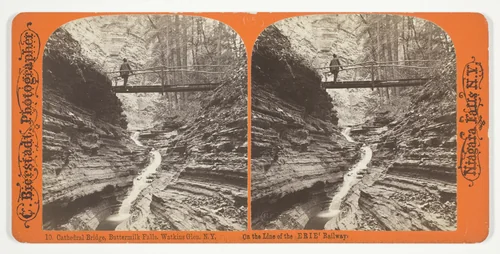
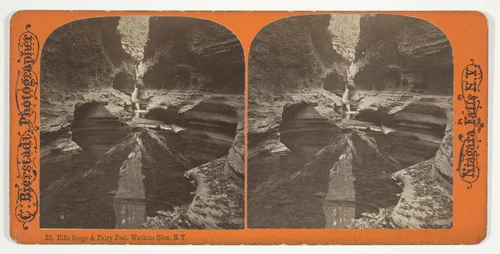
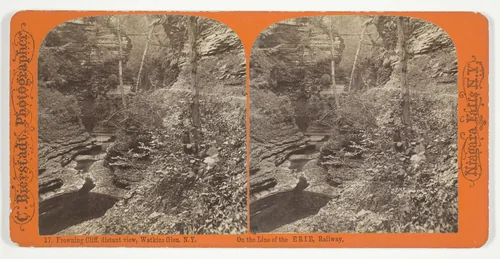
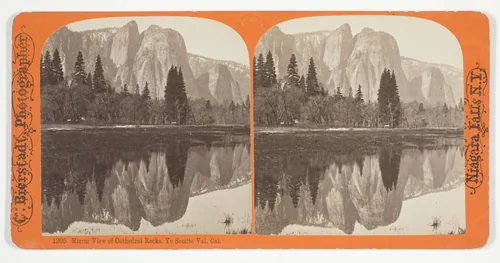
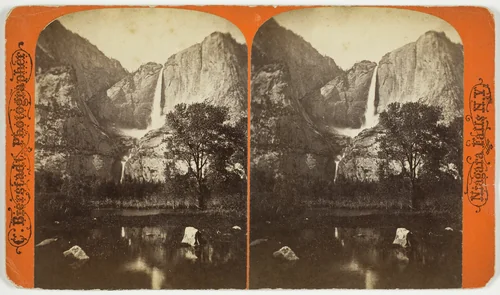
Bierstadt’s work functioned at the intersection of geographical record and visual spectacle. His images often focused on destinations made newly accessible by rail, capitalizing on the public's appetite for natural wonders. This interest is evident in his extensive catalog documenting the deep ravines and geological formations of Watkins Glen, New York, including the series On the Line of the ERIE, Railway. Key pieces from this documentation, such as Cathedral Bridge, Buttermilk Falls, Watkins Glen, N.Y., highlight his technical skill in composing complex views designed to exploit the depth effects inherent to the stereoscope. His camera also traveled West, capturing iconic destinations like Yosemite, exemplified by the precision of Mirror View of Cathedral Rocks. Yo Semite Val, Cal.
While his celebrated sibling, Albert Bierstadt, monumentalized the American West on vast canvases, Charles quietly specialized in repeatable, highly precise miniature studies. This difference in scale and intent positioned Charles as an entrepreneurial artist who adapted photographic technology to meet broad consumer demand for realistic, immersive visual experiences. His production required exacting craftsmanship, ensuring the alignment and quality necessary for functional stereoscopic viewing.
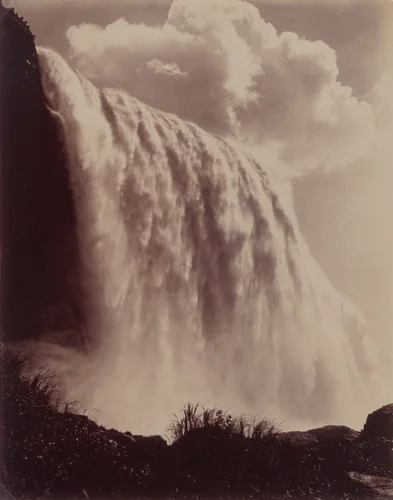
The continued relevance of his work is demonstrated by its inclusion in major institutional holdings, notably the National Gallery of Art and the Art Institute of Chicago. For scholars and enthusiasts seeking to study the mechanical and artistic achievements of the era, the availability of Charles Bierstadt prints in the public domain allows for renewed appreciation of his contribution to visual history. His photographs remain exceptional examples of museum-quality scenic documentation.
Source: Wikipedia · CC BY-SA 4.0