Charles Bentley
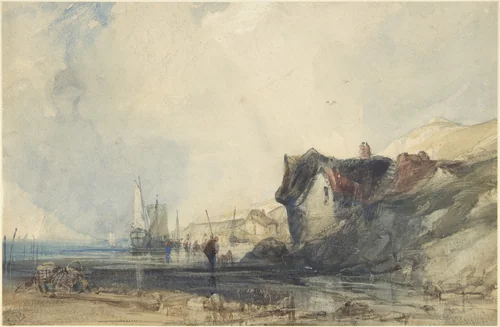
Charles Bentley (1806–1854) holds a secure place among early 19th-century English artists whose reputation rests upon technical mastery of lithography and detailed topographical draftsmanship. Active during the transitional period between 1828 and 1841, Bentley generated work that was commercially successful and artistically rigorous, earning his prints and drawings inclusion in major institutional holdings such as the Metropolitan Museum of Art, the Cleveland Museum of Art, and the Art Institute of Chicago.
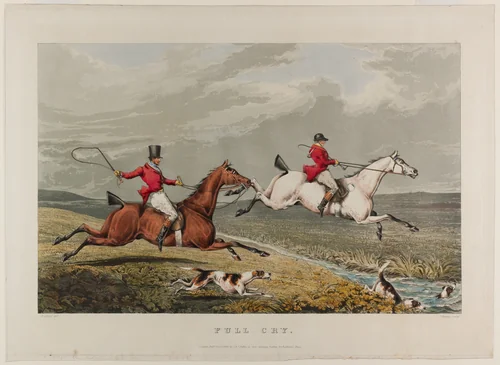
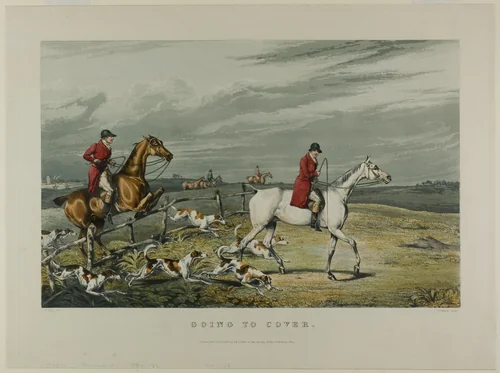
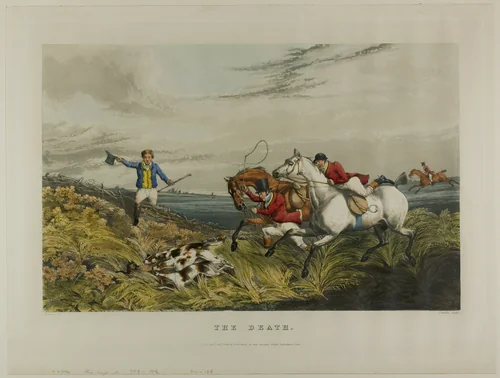
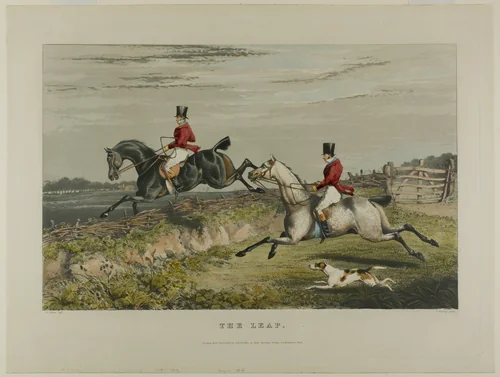
Bentley specialized in subjects of interest to the rising middle and upper classes: meticulously observed architectural landscapes and the high-energy demands of the traditional sporting scene. His proficiency with reproductive techniques like lithography was key to his output, allowing for the widespread circulation of Charles Bentley prints across the kingdom. He captured the essence of the chase in his most recognizable sequence, the Fox Hunting series. This visual narrative methodically moves through the pursuit with compositions like Going to Cover, The Leap, Full Cry, and the ultimate resolution in The Death. These images, combining accurate landscape representation with the dramatic tension of the hunt, served as definitive visual documents of aristocratic leisure.
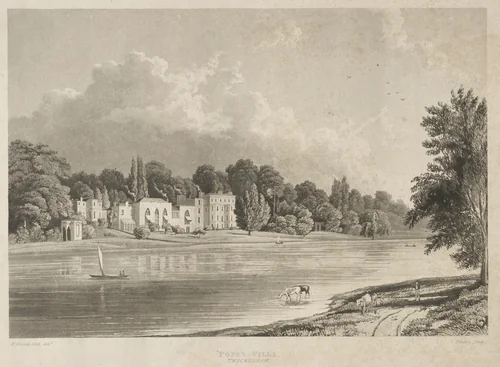
Yet Bentley’s portfolio was not limited to the thrill of the chase. He demonstrated an equally keen eye for quiet, established English scenery, exemplified by the detailed drawing of Pope's Villa, Twickenham. This ability to pivot between the controlled refinement of topographical studies and the kinetic intensity of sporting subjects suggests a surprising breadth of professional adaptation within the period’s demanding commercial art market.
Bentley’s brief but impactful period of activity ensured his work defined a specific niche in early Victorian visual culture. Though often overshadowed by more overtly revolutionary painters, his output provided a critical link between traditional painting and the rise of mass-produced, high-quality prints. Today, his contributions are often sourced by those seeking museum-quality documentation of 19th-century Britain, with high-quality prints derived from his originals ensuring this detailed visual history remains readily available.