Charles Balthazar Julien Févret de Saint-Mémin
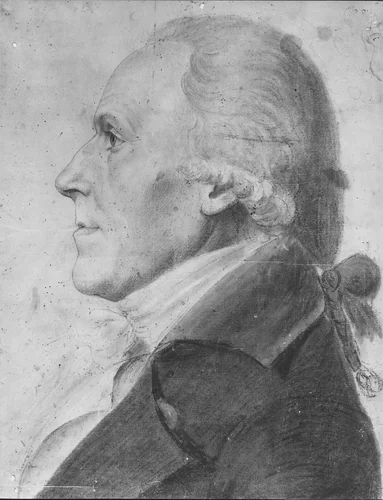
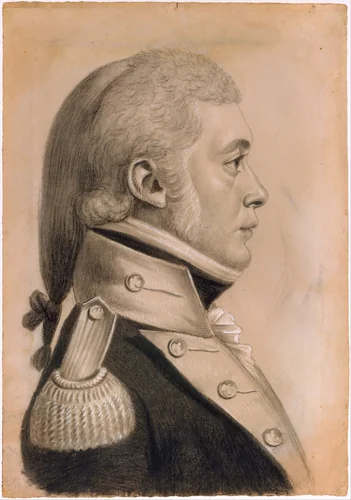
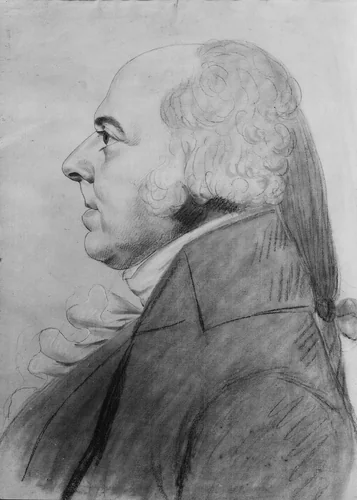
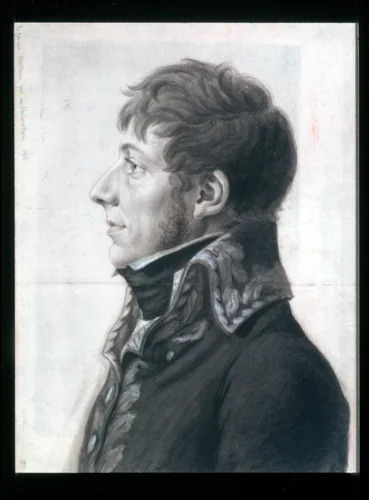
Charles Balthazar Julien Févret de Saint-Mémin (1768–1852) occupies a unique and significant place in the history of early American portraiture. A French nobleman who fled the political turmoil of the Revolution, Saint-Mémin arrived in the United States and successfully reinvented himself as a highly specialized artisan. His concentrated decade of activity between 1797 and 1808 resulted in a singular and expansive body of work: hundreds of small-scale, precise profile portraits executed from life.
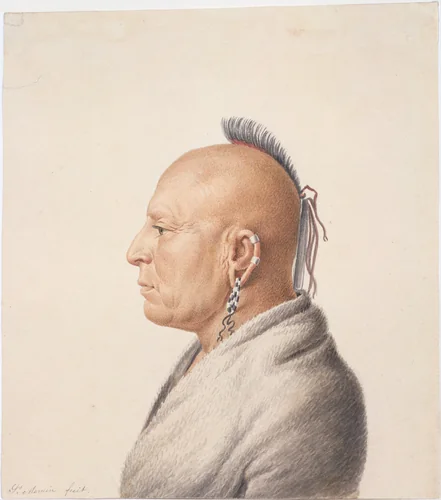
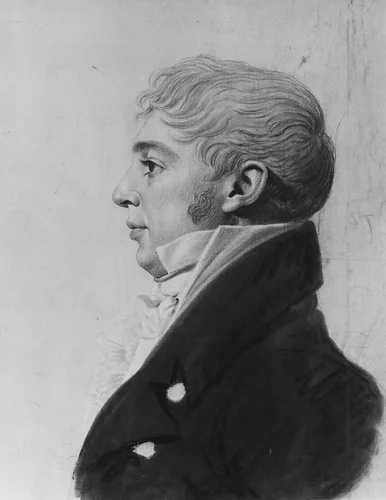
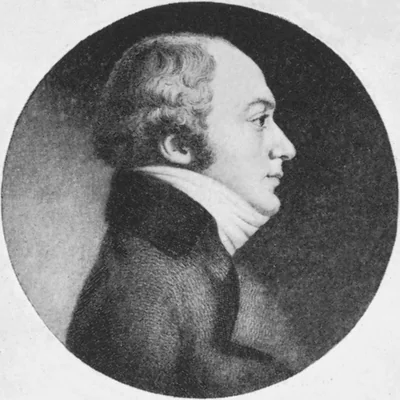
Working primarily in established centers like Philadelphia, New York, and Washington D.C., Saint-Mémin created these iconic silhouettes using a mechanical device known as the physiognotrace, which allowed for remarkable accuracy and speed. After creating the initial precise profile drawing, he would reduce the image via engraving onto copperplate, often supplementing the final print with crayon detailing on the subject’s hairline. This technique not only ensured fidelity but allowed him to produce multiple copies of each image cost-effectively, thereby democratizing the status portrait for the burgeoning American elite. His efficiency was impressive; he sometimes managed to execute an entire portrait from drawing to final copperplate within a single day.
The roster of his sitters constitutes a visual Who’s Who of the Federal Era. He captured the likenesses of foundational political figures, including George Washington, Thomas Jefferson, and John Adams, alongside key military leaders such as Jean-Victor Moreau, and influential indigenous figures like the Osage Warrior. These images offer an immediate and unflinching look at power and presence, providing invaluable historical documentation.
Because of the fidelity and crucial importance of these images, many of Saint-Mémin’s original plates and associated prints are now preserved in major institutions, including the Metropolitan Museum of Art. These foundational works often reside today in the public domain, making museum-quality prints widely accessible for research and educational purposes. Following his intensive American period, Saint-Mémin returned to France, where his distinguished career culminated in his appointment as director of the Musée des Beaux-Arts in Dijon, solidifying his reputation as a dedicated figure in the arts. His American output provides a crucial catalog of downloadable artwork from the dawn of the republic, illustrating how necessity transformed into artistic innovation.
Source: Wikipedia · CC BY-SA 4.0