Charles Aubry
Charles Aubry (1803–1883) stands as a distinct figure in the history of early French photography, one whose rigorous intellectual training as a jurist profoundly influenced his artistic output. While known during his lifetime as a pillar of the legal establishment, serving as a professor of law at Strasbourg from 1833 to 1871 and later as a judge on the high court, the Cour de Cassation, his lasting cultural relevance rests entirely on the sophisticated photographic work he produced between 1836 and 1864.
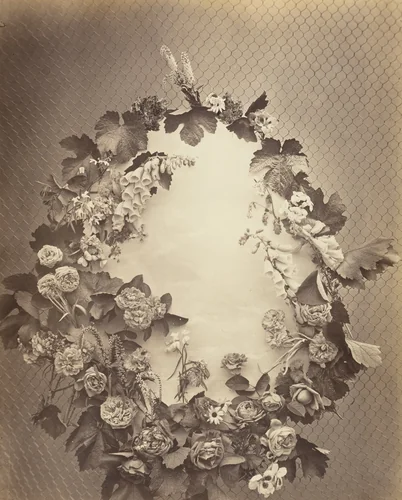
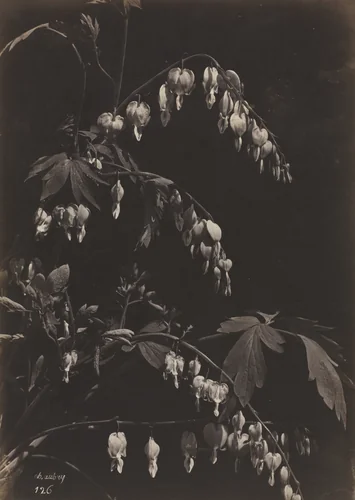
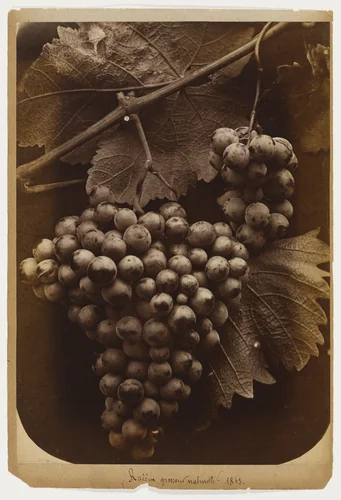
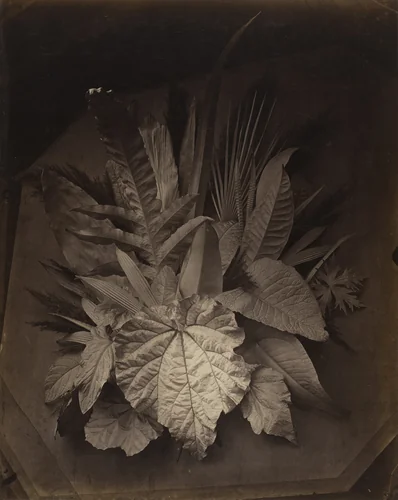
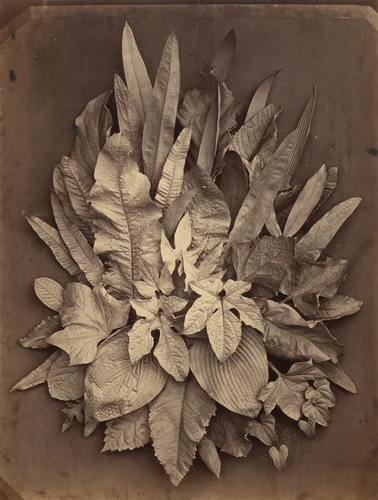
Aubry’s practice specialized in applying the emerging photographic medium to subjects traditionally reserved for painting, particularly botanical and still life compositions. His compositions demonstrate an exceptional precision, clarity, and mastery of tone, qualities perhaps inherited from the analytical demands of his primary profession. Works such as Floral Still Life (Bleeding Hearts) and Grapes, Life Size reveal a deep interest in translating volume and texture onto the two-dimensional plate, achieving a trompe l’oeil illusion that was groundbreaking for the period. These images are characterized by striking resolution and compositional minimalism, placing them among the finest examples of 19th-century still life photography.
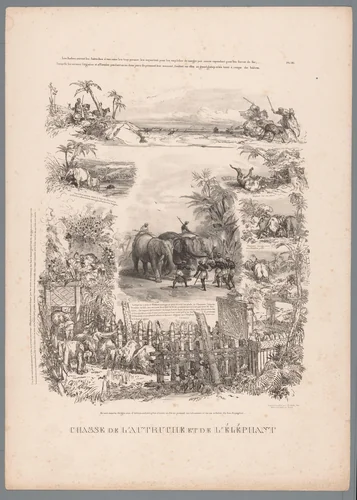
Although celebrated for his quiet, detailed nature studies, Aubry was also capable of capturing complex motion and narrative, as evidenced by the rare image Jacht op struisvogel en olifant. Yet, it is his careful arrangement of light and shadow, seen in studies like Leaf Arrangement with Foreshortening, that secures his place in institutional collections today.
The scarcity and quality of Aubry’s original work have ensured their placement in major North American institutions, including the Art Institute of Chicago, the Museum of Modern Art, and the National Gallery of Art. The careful execution of Charles Aubry prints established a crucial standard for botanical documentation during an era of scientific expansion. Today, much of his historically significant output has entered the public domain, making high-quality prints and downloadable artwork accessible to a new generation of collectors and researchers.
Source: Wikipedia · CC BY-SA 4.0