Charles Alexandre Lesueur
Charles Alexandre Lesueur stands as a pivotal figure in the documentation of early 19th-century natural history, his career operating seamlessly at the intersection of scientific exploration and detailed fine art. A French naturalist and prolific explorer, Lesueur’s greatest legacy resides in the thousands of drawings and prints he created, which served not merely as illustrations but as the defining visual record of previously unknown species across Australia, Southeast Asia, and North America. His commitment to fieldwork yielded an extraordinary number of type specimens, fundamentally shaping modern taxonomy.
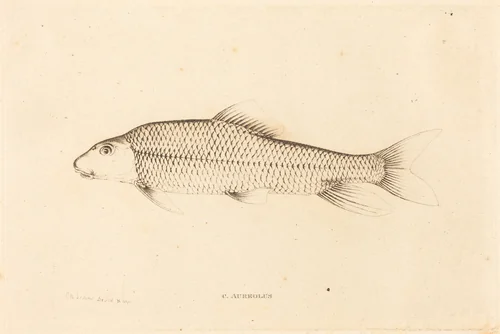
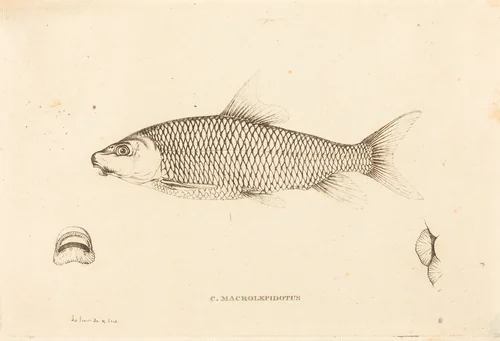
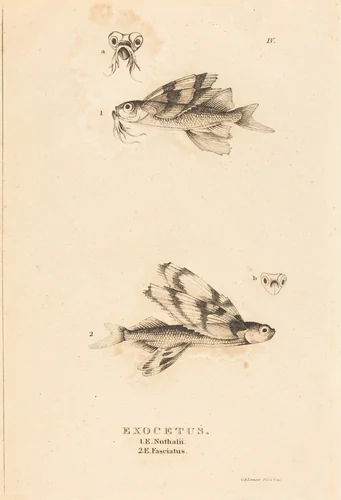
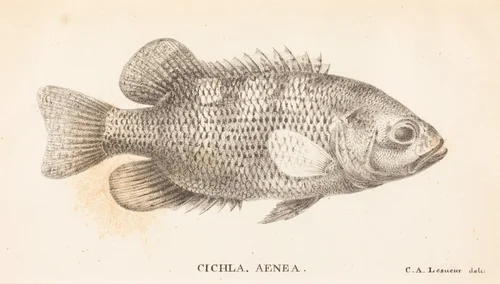
While his role as a collector and discoverer remains paramount—he is credited with describing numerous species, including the spiny softshell turtle and the common map turtle—it is his graphic precision that secures his position in art history. His prints, such as C. Aureolus, Exocetus, and Cichla, Aenea, reveal an uncompromising dedication to visual accuracy, translating the complex morphological details of new ichthyological and reptilian discoveries into elegant and scientifically rigorous compositions. These works represent the peak of museum-quality scientific illustration during the age of great expeditions.
Lesueur’s aesthetic output defined the visual identity of the American frontier's flora and fauna for audiences across the globe. He was a man who understood that a specimen, however important, required flawless documentation to become legible to the wider scientific community. His drawings are characterized by clean lines, careful hatching, and a formal balance that elevates them beyond simple scientific diagramming. Observing the sheer volume and consistently high standard of his documentation, one recognizes a tireless discipline that allowed him to be simultaneously a crucial collector and an impeccable draftsman.
Today, Lesueur’s visual heritage endures. Institutions such as the National Gallery of Art hold his significant contributions, ensuring that these historical documents remain accessible. Due to their age and historical importance, many original plates from his expeditions are now available in the public domain, offering historians and enthusiasts access to high-quality prints and downloadable artwork, allowing his intricate record of global biodiversity to be continuously studied and appreciated as both scientific literature and Charles Alexandre Lesueur prints.
Source: Wikipedia · CC BY-SA 4.0