Charles Abraham Chasselat
Charles Abraham Chasselat (1782-1843) was a French historical painter and designer whose career spanned the late revolutionary period, the Empire, and the Restoration. A key figure in the transition of academic art toward commercial illustration and decorative design, Chasselat’s output was characterized by both traditional historical scenes and detailed preparatory work for print culture and the decorative arts. Trained in Paris by his father, Pierre Chasselat, and the prominent neoclassical painter Vincent, he was well-positioned within the academic milieu.
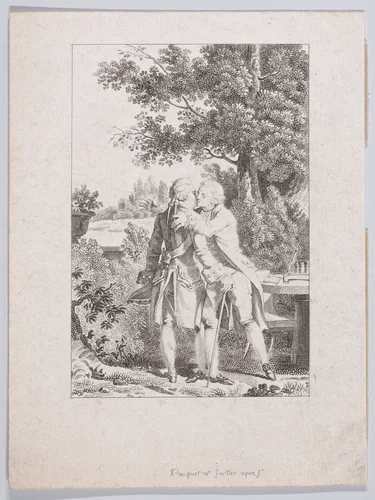
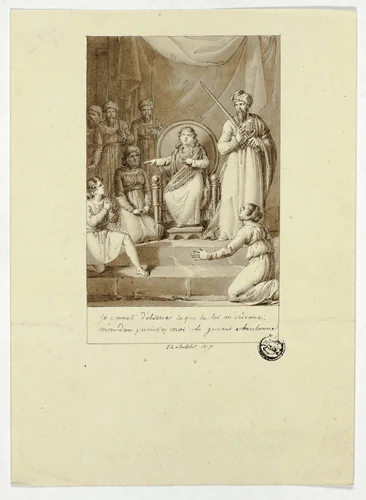
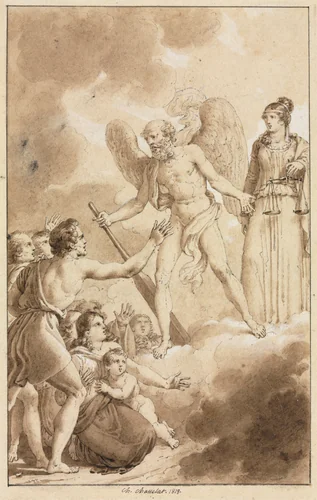
Chasselat exhibited works like The Repose of Belisarius at the Salon of 1812, confirming his credentials as a historical painter. However, his lasting influence is derived from his prolific activity as an illustrator for the burgeoning book trade. He specialized in visualizing classical literature and contemporary popular novels, providing drawings for the works of Molière, Racine (a scene from Athalie is known), and Voltaire. Notably, in the 1820s, he contributed illustrations to the first French translations of Jane Austen’s novels, placing him at the forefront of illustrating new literary tastes.
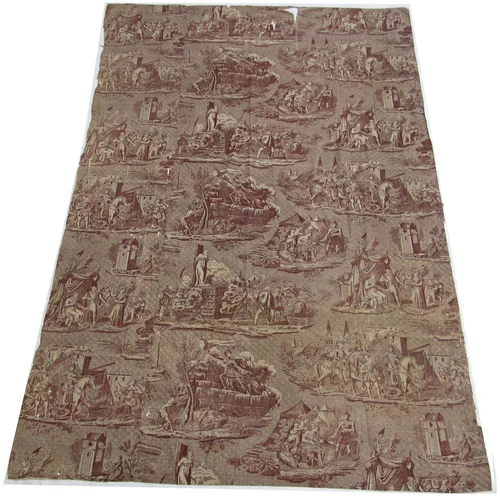
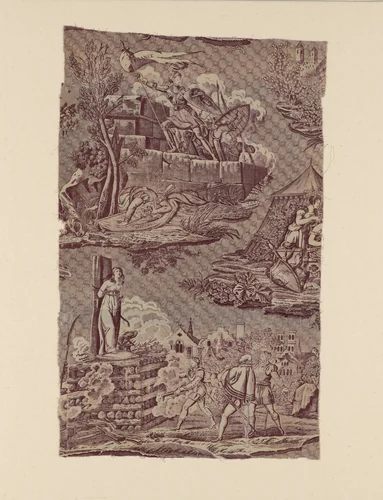
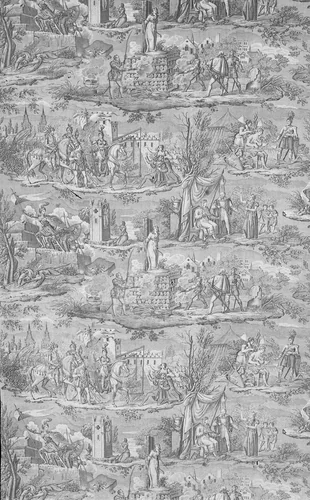
His adaptability extended beyond print; Chasselat excelled at large-scale functional design, most effectively demonstrated in his work for textiles. Surviving pieces, such as the furnishing fabric designs depicting La Vie de Jeanne d’Arc (The Life of Joan of Arc), reveal a neoclassical rigor applied to narrative scene-setting, demonstrating the translation of grand manner history painting into repeated, decorative formats suitable for domestic interiors. These designs reflect a rising nationalistic interest in medieval history popular during the Restoration era. Examples of this textile work, along with his prints and drawings, are held in prestigious North American institutions, including the Metropolitan Museum of Art and the Art Institute of Chicago, often available today as museum-quality images.
Beyond private commissions, Chasselat held significant public roles, being employed to create detailed drawings documenting state ceremonials. These accurate records, such as those detailing the Funeral of Louis XVIII and the Coronation of Charles X, serve as crucial historical documents, meticulously capturing the pomp and precise staging of Bourbon court life. His commitment to precision, whether illustrating the intimate emotionality described in Rousseau’s Confessions (exemplified by his drawing C’est dans un de ces transports d’attendrissement...) or documenting state functions, underscores the versatility essential for artists navigating the shifting patronage structures of early nineteenth-century Paris. These public domain works are widely available today, providing excellent reference material on this transitional era. He died in Paris in 1843, leaving behind a legacy of prints and decorative designs that remain accessible as downloadable artwork.
Source: Wikipedia · CC BY-SA 4.0