Charles A. Platt
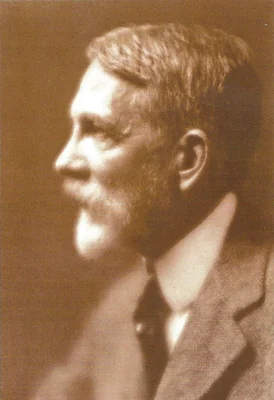
Charles Adams Platt occupied a unique and influential position within the late nineteenth-century American Renaissance. Though perhaps best known today as an architect and pioneer of classical garden design-a practice where his controlled, harmonizing visions consistently complemented domestic structures-his parallel career as a highly proficient artist reveals a meticulous eye for composition shared across all his disciplines. This rare synthesis of fine art practice with architectural theory defines his singular contribution to American aesthetics.
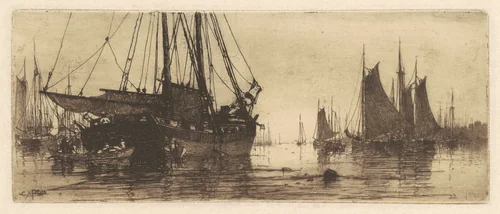
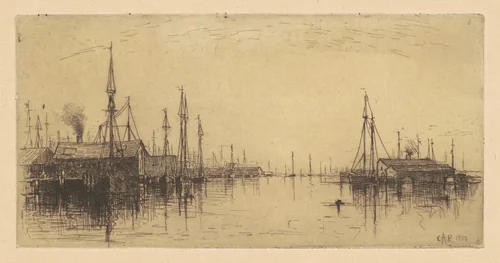
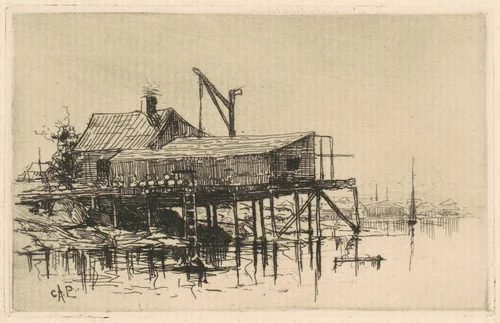
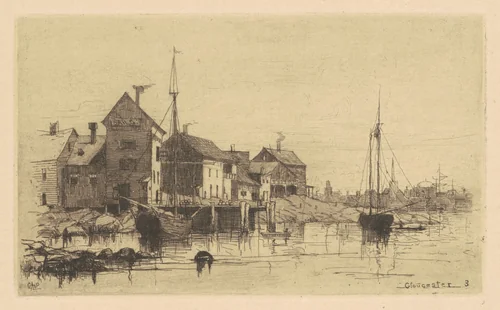
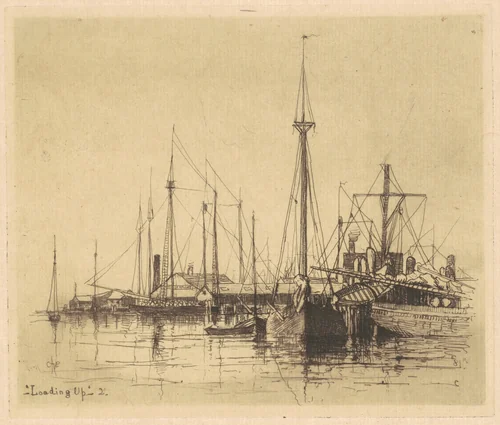
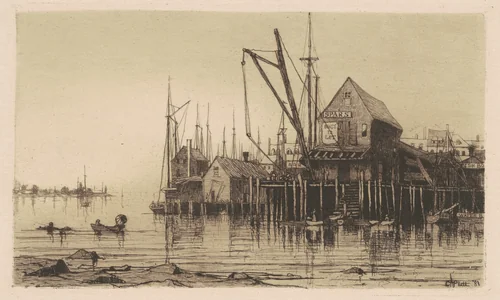
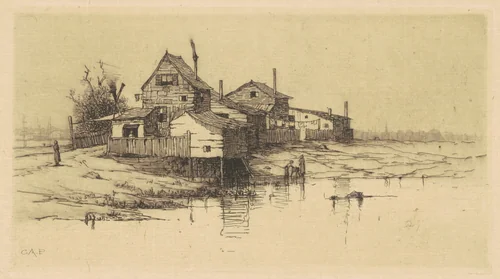
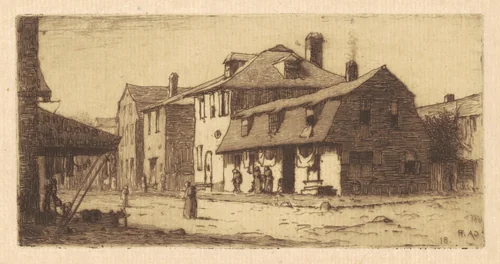
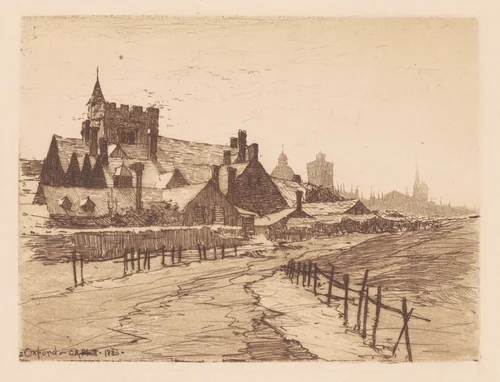
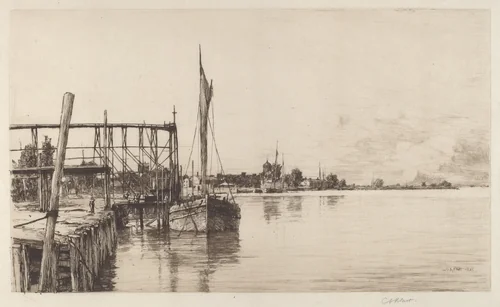
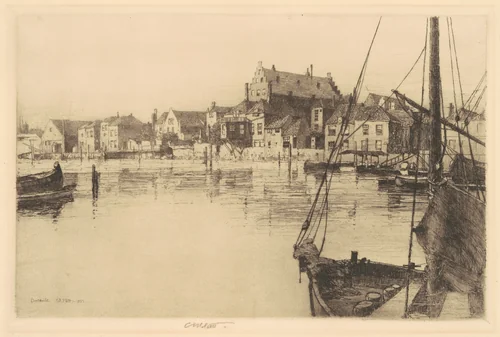
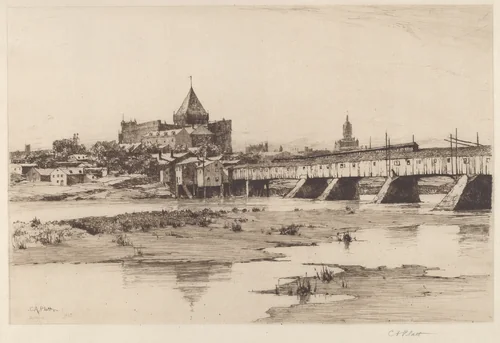
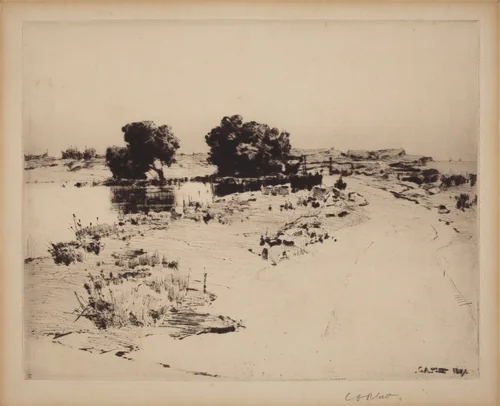
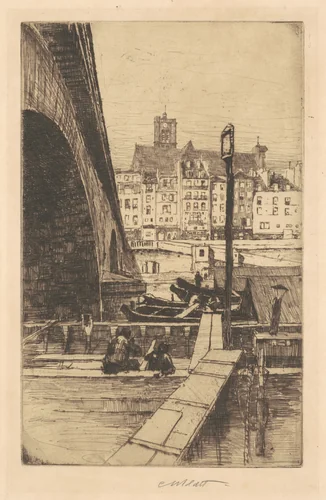
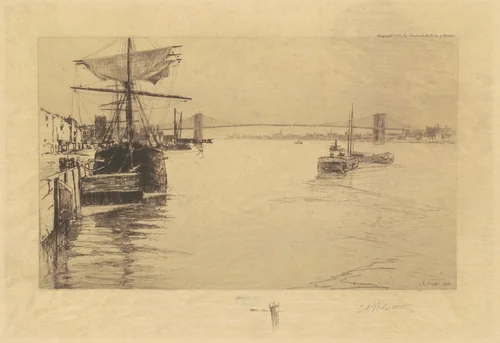
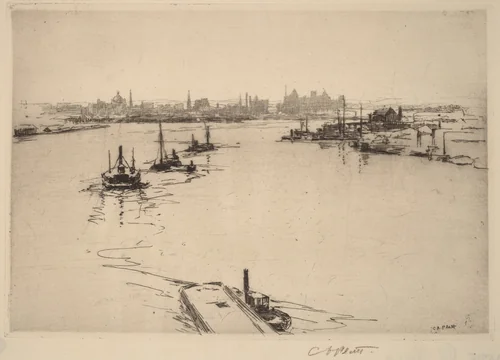
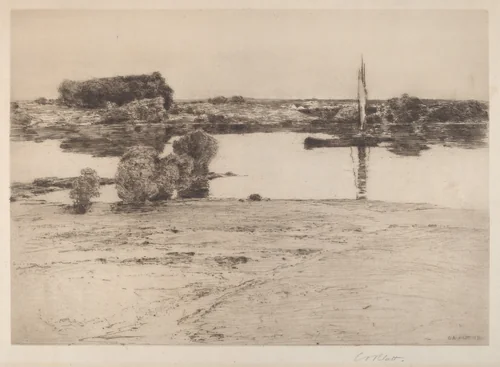
Platt focused his artistic production primarily on printmaking, an activity that spanned roughly twelve years, from 1876 to 1888. During this period, he produced approximately fifteen documented works. These graphic pieces are characterized by an adherence to linear precision and a clear preference for scenes focused on the vernacular architecture and working environment of New England harbors. Titles like Fishing Boats, Gloucester Harbor, Salt Shanties, and Fish-Houses demonstrate his dedication to recording the functional, often rugged, beauty of the coastal environment. Platt’s mastery of the etching needle required a level of technical rigor that mirrors the structured rationality he subsequently brought to his architectural projects.
It is an interesting dichotomy that while his garden designs and domestic architecture idealized classical symmetry and Palladian order, his prints frequently embraced the asymmetry and ad hoc charm of workaday maritime structures, lending a quiet observational depth to his graphic output. This subtle tension between the idealized and the actual provides enduring significance to his artistic endeavors.
Platt’s impactful, albeit brief, foray into printmaking secured his reputation among his contemporaries, and examples of his work now reside in prestigious institutions such as the National Gallery of Art. The sustained interest in Charles A. Platt prints ensures that these detailed renderings of vanishing American maritime life are continually studied. Today, much of his graphic output resides in the public domain, allowing for the widespread availability of museum-quality high-quality prints, which serve as essential documents of the era’s artistic and environmental preoccupations.
Source: Wikipedia · CC BY-SA 4.0