Chaïm Soutine
Chaïm Soutine (1893-1943) stands as one of the most fervent and significant figures of the early 20th-century Expressionist movement, contributing a singular intensity to the vibrant context of the School of Paris. Of Belarusian-Jewish origin, Soutine arrived in the French capital around 1913, where his immediate and passionate approach to color and form positioned him outside the cooler, more cerebral directions of contemporary modernism. He eschewed academic refinement, instead channeling profound psychological tension directly onto the canvas, establishing a highly personal visual language rooted in emotional extremity.
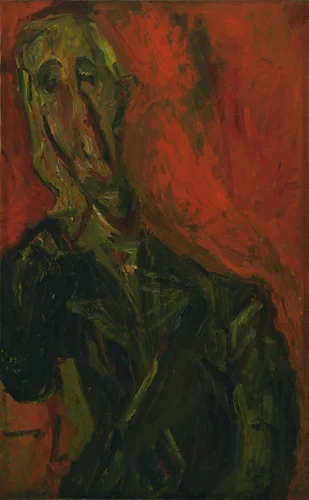
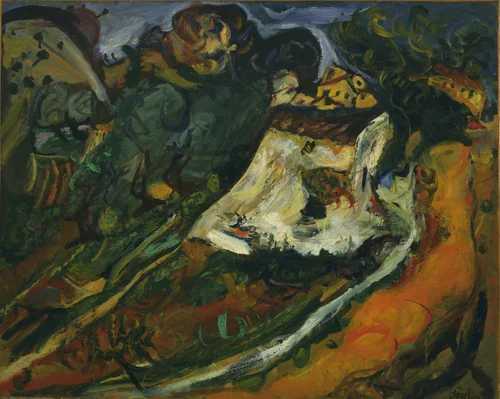
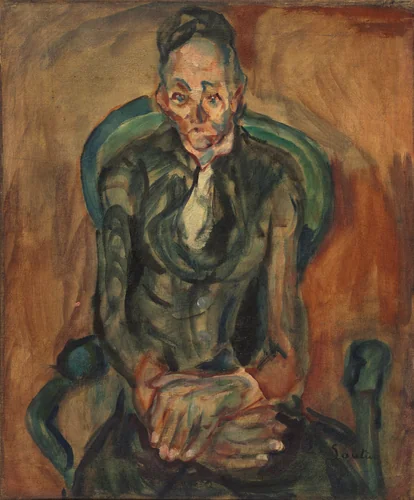
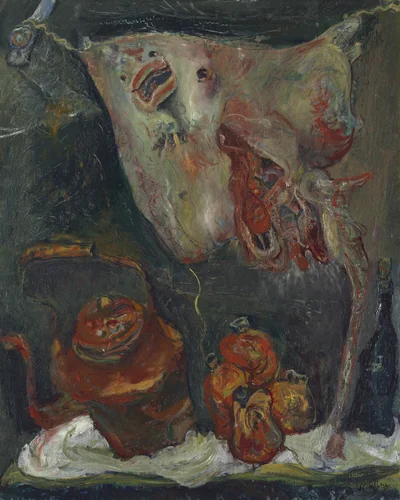
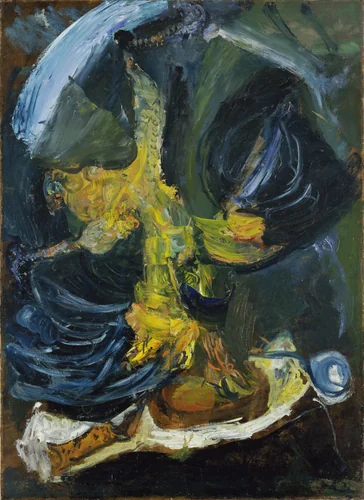
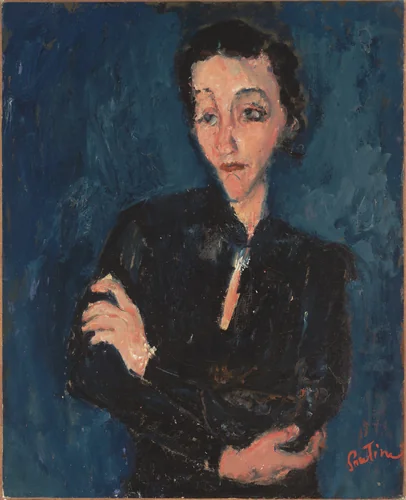
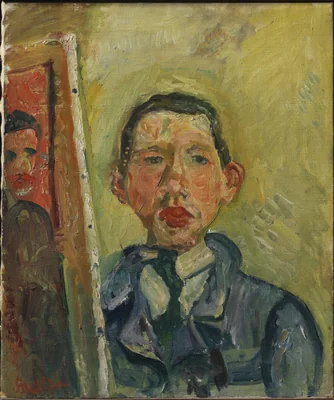
Soutine specialized primarily in portraiture and visceral still lifes. His handling of paint is often described as turbulent, thick, and almost sculptural. He utilized distortion not merely for stylistic effect but as an emotional vehicle, twisting the features of his sitters or the viscera of animal subjects to convey a raw, primal energy. Works like Man in a Green Coat and the unsettling Old Woman capture figures consumed by their internal states, radiating anxiety and melancholy. Furthermore, his famous series dedicated to flayed animals, including Still Life with Rayfish and Dead Fowl, redefine the genre of still life into something darkly compelling and deeply humanistic. His palette, though frequently dark, bursts forth with startling reds and blues, emphasizing the intense vitality inherent in both life and decay.
Though deeply integrated into the artistic milieu of the School of Paris, Soutine maintained an isolated intensity throughout his career. His work was championed early by influential American collectors, such as Albert C. Barnes, ensuring his place in major transatlantic institutions including the Museum of Modern Art and the Cleveland Museum of Art. He was notoriously self-critical; historical accounts describe him compulsively destroying dozens of his own canvases, a fascinating contrast to the undeniable permanence and museum-quality of the work that survived.
This intensity secured his legacy, influencing subsequent generations of painters associated with post-war abstraction and figurative Expressionism. Researchers and collectors seeking to study the full range of Chaïm Soutine paintings from his most active period, spanning 1921 to 1929, increasingly rely on high-quality prints derived from public domain works, ensuring widespread access to his emotionally charged, enduring contribution to modern art.
Source: Wikipedia · CC BY-SA 4.0