Caspar Luyken
Caspar Luyken (1672–1708) was a pivotal Dutch engraver and illustrator whose brief, concentrated independent activity between 1691 and 1694 cemented his position in the history of late 17th-century graphic arts. His significance is rooted not only in his exceptional technical mastery of the copperplate but also in his extensive collaboration with his father, the celebrated artist and poet Jan Luyken.
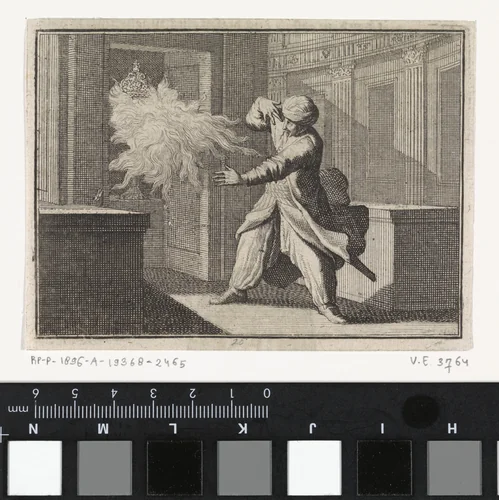
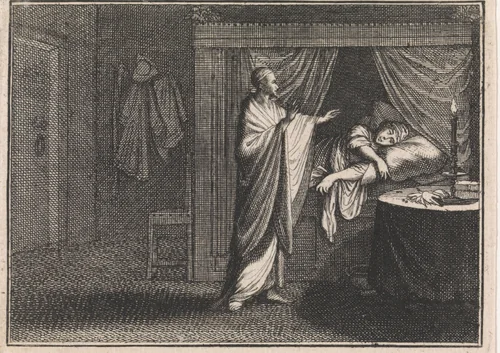
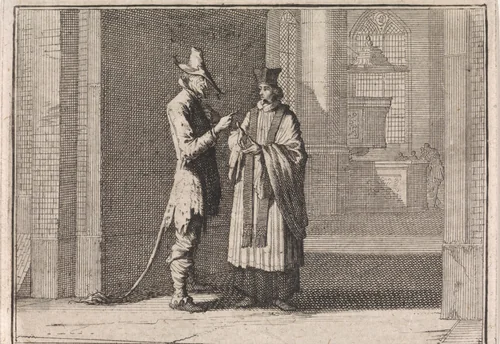
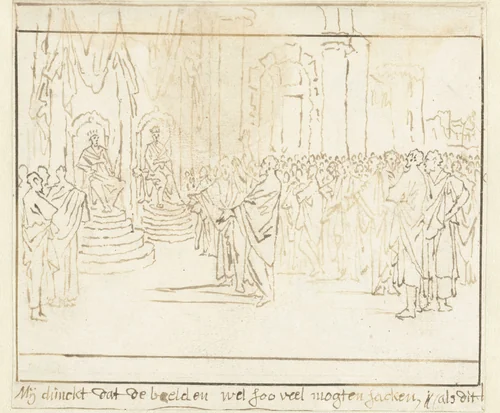
Trained rigorously within the family workshop, Caspar became integral to the production of the meticulously detailed plates that defined the Luyken oeuvre. Their collaborations were vast, supplying illustrations for major publications, theological works, and emblem books, requiring an unwavering standard of precision and compositional clarity. It is challenging to fully disentangle the hands in their joint efforts, but the 15 known works from Caspar’s independent period—comprising 13 prints and two drawings—demonstrate an accomplished artistic voice dedicated to allegorical and occupational themes.
His surviving works, held prominently in the Rijksmuseum, often focus on the personification of human endeavor and knowledge. This focus is evidenced in powerful series dedicated to intellectual disciplines, including Geometria, Musica, and Retorica. Simultaneously, he turned his focus toward the dignity of labor, detailing the working lives of common tradesmen in pieces such as Beeldhouwer (The Sculptor) and Bezemmaker (The Broom Maker). These high-quality prints provide historians with a crucial visual record of the professions prevalent in the Netherlands during the final years of the Golden Age.
A subtle irony defining Caspar Luyken’s historical reception is that the very brilliance and prolific output of his father’s career often overshadowed the younger artist’s distinct contributions. While his independent career span was narrow, the resulting Caspar Luyken prints exhibit an assured hand, demonstrating that he had fully absorbed the sophisticated technical standards required of museum-quality printmaking. Today, thanks to the accessibility afforded by modern digital archives, the integrity of his individual vision is preserved, providing insight into the specialized world of Dutch illustration.
Source: Wikipedia · CC BY-SA 4.0